

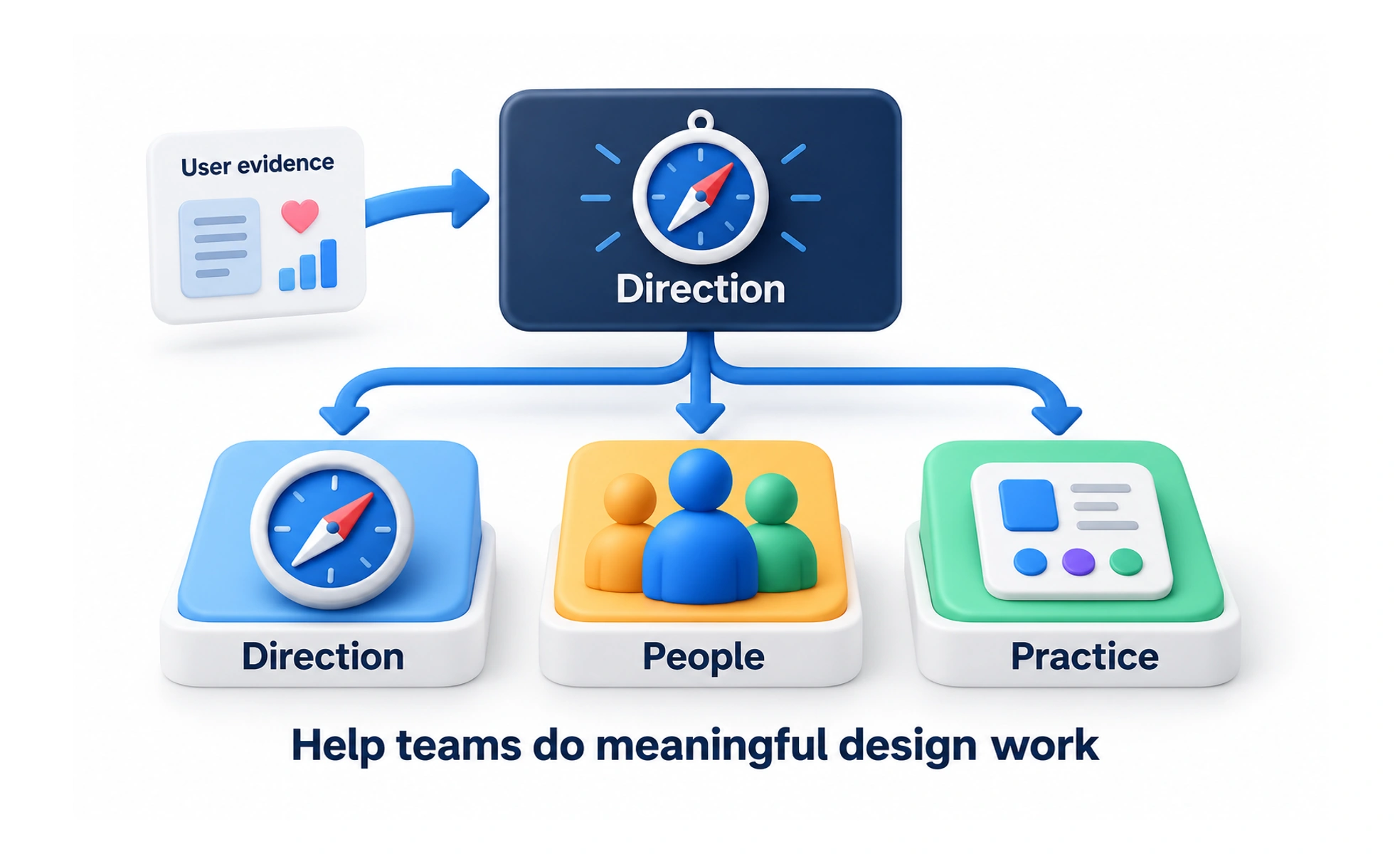
It ensures that design has a strategic seat at the executive table alongside engineering and business. Effective design leaders align creative vision with measurable commercial outcomes.
Think of it as the conductor of an orchestra. The conductor does not play every instrument, but shapes the tempo, harmony and unified performance of the entire ensemble.
How it works
Design leadership operates across strategy, team culture and organizational advocacy.
- Strategic vision translates broad business objectives into clear user experience roadmaps and design principles.
- Team mentorship and hiring recruits diverse talent, develops career progression tracks and coaches craft excellence.
- Cross-functional partnership builds collaborative trust with engineering leads, product managers and executive sponsors.
- Design operational standards establishes design systems, critique rituals and research repositories to scale efficiency.
When to use it
Invest in formal design leadership when growing organizations face alignment and quality bottlenecks.
- Scaling design teams transitions organizations from lone generalists to specialized design systems, research and writing functions.
- Resolving fragmented product experiences aligns multiple squads working on separate features under a unified design language.
- Advocating for accessibility and ethics ensures that inclusive standards receive proper budget, roadmap priority and engineering resources.
- Aligning design with business impact demonstrates how UX investments directly improve retention, conversion and enterprise renewals.
Common mistakes
Design leaders frequently struggle when they fail to bridge the gap between aesthetics and business.
- Speaking only in aesthetic jargon instead of translating design outcomes into business metrics that executives care about.
- Micromanaging individual pixels rather than empowering senior designers to own and defend their problem spaces.
- Operating as an insular agency within the company instead of embedding designers deeply inside agile product squads.
Frequently asked questions
Key takeaways
- Design leadership guides vision, mentors talent and embeds user-centered thinking into company culture.
- Effective leaders connect design decisions directly to commercial outcomes like retention and revenue.
- Scaling design requires establishing design systems, critique rituals and career pathways.
- Leaders must speak the language of business rather than retreating into aesthetic jargon.