

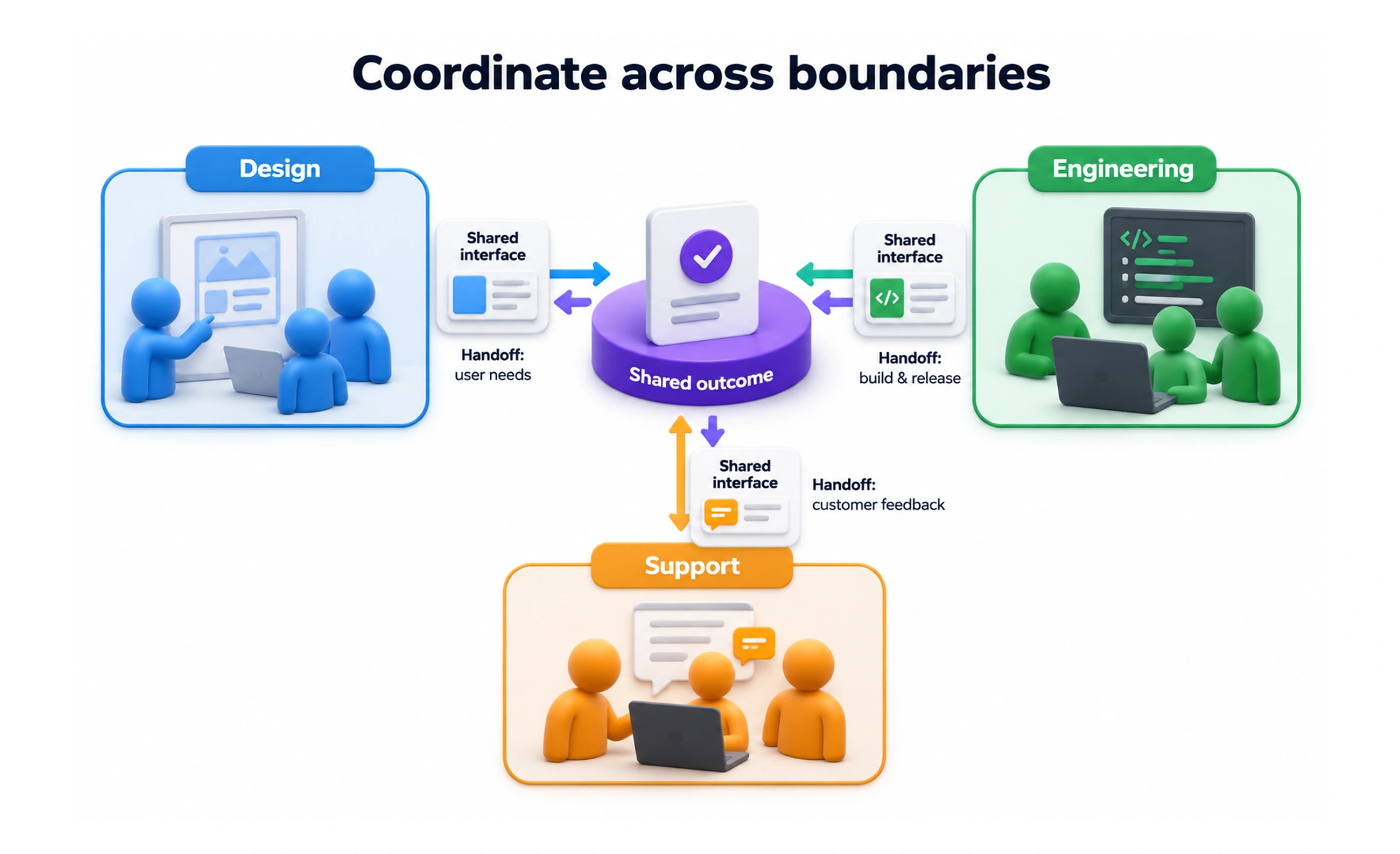
Cross-team collaboration coordinates work across groups with different responsibilities. It helps teams manage shared outcomes, dependencies, and interfaces without losing clear ownership.
An airport journey depends on several teams coordinating baggage, gates, security, and transport. Each has its own role, but passengers experience one connected service.
Define interfaces and dependencies
Agree on responsibilities, data contracts, service expectations, and delivery sequence. Make assumptions visible, including what happens when a dependency is delayed or unavailable. A clear interface lets teams work independently while reducing surprises at integration time.
Keep decisions and escalation clear
Name people who can resolve questions and establish a practical way to raise blockers. Keep important agreements in a shared location instead of scattering them across private conversations. Review changes that affect another team before treating them as settled.
Example: account deletion
An account team may own identity removal while a media team owns stored images and cache cleanup. The complete experience needs an agreed sequence, durable cleanup work, and observable failures. Both teams should verify the overall result so a successful account response does not leave abandoned data behind.
Frequently asked questions
Key takeaways
- Align around the complete customer outcome.
- Define responsibilities, contracts, and dependencies.
- Make blockers and decision paths visible.
- Verify the integrated result across boundaries.