

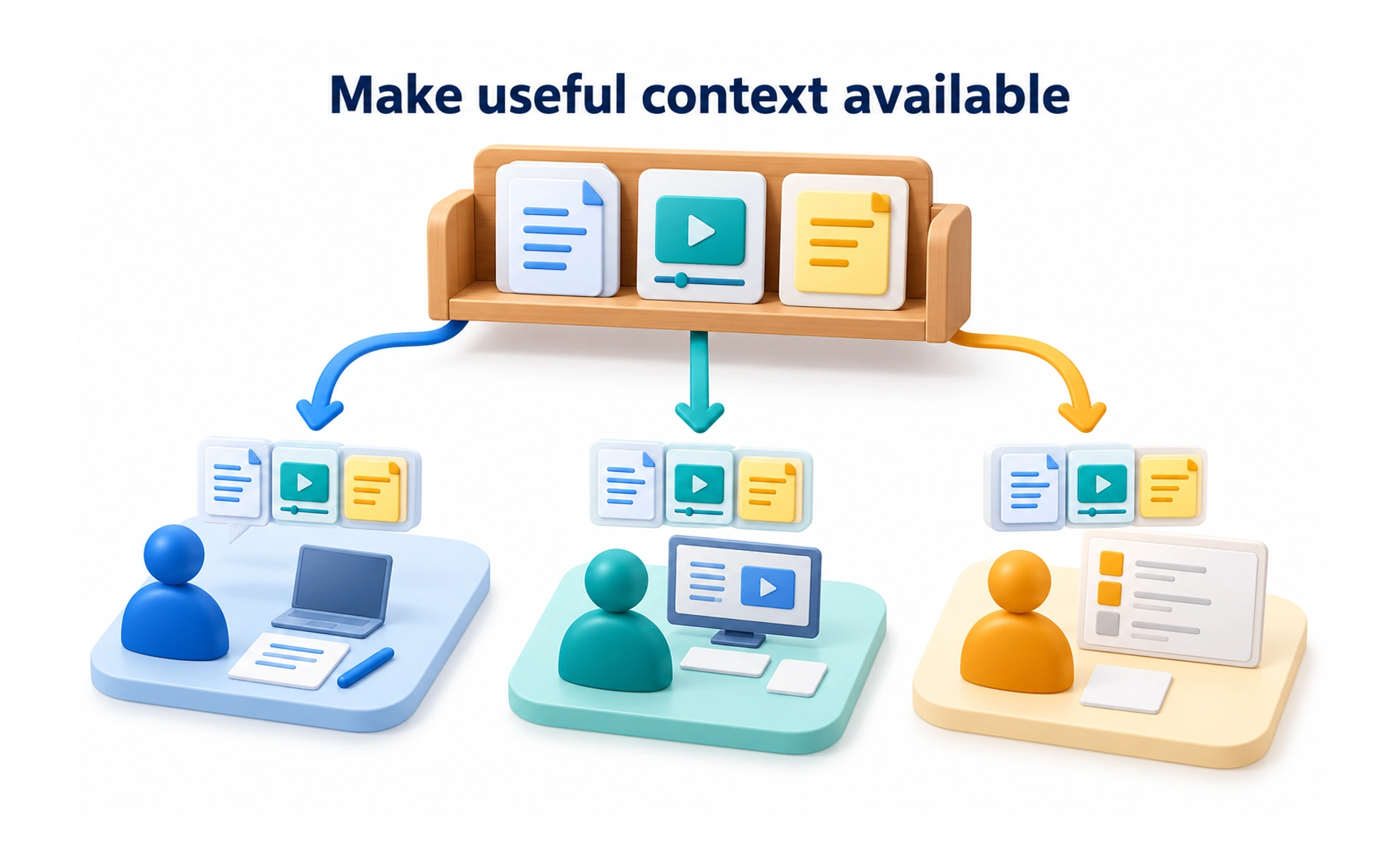
Knowledge sharing is the exchange of information, experience, and practical understanding among people or teams. It helps others make informed decisions and avoid having to rediscover important context.
A trail marker helps the next traveler understand where a path leads and where it becomes difficult. Shared notes and conversations can guide teammates in a similar way.
Preserve context and limits
Explain where information came from, when it was true, and what remains uncertain. Separate observed evidence from an interpretation or recommendation. This helps future readers reuse a lesson appropriately instead of treating a local decision as a universal rule.
Make exchange easy and safe
Use shared spaces people can access, maintain, and search. Invite questions and recognize contributors, including people whose expertise is less visible. Avoid sharing confidential or personal information without a valid reason and appropriate controls; knowledge access should respect its owners and affected people.
Keep useful knowledge current
Assign an owner or review trigger to information that can become outdated. Link related materials and make changes understandable. When a project ends, capture decisions, unresolved issues, and practical lessons while participants still remember the context. Archive obsolete guidance clearly rather than leaving it to look current.
Frequently asked questions
Key takeaways
- Start from the audience and task that need the knowledge.
- Include source, context, and uncertainty.
- Make sharing accessible while respecting confidentiality.
- Review, update, or retire material as conditions change.