

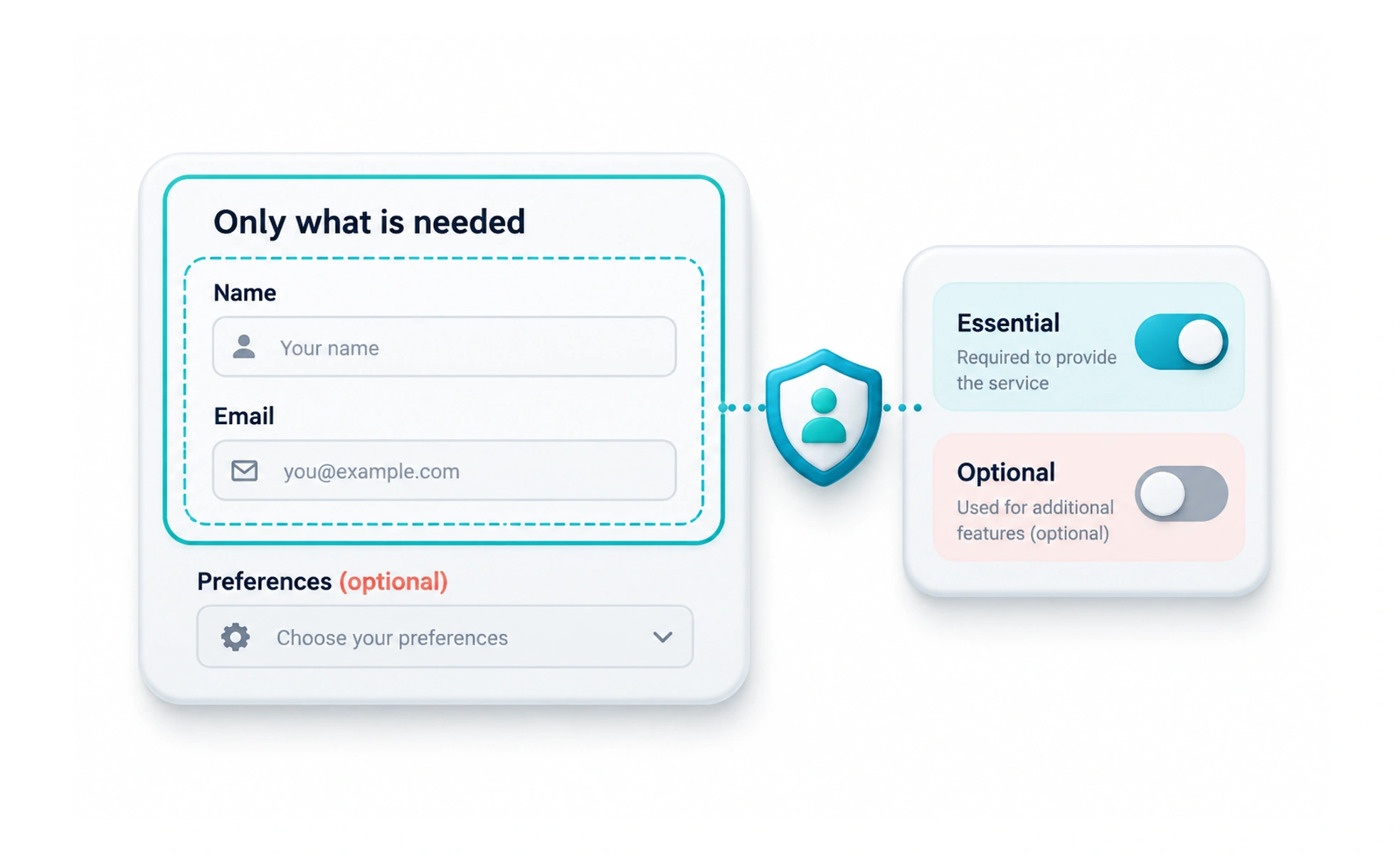
Also known as Privacy by Design, it ensures that products handle personal data responsibly by default. This protects user rights, ensures regulatory compliance and builds lasting consumer trust.
Think of it like this. A reputable bank vault requires two keys and gives you full control over who enters your safe deposit box, rather than leaving the door unlocked on the street.
How it works
Data privacy design weaves transparent controls into every data collection touchpoint.
- Data minimization restricts collection to only the specific data points strictly required to deliver the feature.
- Granular consent toggles allow users to opt into analytics or personalization without blocking core product access.
- Clear contextual notices explain in plain language why an address or phone number is needed before requesting it.
- Self-serve privacy dashboards let users export their complete history or delete their entire account with one click.
When to use it
Apply privacy design from the very first architecture whiteboard session, not as an afterthought.
- Onboarding form design eliminates non-essential personal questions that trigger suspicion and cause drop-offs.
- Cookie and tracking banners present fair, neutral choices without deceptive dark patterns like pre-checked boxes.
- Enterprise compliance prepares platforms for strict legal frameworks including GDPR, CCPA and HIPAA audits.
- Location and hardware permissions requests microphone or GPS access right at the moment of use, never upfront.
Trade-offs
Respecting user privacy requires intentional engineering discipline that limits easy data harvesting.
- Less passive analytics tracking means teams must rely on explicit user feedback rather than silent surveillance.
- Extra engineering investment is necessary to build robust data anonymization, encryption and export pipelines.
- Higher user trust directly increases willingness to share sensitive information when users know they stay in control.
Frequently asked questions
Key takeaways
- Privacy by design embeds data protection into products by default rather than as an afterthought.
- Practice data minimization by only requesting information strictly needed for the task.
- Consent requests must be transparent, specific and free from coercive dark patterns.
- Giving users simple tools to export or delete their data builds deep consumer confidence.