

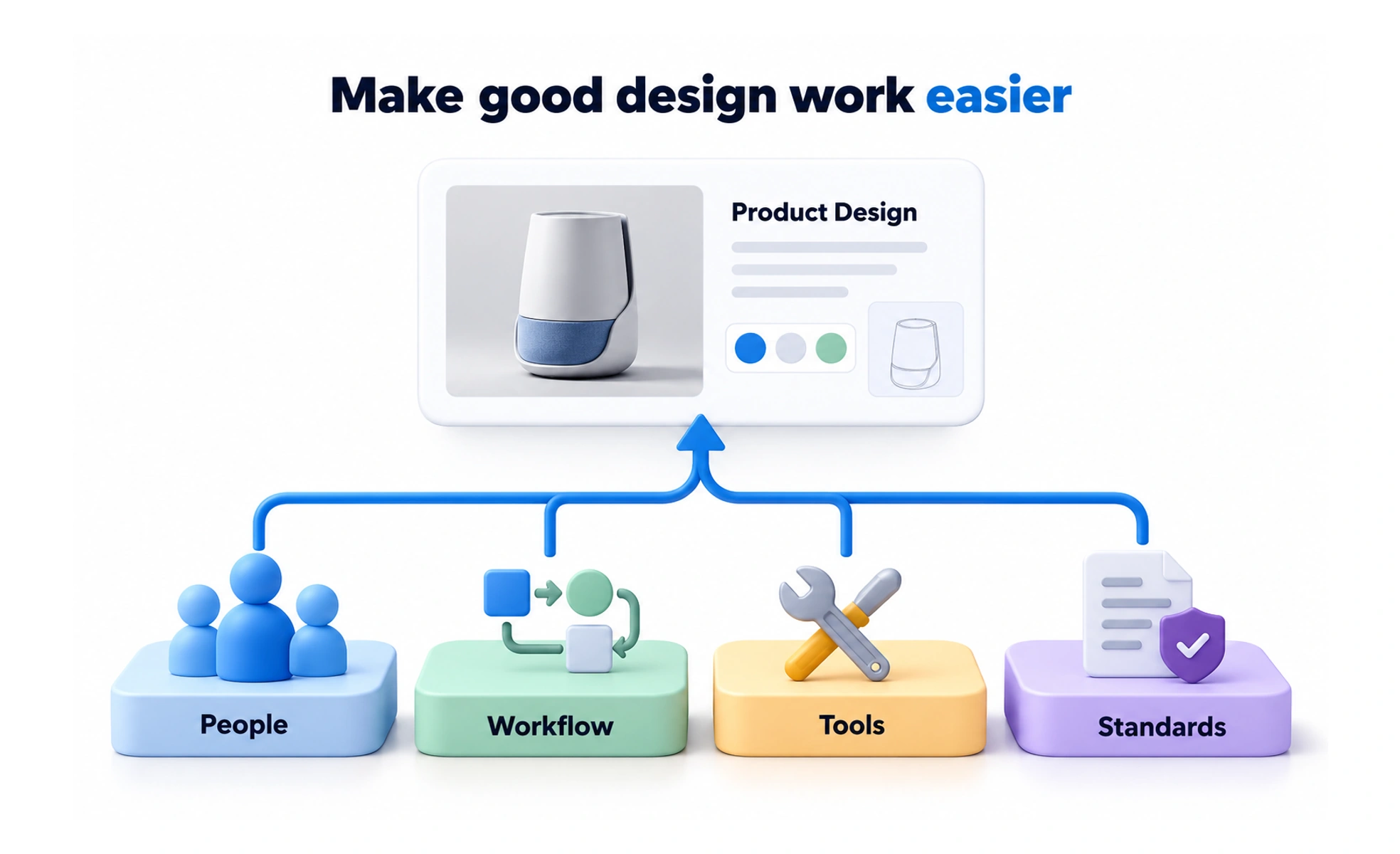
Design operations improves the systems that help design work happen effectively. It supports people, workflows, tools, and shared practices so teams can spend more effort solving the right problems.
A well-organized kitchen gives cooks dependable tools, clear preparation routines, and usable space. Design operations provides similar support for design teams.
Find recurring friction
Look for repeated obstacles such as hard-to-find research, inconsistent file organization, unclear review responsibilities, or inaccessible tools. Observe how work actually moves through the team. Improving a real bottleneck is more useful than introducing a process simply because other organizations use it.
Support adoption and ownership
A tool or template provides little value if people cannot understand or maintain it. Give shared systems clear owners, provide examples, and invite feedback. Consider the needs of new contributors and people working across locations or disciplines.
Example: research reuse
A team might organize research findings with clear context, dates, permissions, and links to decisions. Designers can then find relevant evidence before scheduling another study. Evaluate whether this reduces search effort and improves decisions, rather than measuring success by how many documents were uploaded.
Frequently asked questions
Key takeaways
- Address observed friction in design work.
- Use shared practices that reduce repeated effort.
- Give tools and systems clear owners.
- Measure whether the changes help people work effectively.