

Autism is a neurodevelopmental condition associated with varied ways of communicating, interacting, processing sensory information, and engaging with routines. Autistic people have diverse strengths, preferences, and support needs.
The word spectrum describes a varied pattern of characteristics and needs, rather than placing every person on one simple scale from less to more autistic.
Begin with individual needs
A diagnosis does not tell a designer exactly how someone will use an interface. Ask participants about their communication preferences and access needs, and make research participation flexible. Avoid assuming that one person represents all autistic people or that a preference reveals someone’s diagnosis.
Make content and behavior predictable
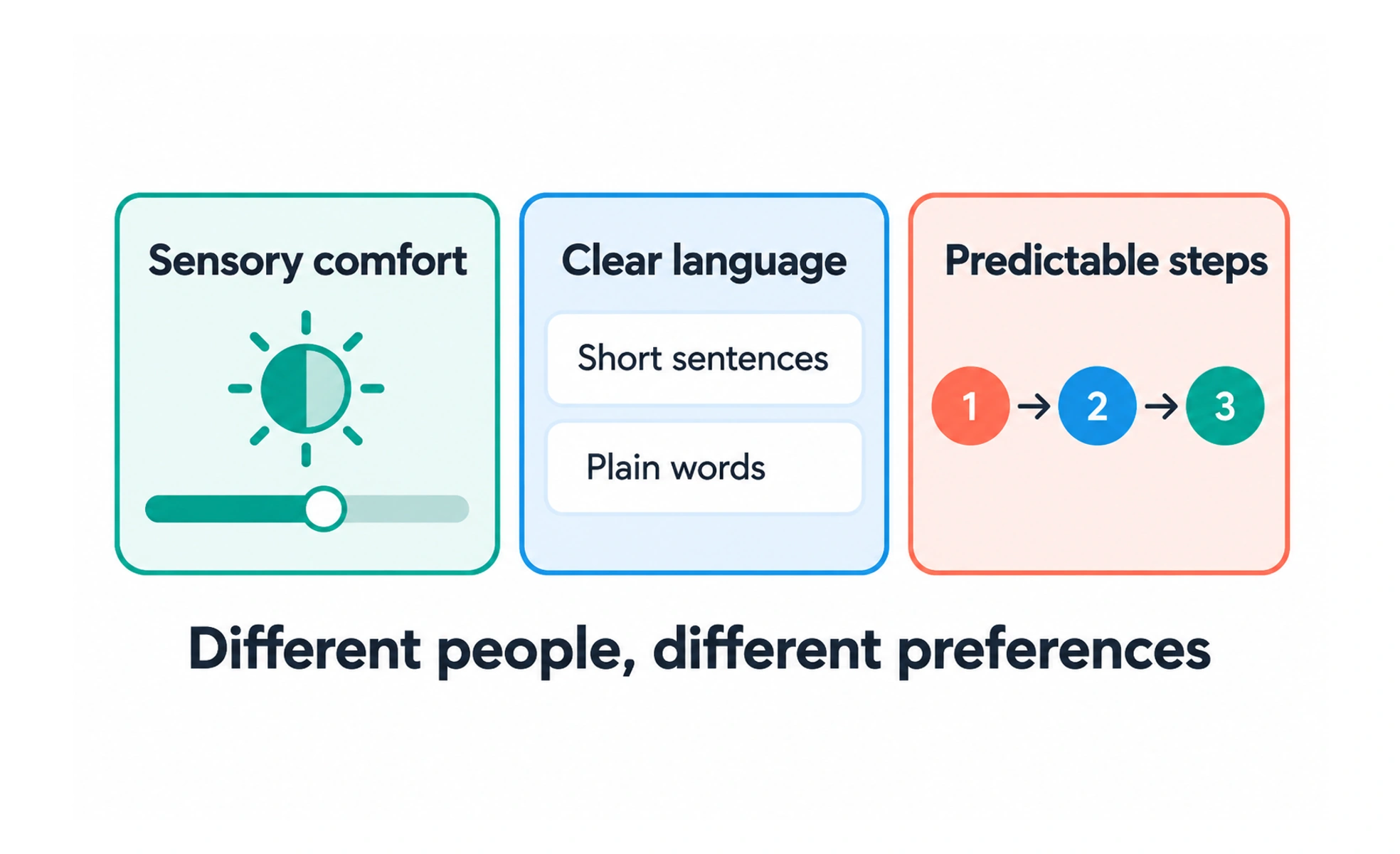
Clear instructions, consistent navigation, and explanations of what happens next can reduce unnecessary uncertainty. Use direct language where figurative wording could obscure a task. Changes to a familiar flow should preserve orientation and give people enough context to understand the new behavior.
Offer control over sensory demands
Unexpected sounds, movement, dense presentation, or interruptions can create barriers for some people. Provide relevant controls and respect accessibility preferences. Needs differ, so a flexible, calm starting experience is more useful than prescribing one visual style as an autism-specific solution.
Example: an online lesson
A lesson can explain its structure, show progress clearly, and avoid unexpected autoplay. Learners can control sound and motion, pause, and return without losing work. Test the experience with a range of people and ask about the barriers they encounter instead of judging only completion speed.
Frequently asked questions
Key takeaways
- Autistic people have diverse preferences and support needs.
- Use clear language and predictable behavior.
- Provide control over relevant sensory demands.
- Include autistic participants without treating one person as representative.