

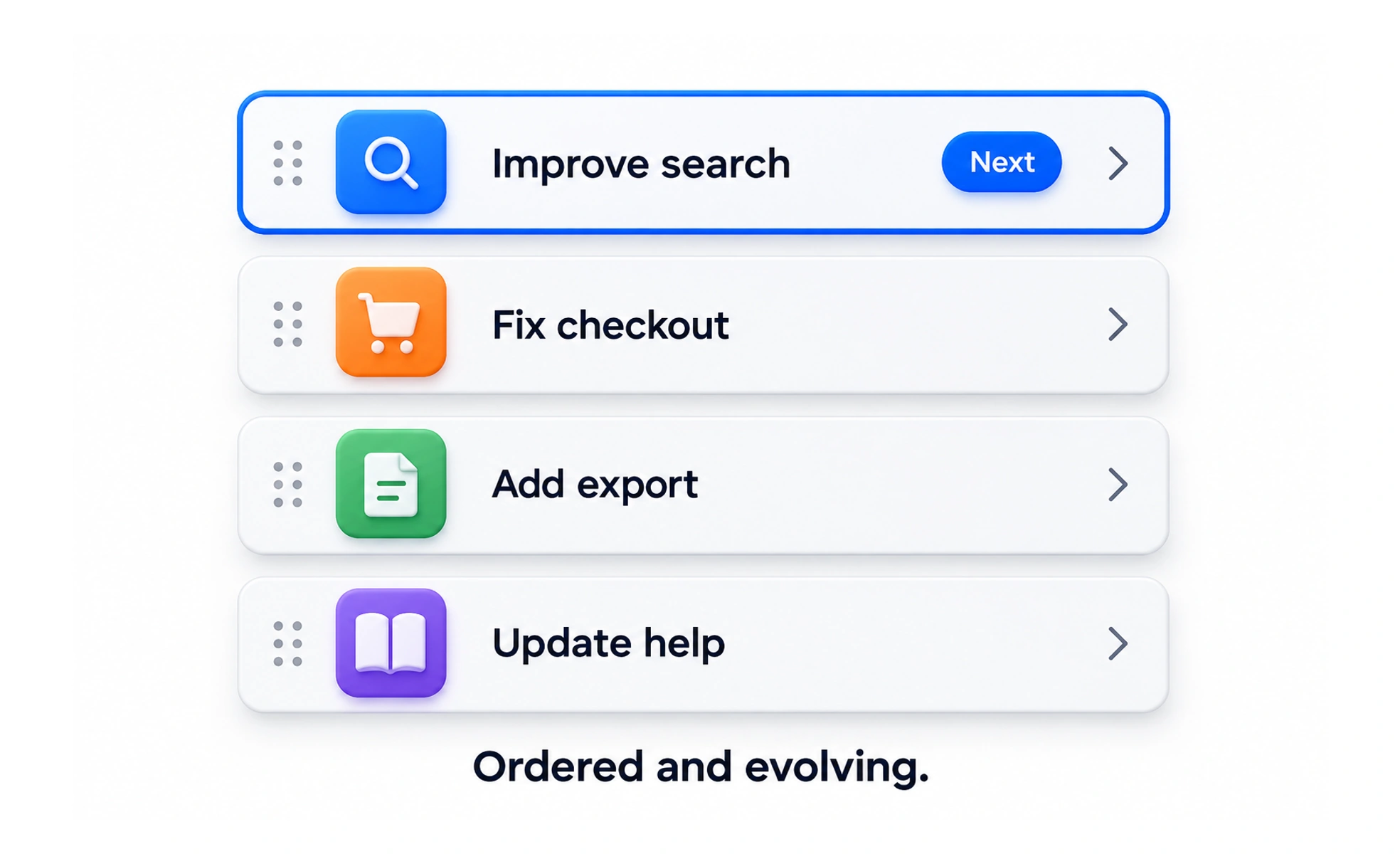
Maintained by the product owner, the backlog serves as the single source of truth for future engineering work. Items near the top are refined in high detail, while distant ideas remain rough outlines.
Think of it as a chef kitchen order board. Incoming guest tickets are lined up in exact priority order, ensuring cooks prepare appetizers first before firing main entrees.
How it works
A healthy backlog functions as a dynamic, continuously prioritized pipeline of product value.
- Backlog refinement sessions clarify acceptance criteria, estimate engineering effort and split large stories.
- Priority ordering ranks tickets based on user impact, business value, regulatory urgency and technical dependencies.
- Sprint backlog selection moves a realistic batch of prioritized tickets into the upcoming engineering sprint.
- Continuous backlog pruning archives obsolete feature requests and outdated bug reports to keep the list focused.
When to use it
Use a product backlog as the foundational operational hub for any agile software delivery team.
- Sprint planning preparation ensures engineers have clearly defined, estimated tickets ready for immediate execution.
- Stakeholder request management captures inbound feature requests without derailing current sprint commitments.
- Technical debt remediation schedules necessary database upgrades and refactoring alongside customer-facing features.
- Design and engineering collaboration attaches Figma prototype links and design token specifications directly to user stories.
Common mistakes
Product teams frequently allow backlogs to devolve into overwhelming, neglected feature graveyards.
- Treating the backlog as an infinite dumping ground, letting thousands of forgotten tickets accumulate over years.
- Specifying distant backlog items in excessive detail, wasting effort on features that will change before implementation.
- Neglecting regular backlog refinement, leading to confused sprint planning meetings and blocked engineering work.
Frequently asked questions
Key takeaways
- A backlog is an ordered, transparent list of all desired work items for a digital product.
- The product owner is accountable for backlog prioritization and aligning tickets with product strategy.
- Keep items at the top highly detailed and estimated, while items further down remain high-level concepts.
- Prune the backlog regularly by closing stale requests and archiving obsolete proposals.