

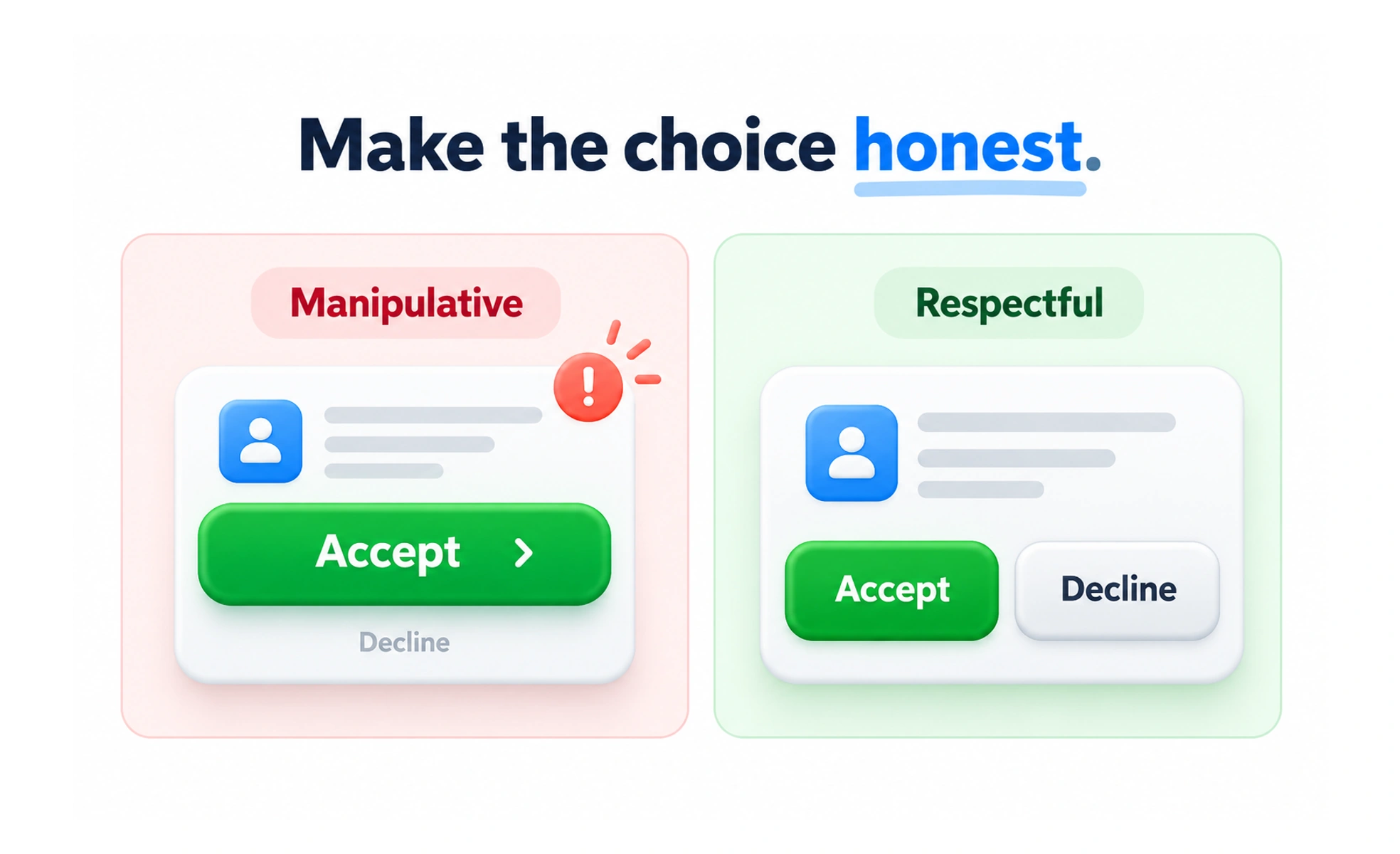
Also called deceptive design patterns, they exploit human cognitive vulnerabilities, reading habits and inertia. Examples include hidden subscription renewals, misleading buttons and buried cancellation links.
Think of it as a deceptive carnival game. The ring looks perfectly sized to land on the bottle neck, but subtle hidden angles make fair winning almost impossible.
Types
Regulatory bodies and researchers classify dark patterns into several manipulative categories.
- Roach motel makes entering a situation effortless, like one-click signups, but makes exiting or cancelling excruciating.
- Confirmshaming pairs opt-out buttons with emotionally coercive copy like 'No thanks, I dislike saving money'.
- Forced continuity silently charges recurring subscription fees after a free trial ends without sending advance notice.
- Bait and switch advertises one outcome, such as an update button, but executes an entirely different marketing action.
How to spot it
You can identify deceptive patterns by analyzing visual prominence and intentional asymmetric effort.
- Visual misdirection gives the paid upgrade option a massive vibrant button while hiding the free option in tiny gray text.
- Pre-checked consent checkboxes default users into receiving spam marketing emails or sharing telemetry with third parties.
- Fake countdown timers display artificial urgency messages like 'Only 2 items left!' that refresh upon page reload.
- Hidden subscription costs reveal mandatory recurring service fees only at the final step of checkout summaries.
Trade-offs
Deploying deceptive patterns produces short-term metric illusions while destroying enterprise value.
- Vanity conversion spikes look positive on weekly charts but lead directly to high chargebacks and support costs.
- Severe legal liability triggers massive regulatory fines under the FTC, GDPR and digital consumer protection acts.
- Erosion of brand trust causes frustrated customers to leave negative reviews, damaging long-term customer acquisition.
Frequently asked questions
Key takeaways
- Dark patterns exploit human cognitive shortcuts to manipulate users into unintended actions.
- Common patterns include roach motels, confirmshaming, forced continuity and visual misdirection.
- Deceptive design destroys customer trust, increases support costs and incurs regulatory fines.
- Ethical products make cancelling subscriptions and opting out just as easy as signing up.