

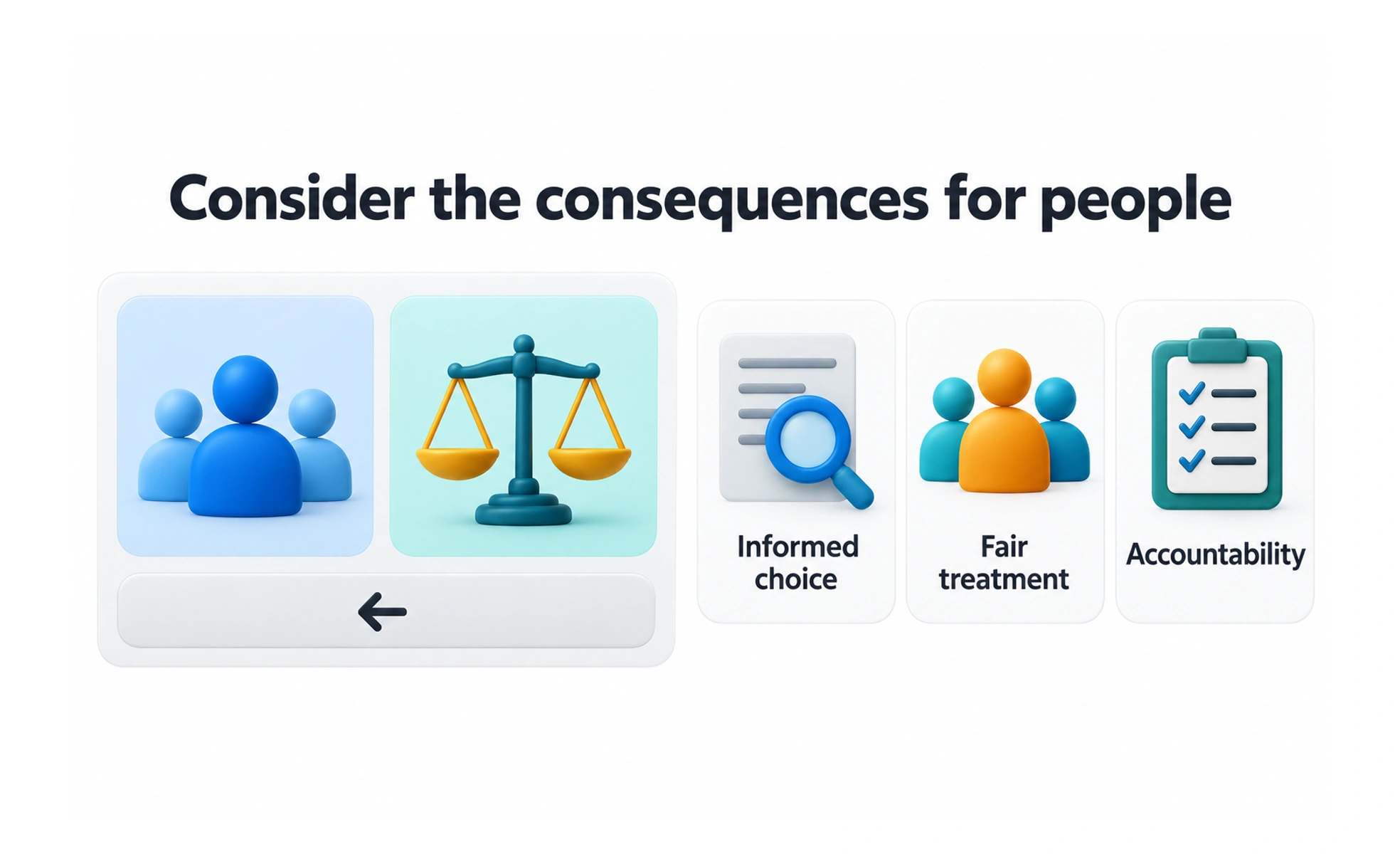
Ethical design considers how product decisions affect people, including those outside the immediate target audience. It supports informed choice, fair treatment, and accountability for foreseeable consequences.
A well-planned public space considers who can enter, who feels safe, and who may be excluded. Digital products also shape opportunities and behavior.
Ask who benefits and who bears costs
Consider the intended audience, excluded groups, workers, and others affected by the service. A change that helps one metric may create pressure or harm elsewhere. Bring different perspectives into the discussion and make assumptions about impact explicit.
Support informed and voluntary choices
Explain material consequences and give choices clear, comparable treatment. Avoid misleading urgency, hidden costs, and controls that steer people through confusion. Success should involve an appropriate decision, not simply the largest number of clicks on the preferred action.
Build accountability into the process
Record important tradeoffs, assign ownership, and provide ways to report problems. Evaluate actual effects after release because intentions do not establish outcomes. A principle becomes useful when it changes requirements, review decisions, or how the team responds to evidence.
Example: learning reminders
A reminder can help someone pursue a chosen goal, but repeated guilt-based messages may create pressure. Give people control over frequency and channels, honor those preferences, and evaluate whether the messages are helpful. Returning less often can be an appropriate choice for the learner.
Frequently asked questions
Key takeaways
- Consider affected people beyond the primary audience.
- Make meaningful choices understandable and voluntary.
- Record tradeoffs and give them accountable owners.
- Review actual effects and respond to harm.