

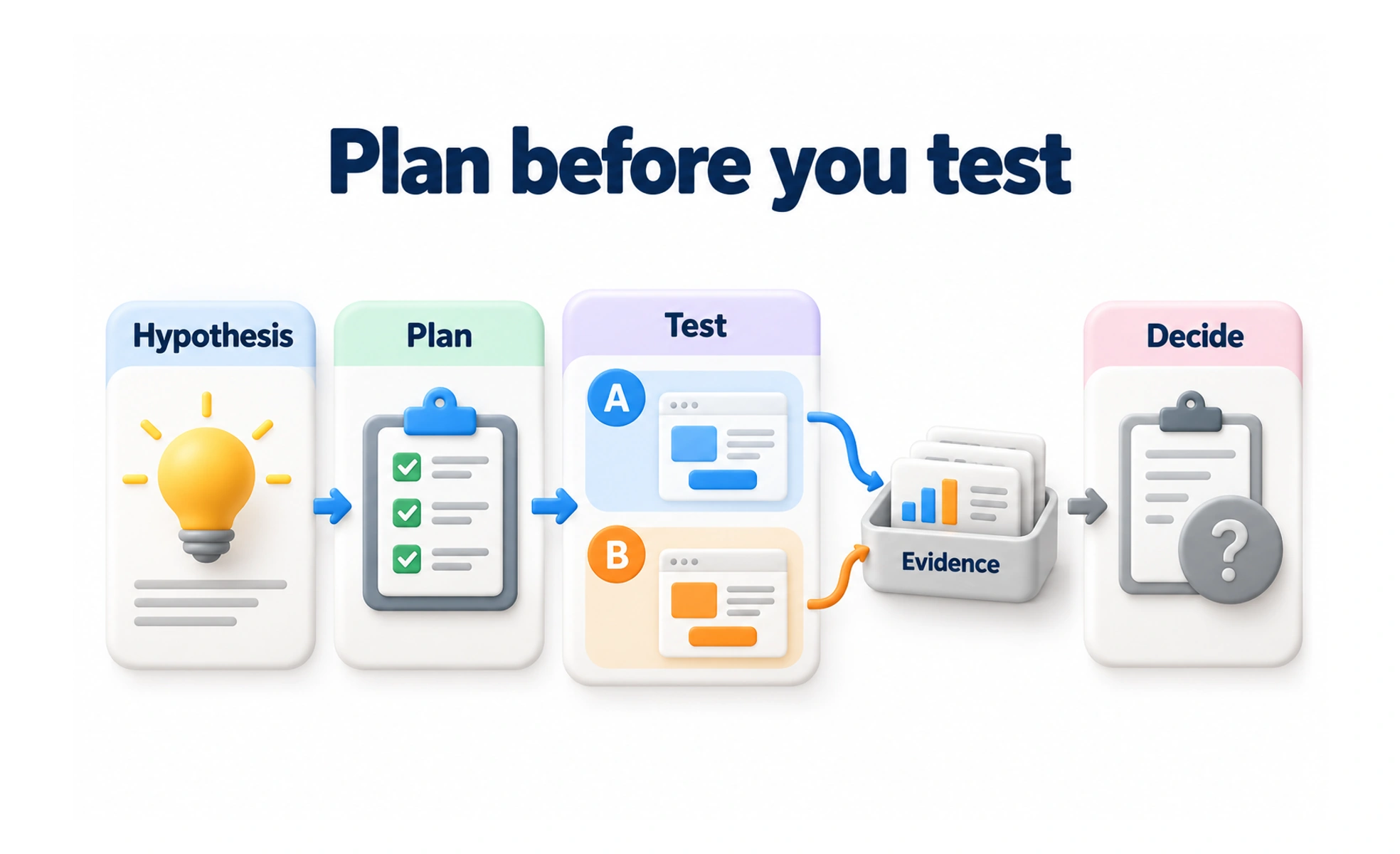
A product experiment asks what changes when one condition is different. An A/B test might compare two versions of a signup form. The result is useful only if the comparison, measurement and interpretation are trustworthy.
Define the claim before the test
State what you expect to change and why. A team might expect clearer delivery information to reduce abandoned checkouts. Choose an outcome that reflects that claim rather than relying on whichever number improves.
Decide the comparison, who is eligible and how they are assigned. In a randomized experiment, assignment should not depend on the person choosing the version they prefer. Consider whether people sharing an account could affect each other.
Plan measurement and safeguards
Check that both versions record outcomes consistently. Agree on a sample and analysis plan appropriate to the decision; small or noisy results can leave substantial uncertainty.
- Choose a primary outcome.
- Monitor important harms or regressions.
- Check the quality of assignment and event data.
- Define stopping and analysis rules before looking for a winner.
Repeatedly checking results and stopping at an appealing moment can distort conclusions.
Example: clearer delivery costs
A store compares its current checkout with a version that shows delivery costs earlier. It measures completed purchases and watches payment errors and cancellations.
If purchases increase but cancellations rise sharply, the team has not found an uncomplicated improvement. It investigates whether the new explanation created a misleading expectation. A positive headline metric does not cancel out a harmful side effect.
Interpret within the tested conditions
Report the estimated effect and uncertainty, not just a winning label. Check that the test ran as intended before attributing a difference to the design.
A result from one audience, season or workflow may not transfer unchanged elsewhere. When the sample is insufficient, an honest inconclusive result is more useful than a confident guess.
Frequently asked questions
Key takeaways
- Define the decision and hypothesis before testing.
- Make assignment and measurement trustworthy.
- Monitor harms alongside the main outcome.
- Report uncertainty and the limits of the tested context.