

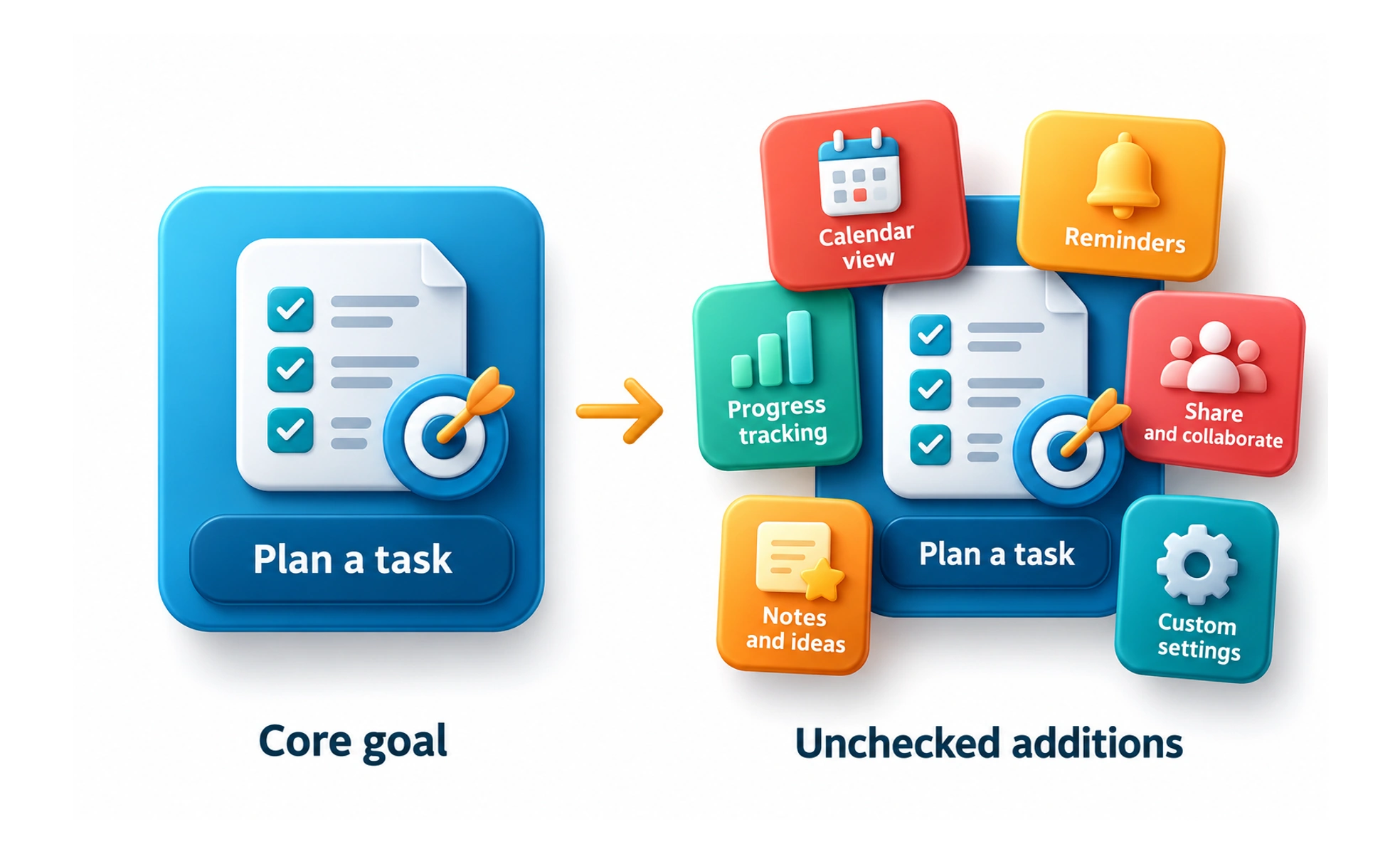
Feature creep is the gradual expansion of a product or project through additions that are not adequately evaluated against its goals and constraints. It can increase complexity, cost, and delivery risk.
Packing one extra item at a time can turn a light travel bag into something difficult to carry. Small product additions can accumulate in the same way.
Recognize accumulated scope
An individual request may seem small, but each addition can introduce design states, dependencies, testing, support, and maintenance. The combined effect is easy to underestimate. Watch for work expanding while the original schedule and resources remain unchanged.
Evaluate additions against the goal
Ask which need an addition addresses, what evidence supports it, and whether it is necessary for the current outcome. Compare it with existing priorities and the cost of delaying other work. Requests deserve consideration without automatically becoming part of the active release.
Make scope changes explicit
A useful new finding can justify changing scope. Record the decision, expected benefit, and effects on time, quality, or other commitments. Keep a clear boundary for what will be delivered now and what needs further investigation, so agreement does not depend on memory.
Example: a profile release
A release intended to make profile editing reliable may attract requests for messaging, job listings, and portfolio analytics. Those ideas may have future value, but adding them all can delay the original improvement. Complete the coherent profile outcome and assess the other opportunities through separate decisions.
Frequently asked questions
Key takeaways
- Small additions can create large combined costs.
- Evaluate requests against evidence and the current goal.
- Record deliberate scope changes and their consequences.
- Keep release boundaries understandable.