

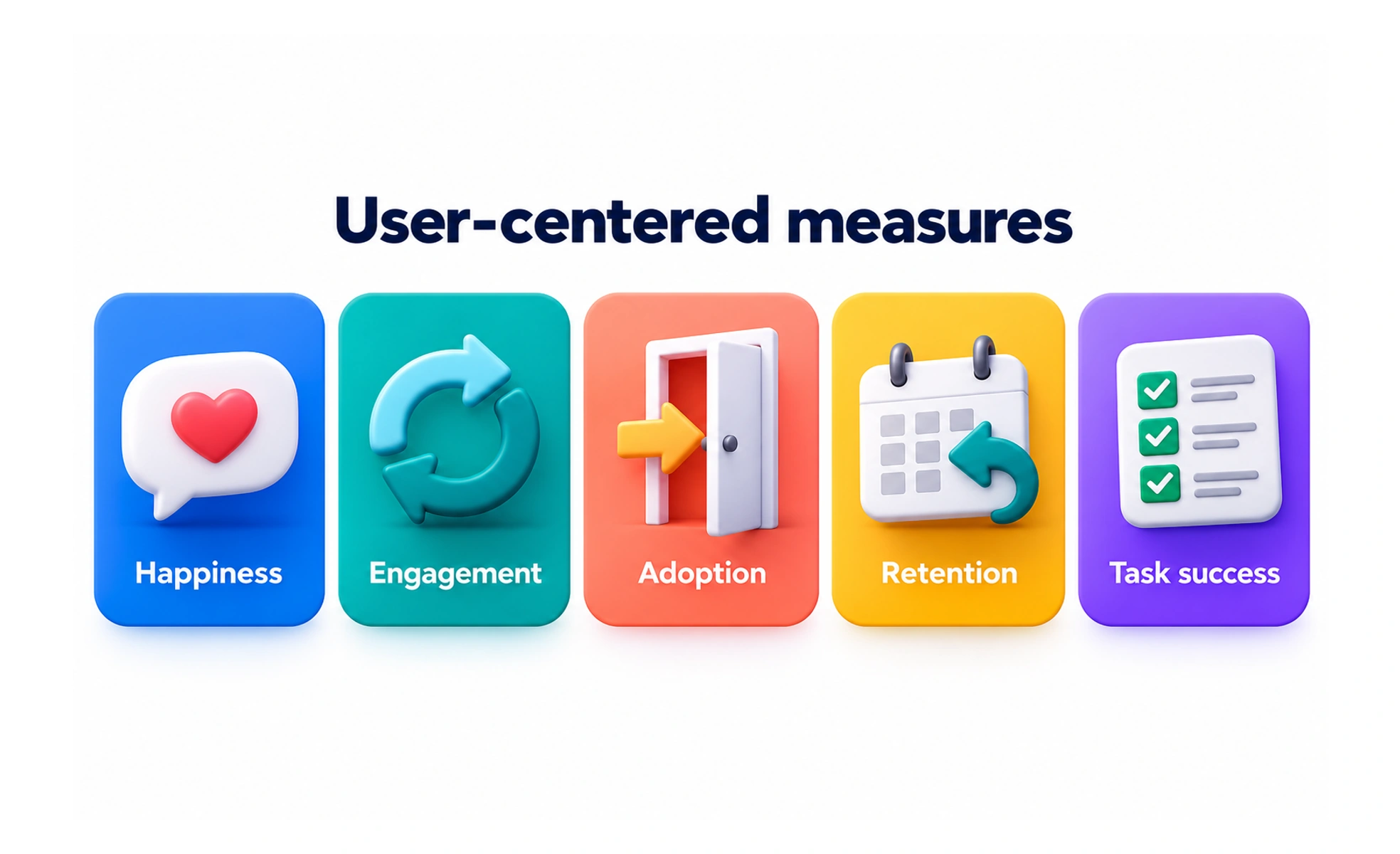
HEART is a framework for choosing user-centered product measures across happiness, engagement, adoption, retention, and task success. It connects product goals with observable signals and practical metrics.
A health check uses several relevant observations rather than a single reading. HEART similarly encourages a broader view of product experience.
Choose relevant experience categories
The five categories offer different perspectives on an experience. A particular project may need only some of them. Select categories based on the question and product context instead of filling every category with a number simply to complete the framework.
Move from goals to signals to metrics
Write the intended user outcome first, identify behavior or feedback that could signal progress, and then define a measurable version. This sequence helps avoid choosing an available dashboard measure and inventing a goal to justify it afterward.
Balance interpretation and collection
For each measure, record its population, time window, method, and limitations. Use data that can be collected responsibly and reliably. Different categories may reveal tradeoffs, such as increased activity accompanied by lower satisfaction or worse task completion.
Example: saved-topic discovery
A team improving discovery might aim for easier retrieval, observe whether people find a followed topic, and measure success in a realistic task. It could also ask about confidence and track later useful returns. More clicks through the topic list would not automatically mean the experience improved.
Frequently asked questions
Key takeaways
- Choose the HEART categories relevant to the decision.
- Begin with goals, then signals, then metrics.
- Define measures and limitations clearly.
- Look for tradeoffs across experience dimensions.