

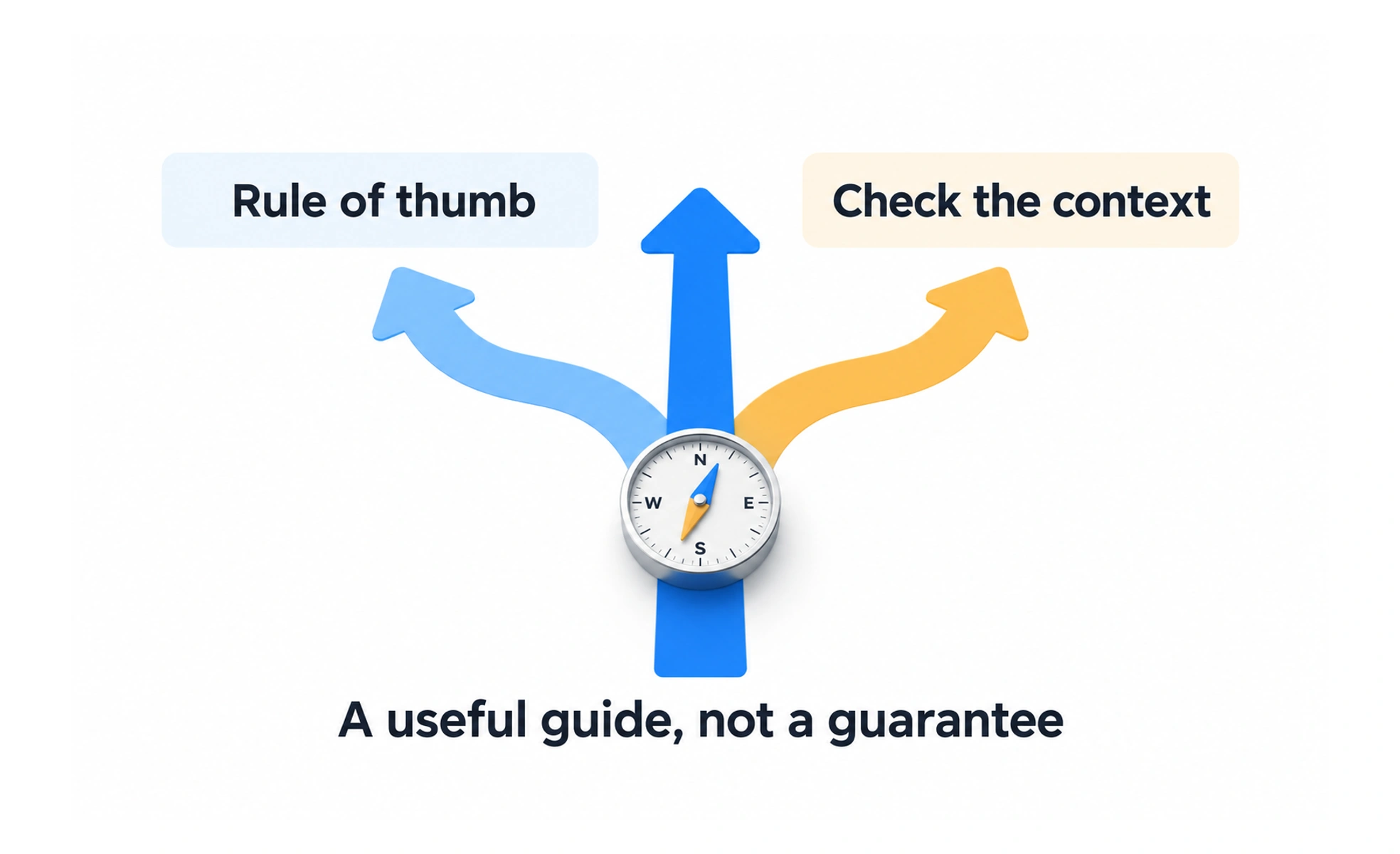
A heuristic can make a decision faster, especially when information or time is limited. It is a starting point rather than a guarantee. A rule that works in a familiar situation can lead to the wrong conclusion when the context changes.
Recognize a shortcut in everyday work
A person may choose a familiar payment method because it has worked before. A designer may start with a familiar navigation pattern because people have encountered it elsewhere.
Neither choice is automatically wrong. The useful question is whether the shortcut fits the task and whether the cost of a mistaken judgment is acceptable. Important decisions may need additional checks.
Distinguish a rule from a requirement
“Use familiar language” is broad guidance. It does not specify the exact label for every audience. A legal or technical requirement, by contrast, may define a condition the product must satisfy.
Avoid presenting a heuristic as an unbreakable law. Explain what it helps you notice, when it may apply and what evidence would justify a different decision.
Use shortcuts with deliberate checks
Heuristics are especially useful for generating questions during a review.
- State the principle you are applying.
- Describe the task and likely consequence.
- Check for conflicting needs or constraints.
- Test important assumptions when the risk warrants it.
The goal is a better judgment, not winning an argument by naming a principle. Keep room to revise the rule’s application when circumstances change.
Frequently asked questions
Key takeaways
- A heuristic supports judgment without guaranteeing a result.
- Check whether the context fits the rule.
- Separate broad principles from binding requirements.
- Use evidence to refine an initial shortcut.