

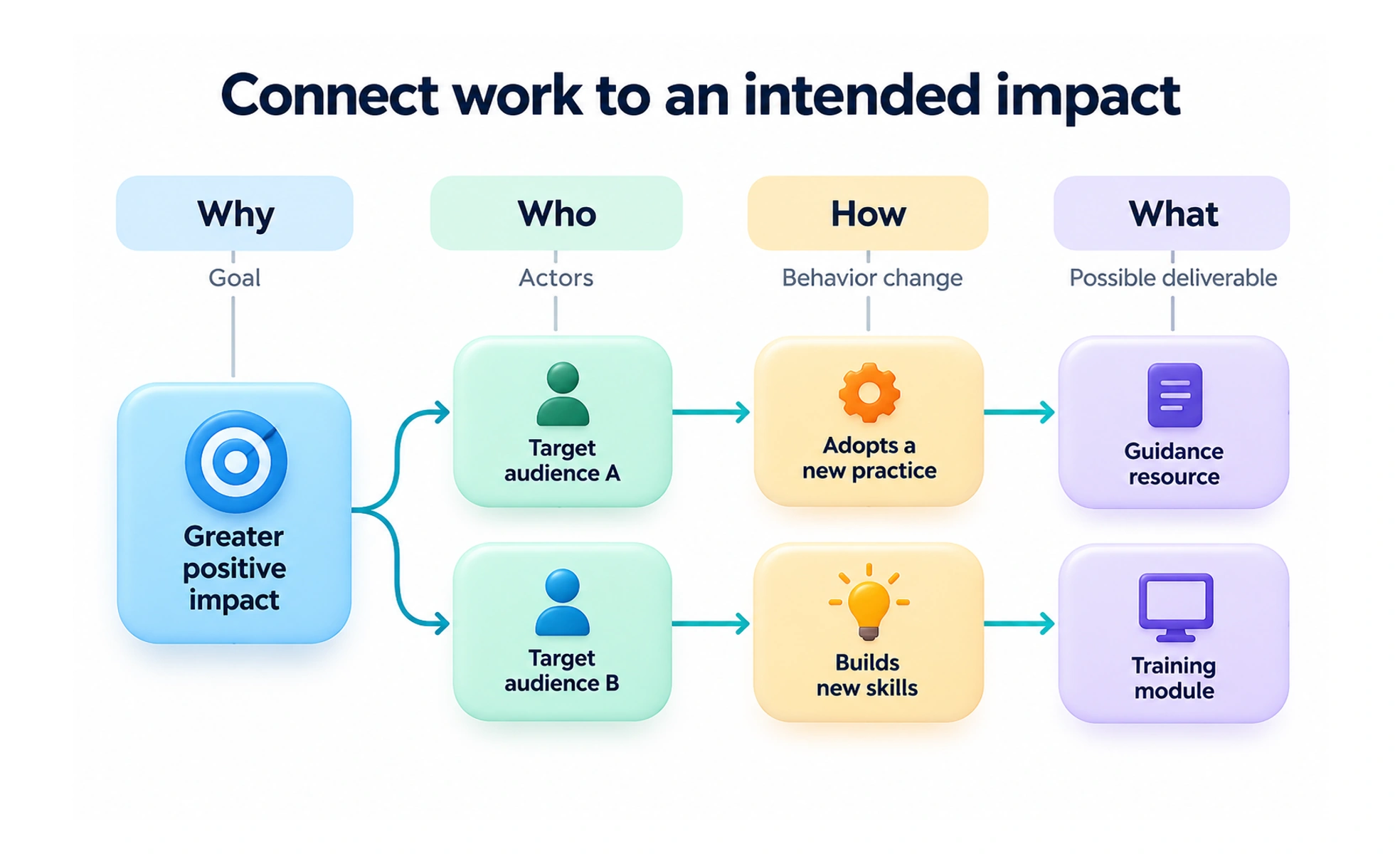
Impact mapping connects a goal with the people who can influence it, the behavior changes needed, and possible deliverables. It helps teams explain why proposed work may contribute to an outcome.
A campaign plan connects a goal to the people who can help and the actions they need to take. Impact mapping makes those connections explicit for product work.
State a useful goal
Choose a goal with a clear purpose and a way to judge progress. Explain why it matters and set an appropriate time horizon. A vague ambition or a predetermined feature gives the team little basis for comparing different ways to achieve a result.
Identify actors and behavior changes
Consider who can help or hinder the goal, including users, customers, staff, or partners. Describe what would need to change in their behavior. Be specific enough that the team can investigate whether a proposed impact is plausible and whether it would actually support the goal.
Explore deliverables as options
List possible product changes, service improvements, or other interventions that could enable the behavior change. Treat the links as assumptions to test. A well-organized map does not establish causality, and a delivered feature may still fail to change behavior.
Example: reducing missed sessions
A learning service may want fewer missed mentoring sessions. Learners might need to reschedule earlier, while mentors may need better visibility of changes. Reminder improvements and clearer rescheduling are possible deliverables, but the team should test which barrier matters before building them all.
Frequently asked questions
Key takeaways
- Connect goals, actors, behavior changes, and deliverables.
- Describe behavior in observable terms.
- Treat causal links as assumptions to investigate.
- Review whether delivered work produced the intended impact.