

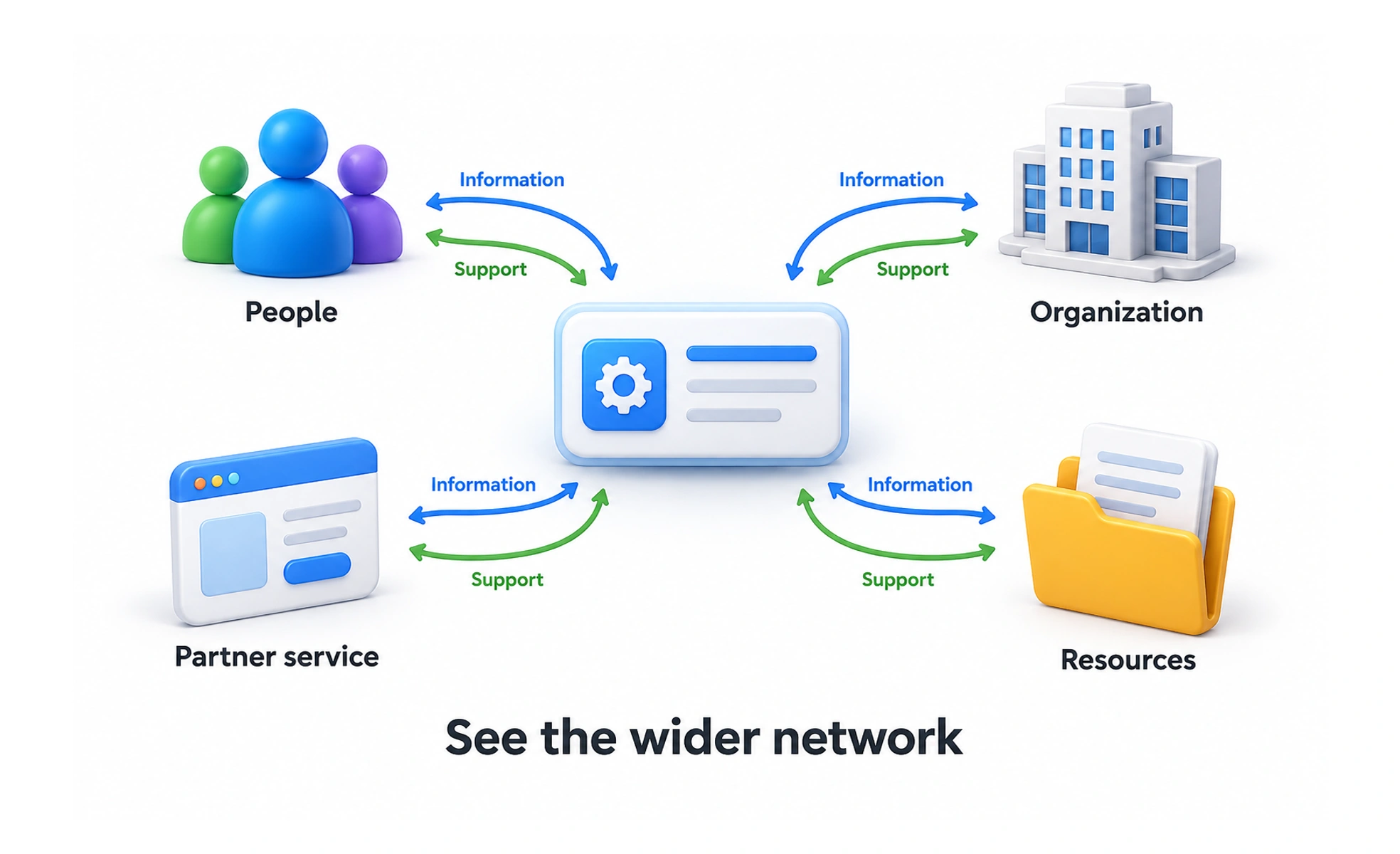
Ecosystem mapping shows the people, organizations, services, and resources involved in a situation. It helps teams understand relationships and dependencies beyond a single product interaction.
A transport map shows more than one station: it reveals connections, transfers, and gaps. An ecosystem map provides a similar view of a product’s wider setting.
Define the question and boundary
Decide what the map should help explain, such as how someone receives care or completes a workplace task. Identify the main person or service and the relevant surroundings. A clear purpose prevents the exercise from becoming an unreadable inventory of every possible stakeholder.
Map meaningful relationships
Show what flows between participants, such as information, money, materials, permissions, or support. Label relationships so the diagram can be understood by someone who did not create it. Different line styles can help, but they need a simple legend and should remain distinguishable without color.
Validate with participants
Build the map from research and review it with people who understand different parts of the situation. Mark assumptions and missing perspectives. A team’s internal view may overlook informal work, excluded groups, or dependencies that become visible only when someone describes a real experience.
Example: booking a clinic visit
A patient may interact with a booking service, clinic staff, a clinician, transport, and an insurer. Mapping those relationships can reveal that missed appointments come from unclear preparation or travel constraints. That changes which interventions are worth exploring beyond a more polished booking form.
Frequently asked questions
Key takeaways
- Start with a specific question and boundary.
- Show important flows between participants.
- Validate relationships with research and diverse perspectives.
- Use the map to find dependencies and overlooked needs.