

A design can work well for one person and exclude another. A phone-only sign-in flow may be convenient for someone with reliable reception but unusable for someone who cannot receive a message. Inclusive design asks who is being left out and what would help them participate.
Look for exclusion in an ordinary task
Choose a specific activity, such as booking an appointment. Consider the equipment, language, confidence and support it assumes. A person may understand the task but be unable to operate a small control or provide a document in the requested format.
Describe the barrier rather than treating the person as the problem. “The form requires a mouse” suggests something a team can change. “Some users struggle” leaves the cause unclear.
Include people in the work
Invite people affected by the barrier to help investigate and review possible changes. Offer suitable ways to take part and ask what support they need. One participant cannot represent everyone with a similar disability or background.
Accessibility standards provide an important baseline. Research can reveal additional barriers in the surrounding service, such as confusing instructions or an unavailable support channel.
Example: joining a live workshop
A workshop service sends essential instructions only through a video. Someone who cannot hear it misses the joining code, while a person on a busy train cannot play the audio.
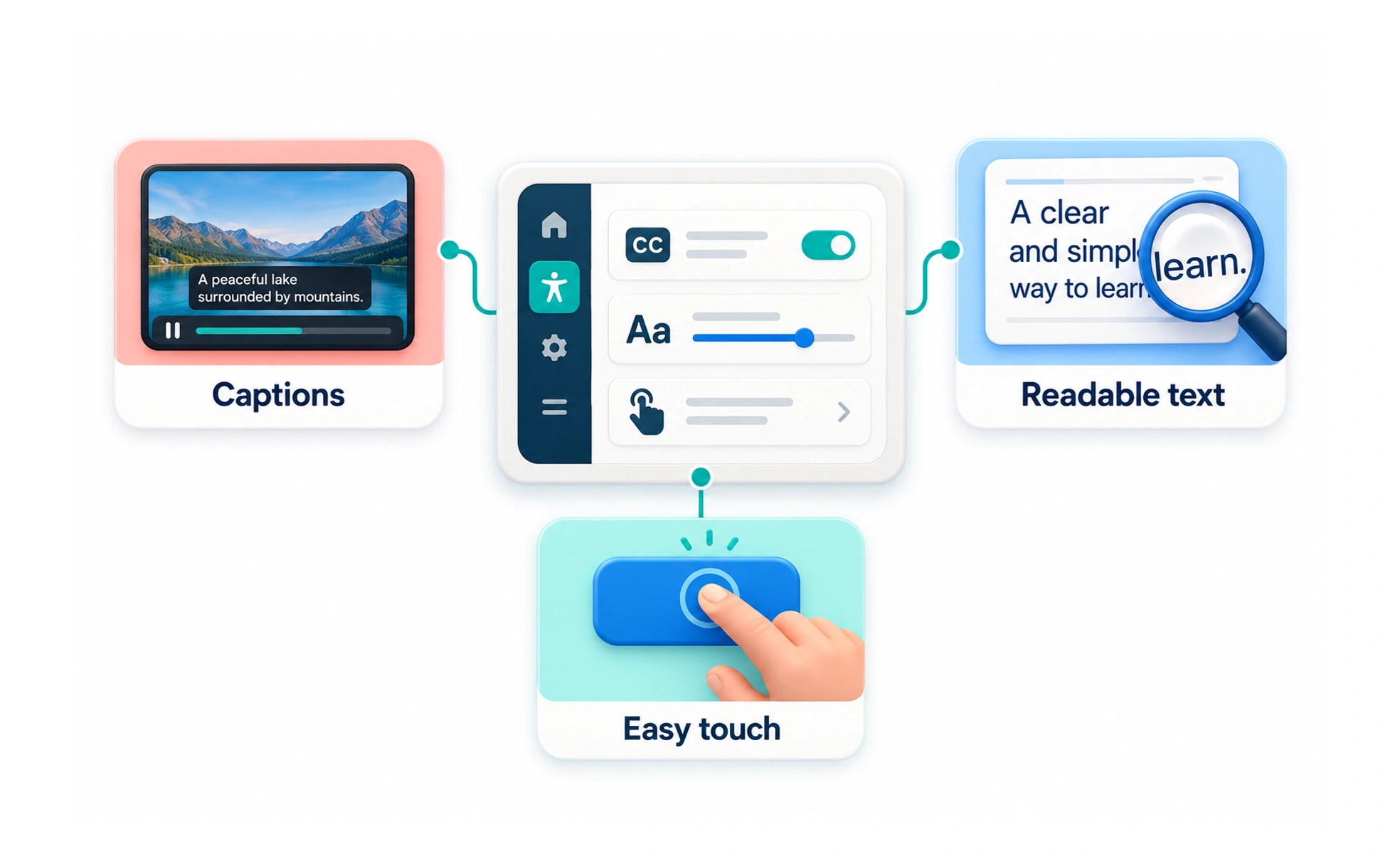
The team adds clear written instructions and captions, then checks whether participants can find and use them. It also offers a way to ask for help. The improvement addresses the task instead of creating a separate, incomplete experience.
Keep checking the outcome
Review more than the intended path through the interface.
- Check assistive technology and keyboard access.
- Test long names, translated text and limited connectivity.
- Include recovery and support when a step fails.
- Record remaining barriers and who will resolve them.
An inclusive process is ongoing. New features, content and service policies can introduce new exclusion.
Frequently asked questions
Key takeaways
- Describe the barrier in a specific task.
- Involve people affected by the design.
- Combine accessibility standards with research.
- Review recovery and support as well as the main flow.