

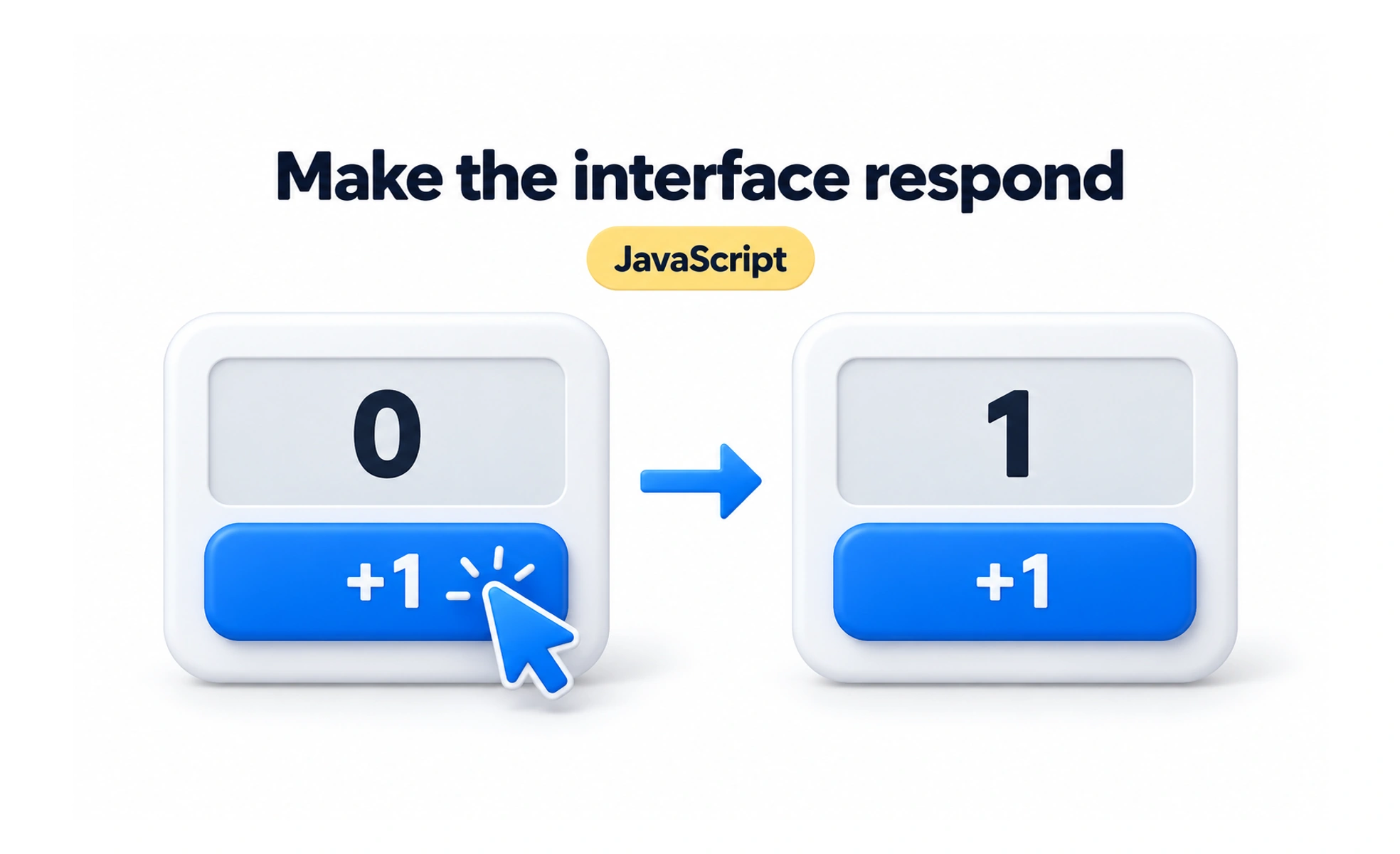
JavaScript is a programming language commonly used to add behavior to web pages and applications. It can run in browsers and on servers, while the surrounding runtime provides capabilities such as the document, network, or file access.
A recipe describes steps, while the kitchen supplies tools and ingredients. JavaScript describes program behavior; a browser or server runtime provides the environment in which that program operates.
Separate the language from its environment
JavaScript defines syntax and behavior such as values, functions, objects, and asynchronous operations. A browser adds APIs for the page and user events; a server runtime offers different capabilities. Knowing this distinction helps explain why code that references a browser document may not run unchanged on a server.
Use it to respond to interaction
In a web interface, JavaScript can validate input, update a view, and request data from a service. Important rules must still be enforced by trusted server logic because browser code can be inspected or bypassed. Keep user feedback tied to actual request outcomes and provide useful behavior when a request fails.
Handle asynchronous work clearly
Network operations and other tasks may finish later or fail. Use promises or async functions to represent that timing, and define loading, success, and error behavior. Consider duplicate submissions, cancellation, and out-of-order responses when the interface can change while work is pending.
Keep code understandable and dependable
Break behavior into clear functions, use meaningful names, and validate data at system boundaries. TypeScript can add static checks but does not remove the need for runtime validation. Test important paths and consider performance, security, accessibility, and the user’s experience on slower devices.
Frequently asked questions
Key takeaways
- JavaScript is a language; browsers and servers provide different runtimes.
- Use client code for interaction, not as the only place for trusted rules.
- Represent asynchronous success and failure states explicitly.
- Readable structure and runtime validation support reliable behavior.