

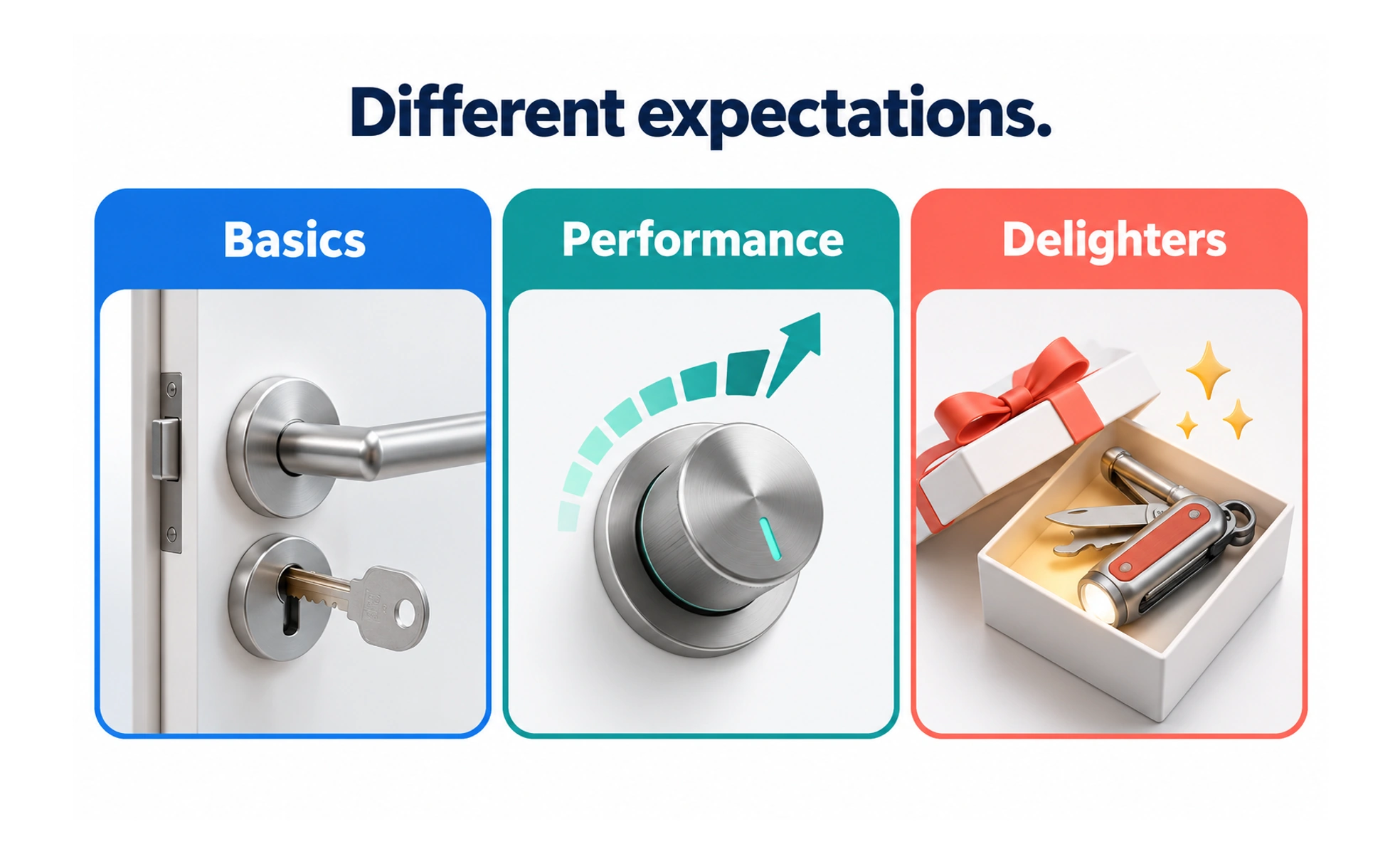
The Kano model explores how product attributes relate to customer satisfaction. It helps teams distinguish expected basics, qualities that improve satisfaction with performance, and unexpected benefits that may delight customers.
A hotel guest expects a clean room, values a shorter wait, and may appreciate an unexpected thoughtful service. These qualities affect satisfaction in different ways.
Recognize different satisfaction patterns
Basic expectations can cause dissatisfaction when absent without creating much extra delight when present. Performance attributes tend to improve satisfaction as they improve. Attractive attributes may please people when present without disappointing them when absent. Customers may also be indifferent to an attribute or prefer its absence.
Ask about presence and absence
A Kano study commonly pairs a question about an attribute being available with one about it being unavailable. The combination helps classify the response. Use a clear, neutral description and avoid bundling several capabilities into one question, which makes the answers hard to interpret.
Interpret by segment and context
Different groups can have different expectations, and those expectations can change as alternatives improve. Look at the distribution of responses rather than forcing every person into one average preference. Check sample quality and investigate confusing or contradictory answers.
Example: a learning application
Learners may expect progress to survive a reload, value faster access to relevant lessons, and appreciate an unexpected review aid. Research should establish how these attributes are perceived. Combine those findings with effort, strategy, and reliability obligations before choosing what to build.
Frequently asked questions
Key takeaways
- Product attributes affect satisfaction in different ways.
- Ask clearly about both presence and absence.
- Study segments and changing expectations.
- Combine satisfaction evidence with other prioritization inputs.