

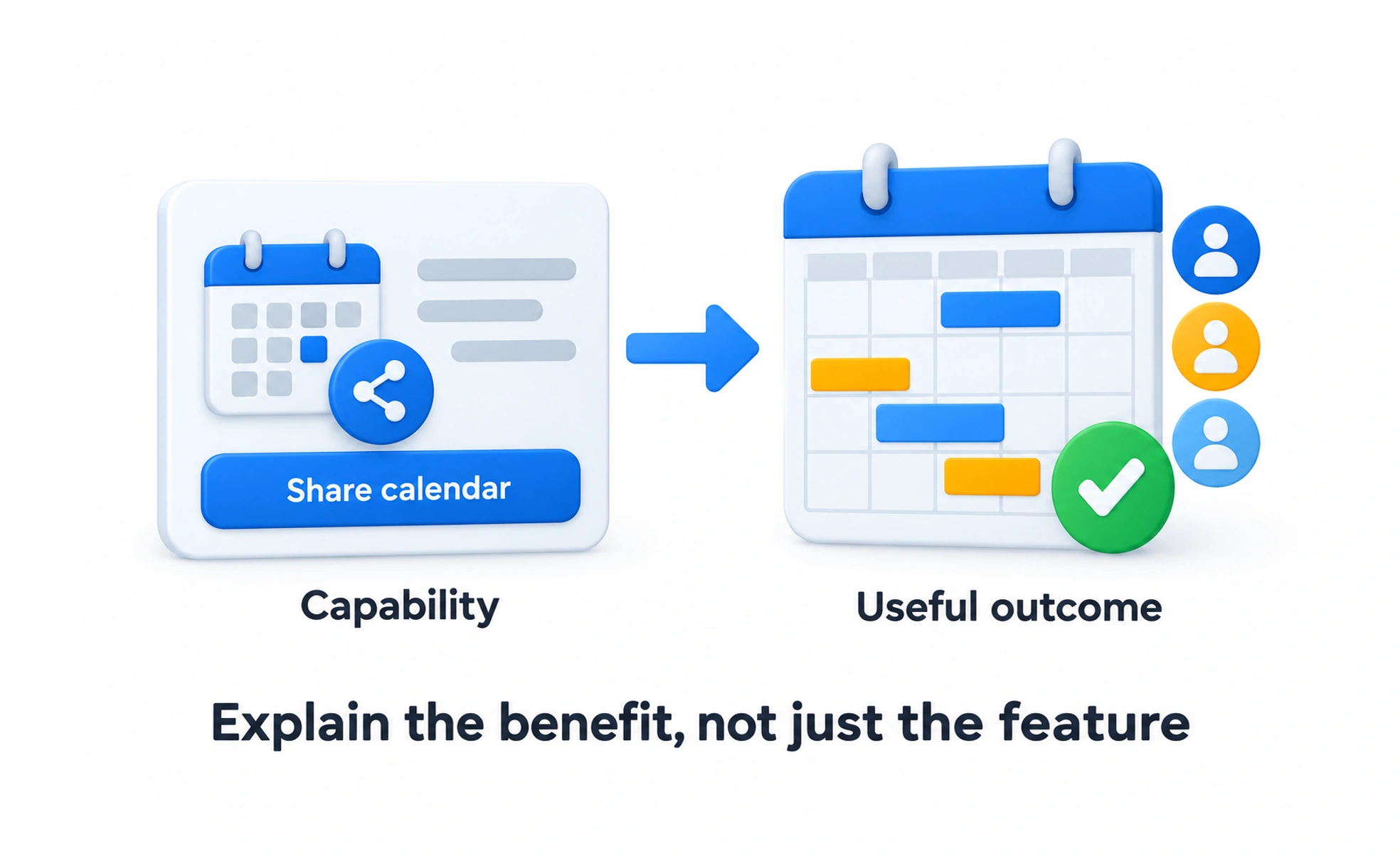
Feature marketing explains a product capability in terms of who it helps and what benefit it provides. It supports discovery and appropriate adoption rather than treating a new release as valuable by default.
A demonstration of a new kitchen tool is useful when it shows a relevant job becoming easier. Listing its parts without that context leaves the benefit unclear.
Start with the user’s situation
Explain the need the capability addresses and identify who is likely to benefit. Connect concrete functionality with a practical outcome. Avoid describing every new control as essential for everyone or assuming customers will infer the value from technical release notes.
Show accurate availability and use
Demonstrate the actual behavior and explain important eligibility, pricing, or platform conditions. Distinguish a preview from a generally available feature. Screenshots, examples, and claims should reflect what recipients can use when they follow the message.
Choose timely, appropriate channels
Use release notes, contextual guidance, or opted-in notifications where the information is relevant. Do not interrupt every task with every announcement. Respect preferences and avoid repeated messages to people who cannot access or do not need the capability.
Example: saved learning collections
An announcement can show how learners organize material for a project, with a direct route to try the capability. Measure whether eligible people reach a useful result and understand its limits. Opening the announcement alone does not establish successful adoption or continuing value.
Frequently asked questions
Key takeaways
- Explain the audience, need, and concrete benefit.
- Represent real availability and conditions.
- Use relevant channels and respect preferences.
- Measure useful adoption beyond message engagement.