

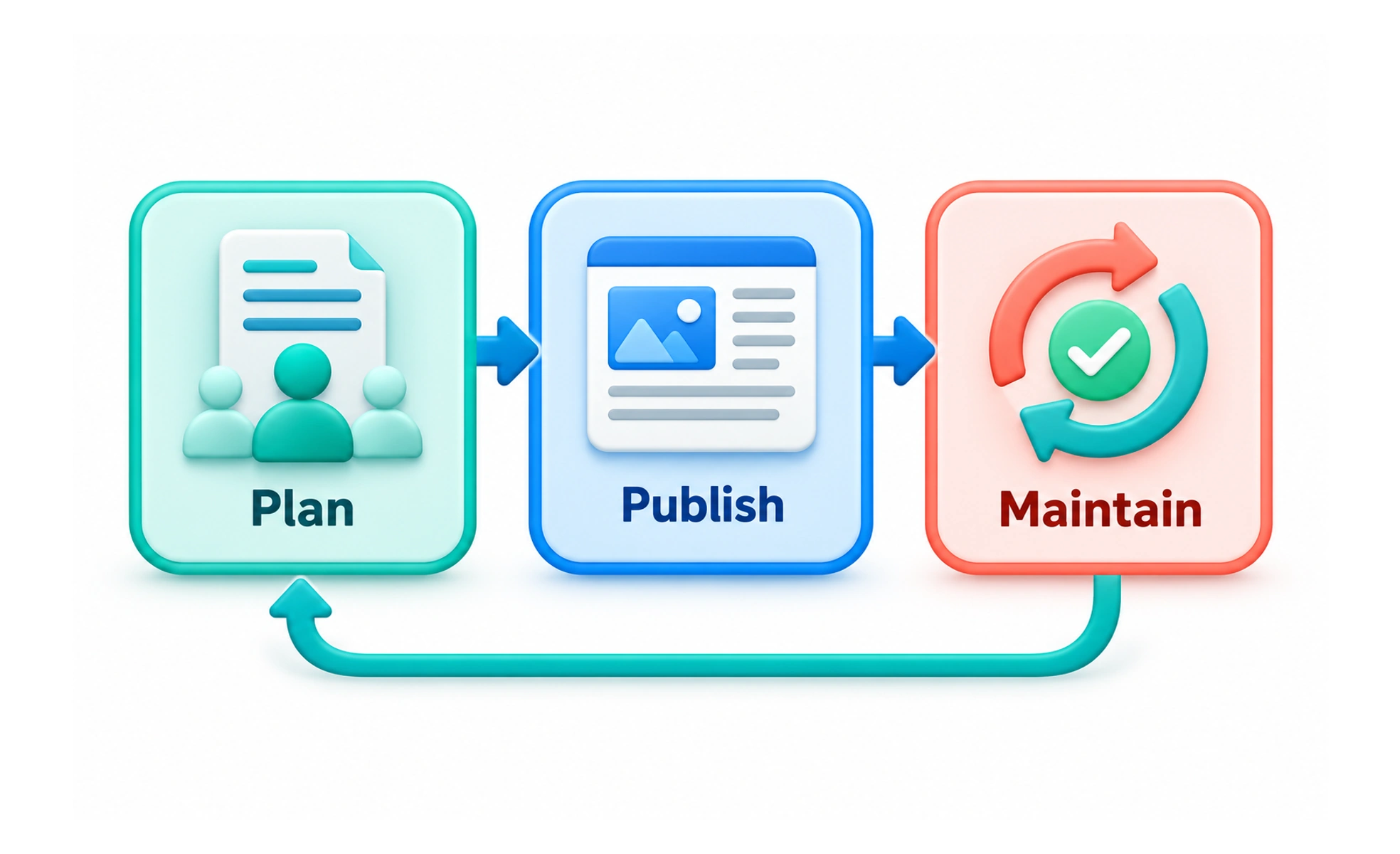
Writing an article is one content task. Deciding whether the article should exist, how people will find it and who keeps it accurate are strategy questions. A useful strategy connects content decisions with user needs and the product’s purpose.
Choose what deserves to exist
List the questions and tasks the product should support. Then examine the existing content: what answers those needs, what repeats another page and what is outdated or missing?
A larger catalog is not automatically better. Twenty carefully explained topics can be more useful than hundreds of empty titles. Keep the scope manageable enough that the team can stand behind the material it publishes.
Plan structure and ownership
Decide which content types are needed and what each must contain. A glossary entry, course lesson and policy page serve different purposes, even if they share a writing style.
- Define the audience and purpose of each type.
- Give content a clear owner and review process.
- Plan naming, navigation and related-content relationships.
- Decide how material is updated or retired.
These decisions help content stay coherent after the initial launch.
Example: building a learning glossary
The team groups related topics into writing batches and checks overlap before drafting. Each published entry explains the concept, gives an example and addresses common questions. A database stores the approved content, while a review record explains where it came from.
This is more sustainable than adding a new title every time someone encounters a term and hoping to fill the page later.
Measure usefulness, not only output
Look for evidence that people find the right material and understand what to do next. Review unclear searches, repeated support questions and pages that fail to answer their stated question.
Page views can reveal demand, but cannot by themselves prove that the content helped. Combine usage with review and feedback, then revise the material or its place in the product.
Frequently asked questions
Key takeaways
- Connect content decisions to audience needs and product purpose.
- Define what belongs in the catalog and what does not.
- Assign ownership, review and retirement responsibilities.
- Use evidence of usefulness rather than publication volume alone.