

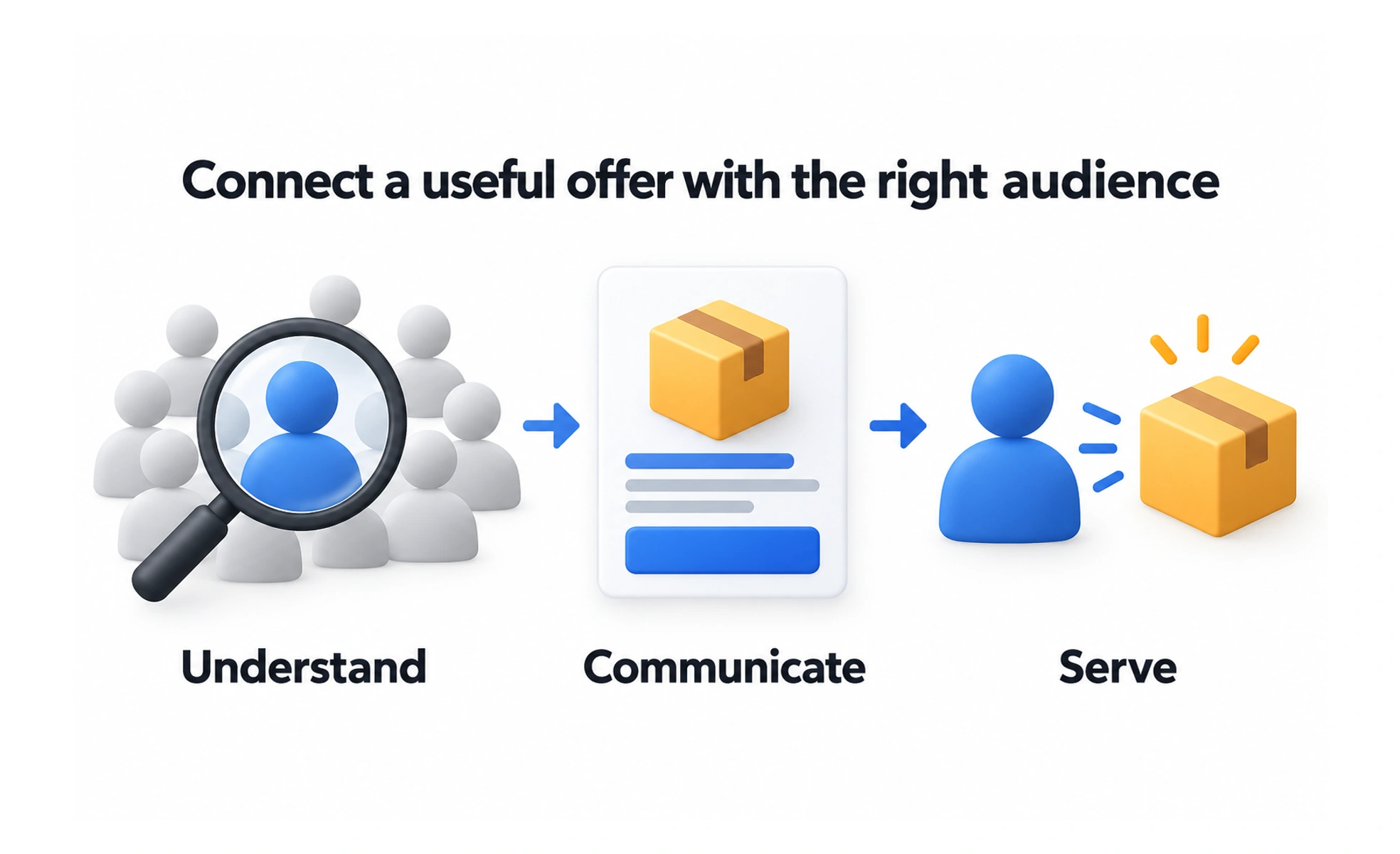
Marketing is the work of understanding an audience and helping them discover, evaluate, and choose an offering. It connects what an organization provides with the needs of people it can genuinely serve.
A useful sign helps the right visitor find a place and understand what is offered. Marketing does this across research, messages, channels, and the experience after someone responds.
Start with people and a real need
Good marketing begins by learning who may benefit, what they are trying to do, and what alternatives they have. Research and direct feedback help a team avoid building a campaign around assumptions. Audience segments are useful when they reflect meaningful differences, not when they reduce people to stereotypes.
Make the promise clear and truthful
Explain the value in language people can understand, and support important claims with evidence. The message, price, limitations, and experience should agree. A promise that attracts attention but cannot be fulfilled can damage trust and create work for support teams.
Connect channels to the whole experience
A person may meet an offering through search, a recommendation, an email, or an event. Each touchpoint should set an accurate expectation for the next step. Check that landing pages, sign-up flows, and follow-up messages are relevant, accessible, and respectful of consent.
Measure useful outcomes
Reach and clicks can show whether a message was seen, but they do not explain whether it helped. Pair channel measures with outcomes such as qualified interest, successful use, retention, or customer feedback. Interpret results in context and avoid treating correlation as proof that a campaign caused a change.
Frequently asked questions
Key takeaways
- Understand the audience and need before choosing a message.
- Make claims clear, supportable, and consistent with the experience.
- Connect each channel to a useful next step.
- Measure value and outcomes alongside attention.