

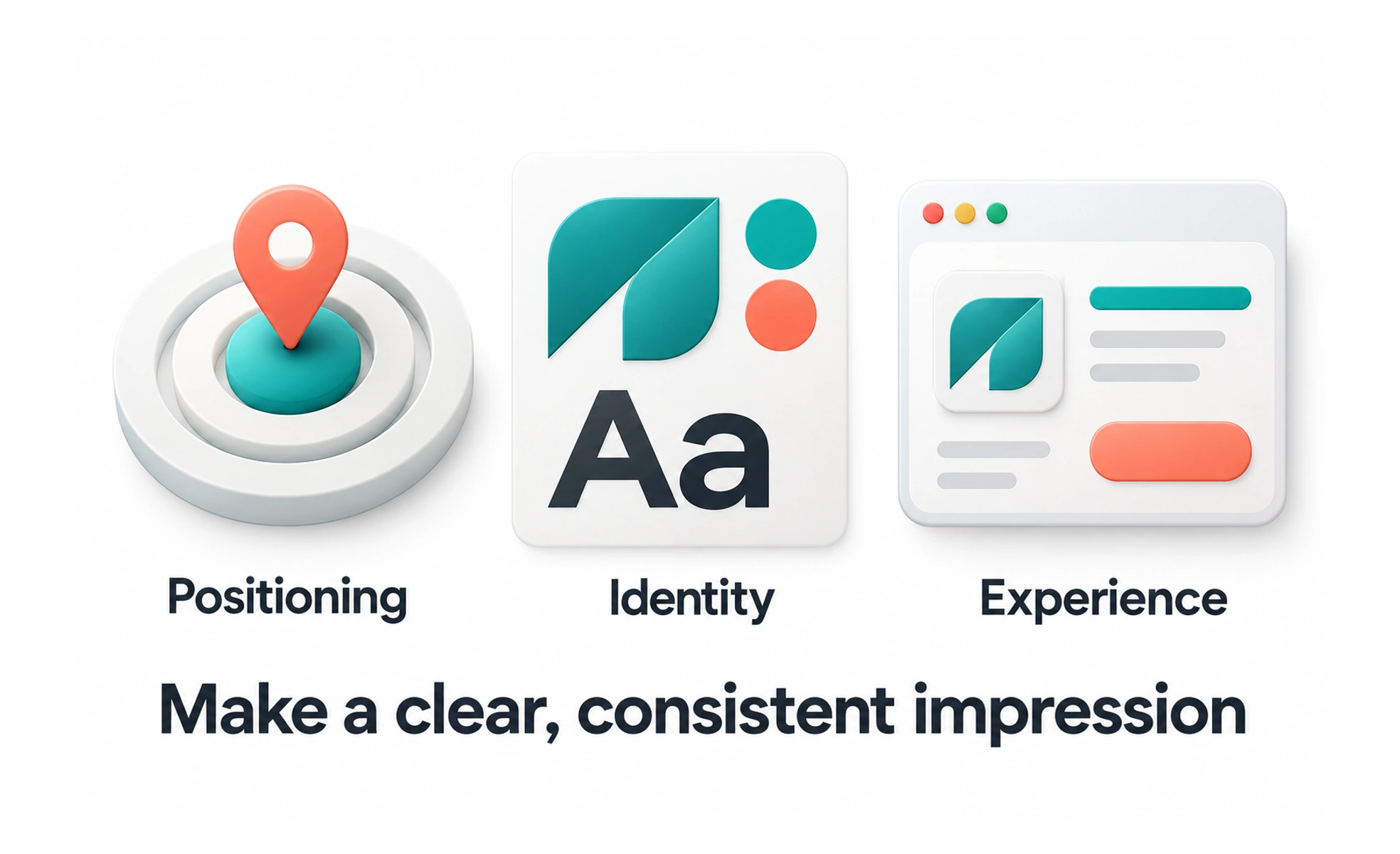
Branding shapes how a product or organization is identified and understood. It connects positioning, visual identity, language, and the experience people receive over time.
A person becomes known through both how they introduce themselves and how they behave repeatedly. A product’s identity and reputation develop through a similar combination.
Define the intended meaning
Clarify the audience, the value offered, and the qualities the organization aims to demonstrate. Ground those choices in real capabilities and customer needs. Generic claims about being innovative or friendly provide little direction unless teams can explain how those qualities appear in decisions.
Build a coherent identity system
Use names, logos, color, typography, imagery, and tone in related ways. Document recurring rules and maintain shared assets. Consistency helps recognition, but applying the same treatment mechanically should not reduce readability or make a critical warning feel like promotion.
Deliver the promise through behavior
Reliability, support, billing, privacy, and accessibility affect what people believe about the product. A calm visual style cannot compensate for confusing charges or lost work. Review the complete experience to find gaps between what the brand says and what the service does.
Example: a learning platform
A platform promising practical, trustworthy learning can express that through clear lessons, accurate progress, honest content claims, and helpful recovery. Its visual identity should support those qualities. Replacing a logo alone does not establish a distinctive product if the surrounding voice and experience still contradict the promise.
Frequently asked questions
Key takeaways
- Connect identity to a specific audience and credible value.
- Use shared visual and verbal rules.
- Make product behavior support the promise.
- Review the complete relationship, not only marketing surfaces.