

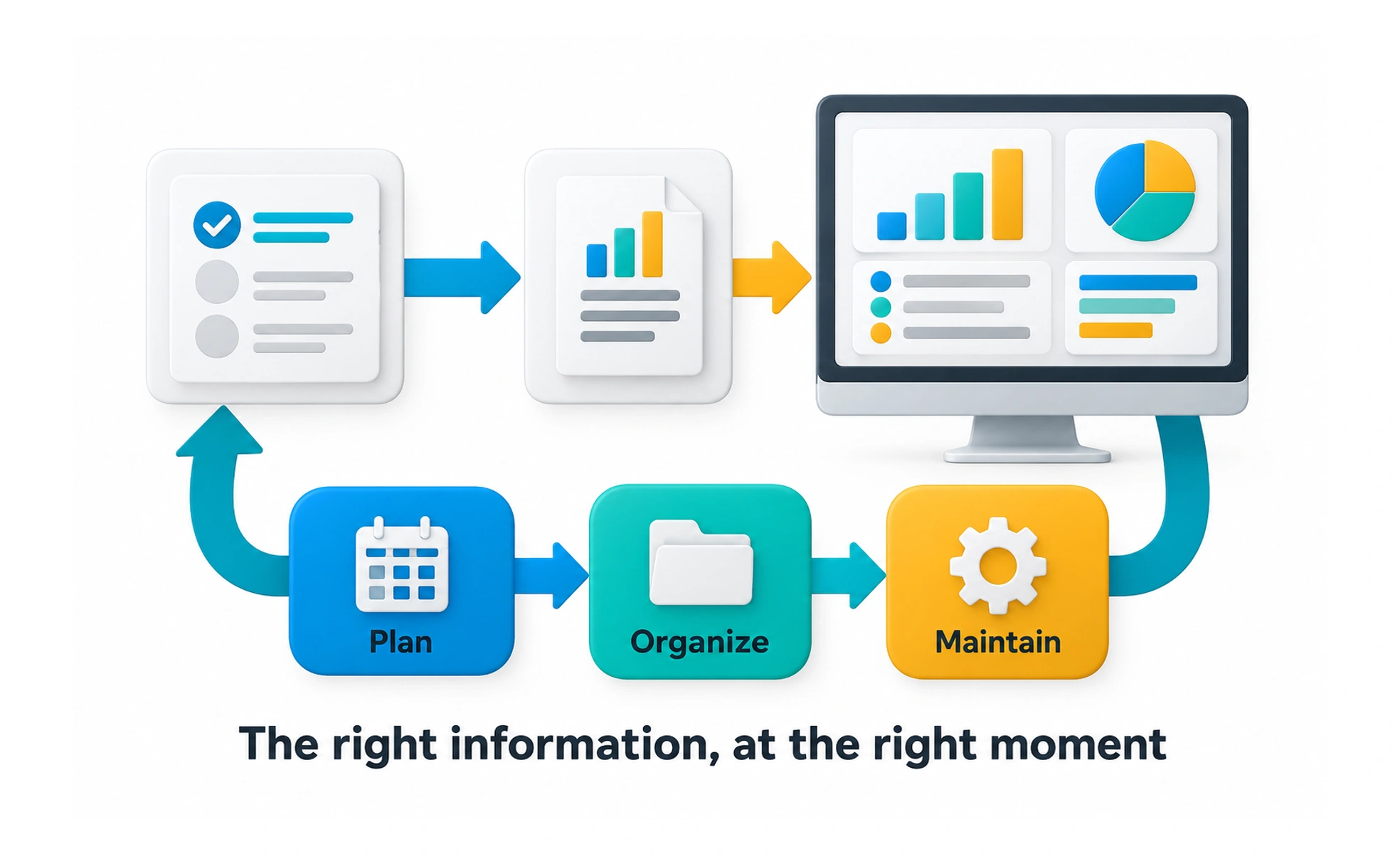
Content design shapes information around what people need to understand or do. Content strategy defines how that information is planned, organized, governed, and maintained over time.
A useful guidebook selects the right information, puts it in a helpful order, and stays accurate as places change. Product content needs the same ongoing care.
Begin with the task and audience
Find out what people need to know, when they need it, and which words they use. Decide whether the best response is text, a structured choice, a diagram, or a change to the interaction itself. More explanation is not always the answer to a confusing design.
Create a clear structure
Use descriptive headings, a logical order, and concise language. Keep essential instructions close to the action they support. Avoid making people search a long page for a condition that changes the meaning of a button or commitment.
Plan ownership and maintenance
Define which source owns a piece of information, who reviews it, and when it needs updating. Reuse structured content where the same fact appears in several places. Duplicated rules can drift and make the product contradict itself across onboarding, help, and account settings.
Example: a glossary
A useful glossary article explains the concept, shows a practical example, and helps readers distinguish related ideas. Its title, summary, and links should be consistent with the content. A published label on an empty record does not serve the reader, regardless of the catalog’s size.
Frequently asked questions
Key takeaways
- Design information for a real task and audience.
- Choose structure and format deliberately.
- Keep essential conditions near relevant actions.
- Give content clear sources, owners, and review needs.