

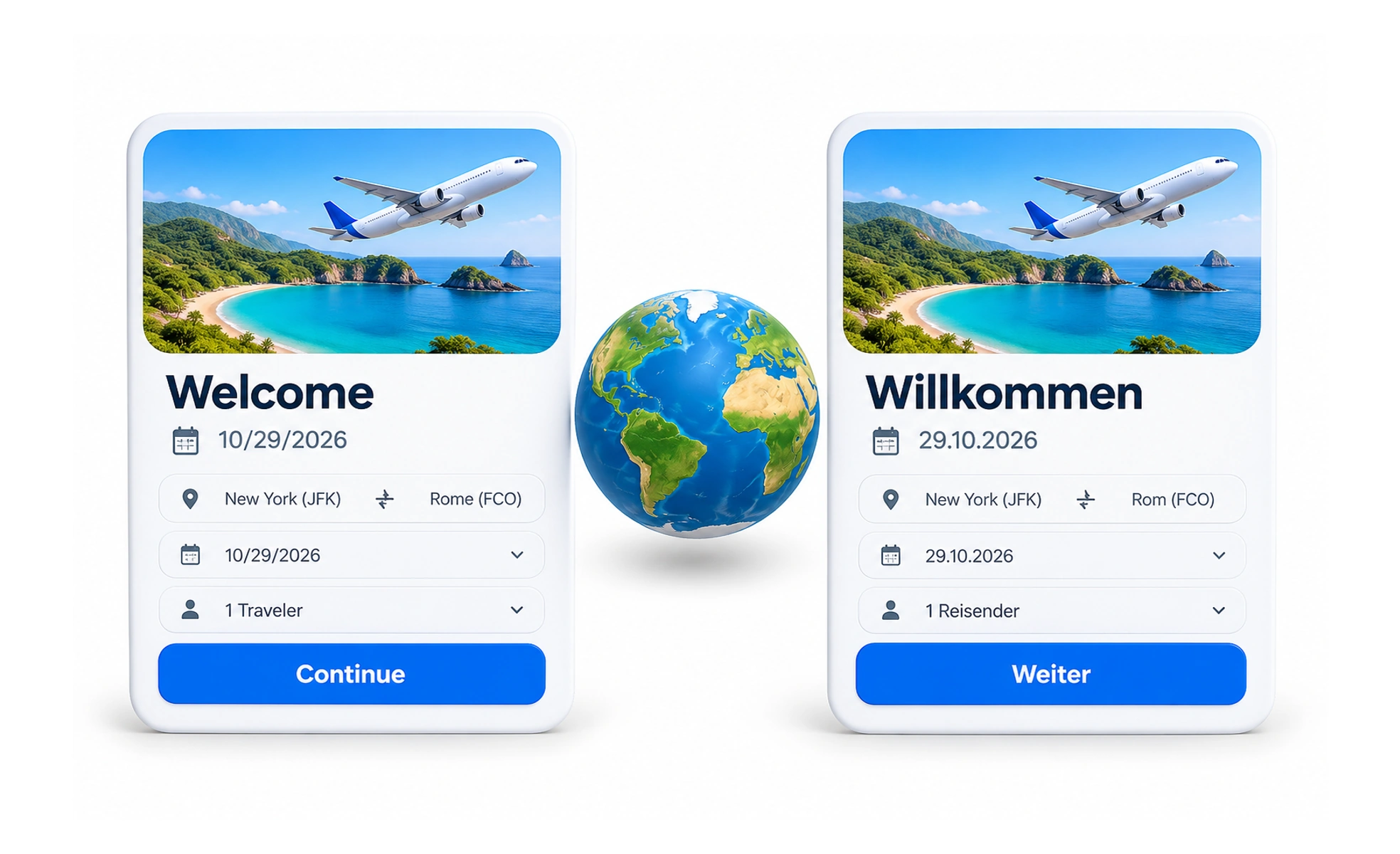
Translation changes words between languages. Localization can also affect formats, examples, layouts and product behavior. A checkout may have translated labels yet still reject the address or payment method that customers in the target region need.
Look beyond translated sentences
Check the assumptions built into the experience. Dates, numbers, currencies and address fields may need different treatment. Names do not follow one universal structure, and text may read in a different direction.
Internationalization is the preparation that makes these adaptations possible. Localization applies them to a particular locale. Preparing early usually makes later changes less disruptive.
Give words enough context
A translator needs to know what a string means and where it appears. “Open” could describe an action or a status. A screenshot, description and relevant constraints help avoid the wrong interpretation.
Avoid building sentences by joining small translated fragments. Grammar and word order can change. Keep meaningful messages together, and provide the values and context needed to translate them naturally.
Example: booking an appointment
A booking service shows available times in a clear time zone and formats dates for the intended audience. It also checks whether local phone numbers and addresses are accepted.
When a customer changes language, the product keeps their selected appointment and entered information where possible. Translating the interface should not accidentally restart the task or change the meaning of the chosen time.
Review the localized experience
Use realistic translated text rather than assuming it will fit the original buttons. Review longer labels, different scripts, sorting and content embedded in images. Check the result with people who understand the locale.
Some choices need specialist advice, including local legal or payment requirements. A translated interface alone does not prove the whole service is ready for a market.
Frequently asked questions
Key takeaways
- Localization adapts the experience, not only the words.
- Prepare for different formats, scripts and content lengths.
- Give translators complete messages and meaningful context.
- Review the actual localized task with appropriate expertise.