

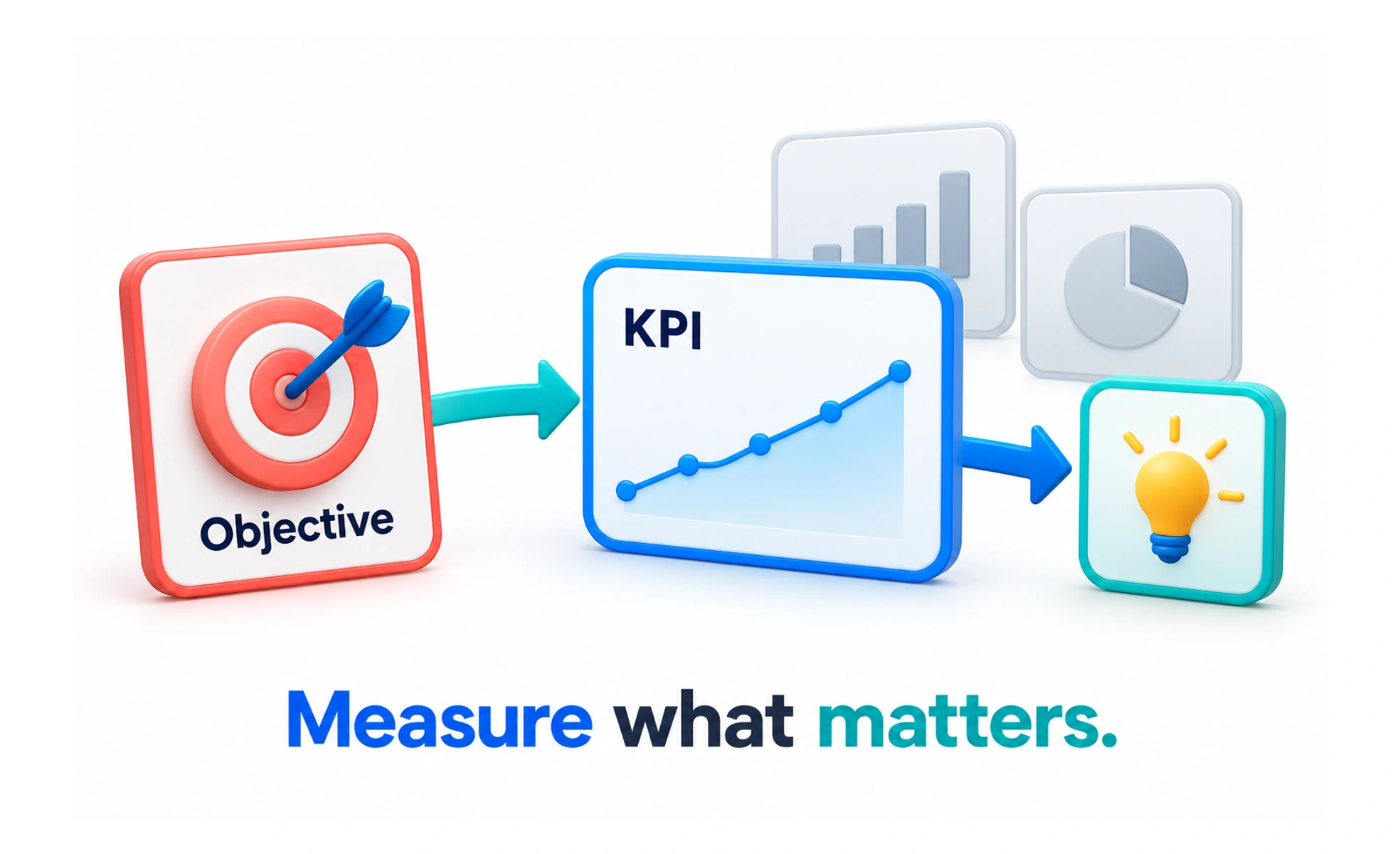
A key performance indicator is a selected measure used to judge progress toward an important objective. Its usefulness depends on a clear definition, a relevant goal, and a response when the signal changes.
A pilot has many instruments, but a few are especially important for the current phase of flight. A KPI identifies similarly important signals for a particular objective.
Choose what is key
Start with a meaningful objective and select a small number of measures that indicate progress. A metric becomes a KPI because of its role in a decision, not because it appears on a dashboard. Too many indicators can make every activity seem equally important.
Give the indicator a contract
Document its calculation, eligible population, time period, source, and owner. Establish a baseline and a justified target or interpretation range when appropriate. Definitions should remain stable enough to compare results, with changes clearly recorded.
Use leading signals and safeguards
An outcome may take time to appear, so an earlier signal can help guide action. Check that it has a plausible relationship to the objective. Pair targets with safeguards so people do not improve the number by damaging quality, accessibility, or customer trust.
Example: first useful learning
A team aiming to improve early learner value might choose the share of new learners completing an appropriate first lesson within a defined period. It should also check errors and reported difficulty. Increasing completion through misleading prompts would improve the number without satisfying the intended goal.
Frequently asked questions
Key takeaways
- Connect each KPI to an important objective.
- Keep the set focused and definitions explicit.
- Assign ownership and a useful review cadence.
- Use safeguards against harmful optimization.