

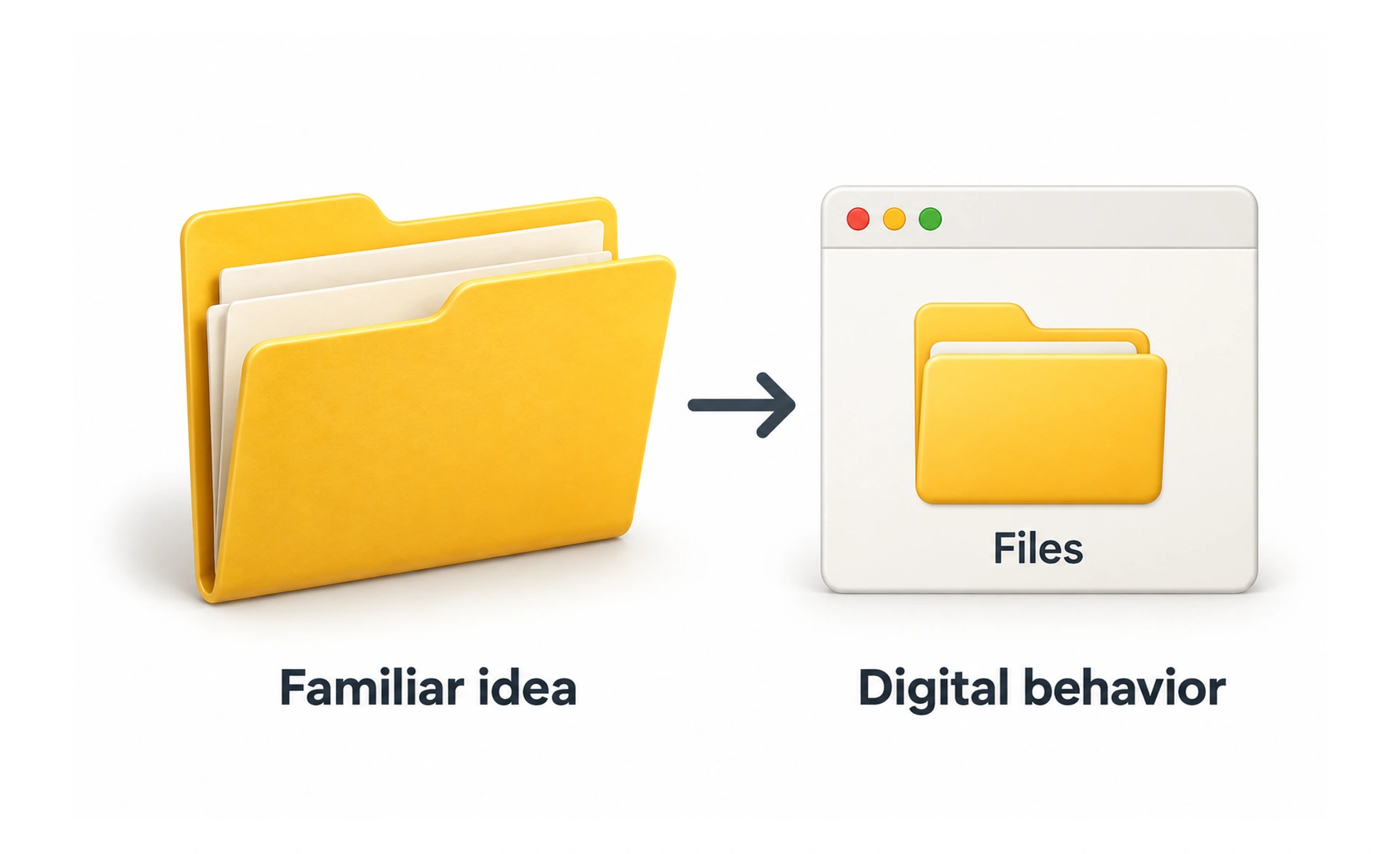
Users do not know the underlying database architecture or source code of your application. Instead, they construct an internal simplified model of how things function. When the interface contradicts their mental model, usability breakdowns occur.
Think of it like this. Driving a car relies on a mental model: you turn the steering wheel expecting the front wheels to turn, even if you know nothing about power steering pumps.
How it works
Mental models are built through years of interacting with physical objects, operating systems, and other software. Designers succeed when the visible system model matches the user's intuitive expectations.
How to fix it
When user testing reveals a mismatch between how users expect a feature to work and how it actually behaves, change the interface metaphor to match the user's mental model rather than writing long instruction manuals.
Common mistakes
Exposing internal database structures and engineering limitations directly in the UI instead of translating them into terms that match the user's worldview.
Frequently asked questions
Key takeaways
- Users base actions on their mental model, not on how the code actually runs.
- Mismatches between the system model and mental model generate friction.
- User research and interviews are the best tools to map out mental models.