

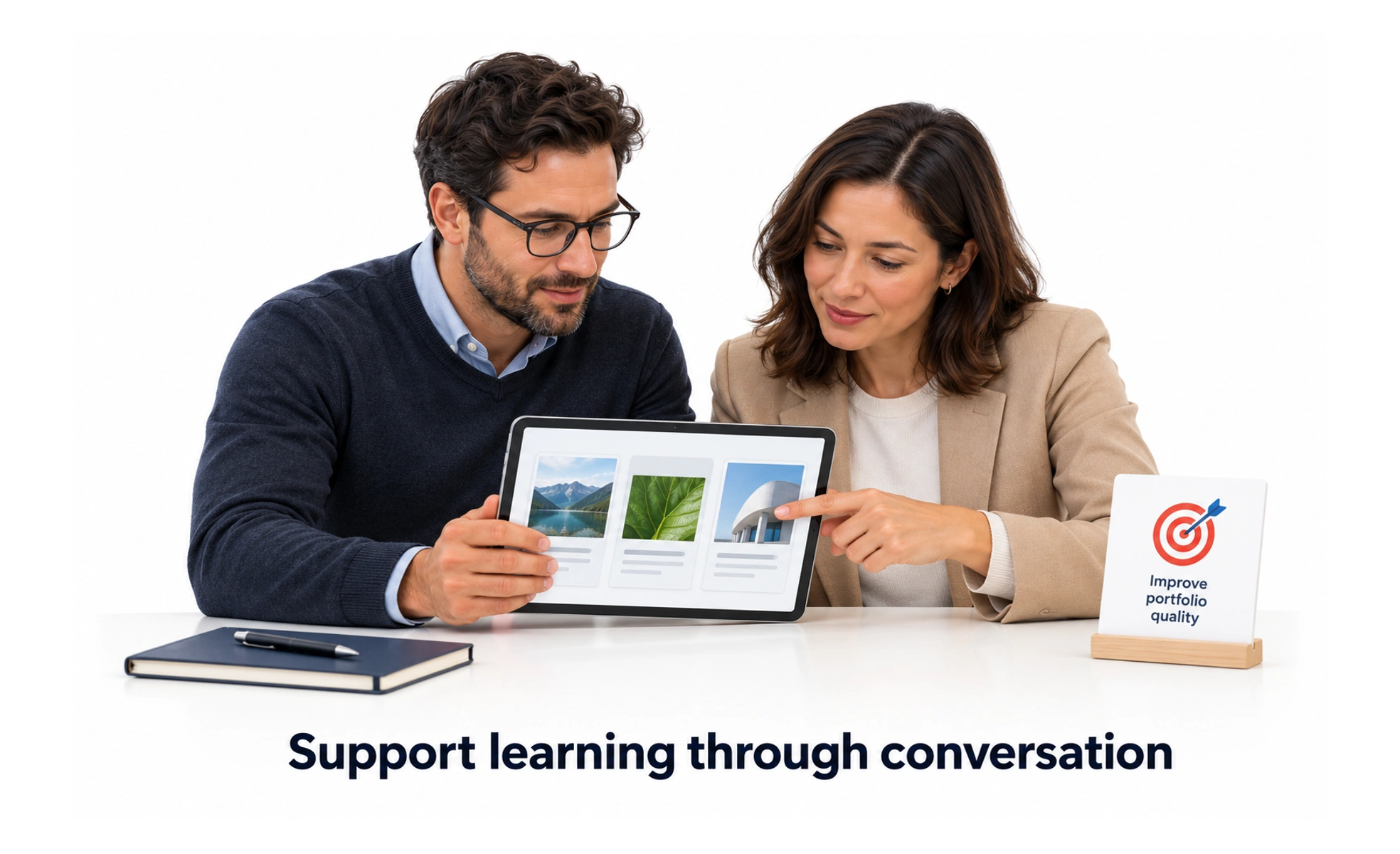
Mentorship is a relationship in which a more experienced person supports another person’s learning, reflection, and development. It works best when goals, boundaries, and expectations are discussed by both people.
A hiking companion can share route knowledge and help someone decide what to do at a fork, while the learner still chooses and walks their own path.
Agree on purpose and expectations
Discuss what the learner hopes to develop, how often to meet, and what each person can offer. Goals may change as the relationship progresses. Be clear about confidentiality and its limits, and avoid implying that a mentor can guarantee promotion, employment, or a particular outcome.
Support thinking rather than taking control
A mentor can share experience, ask questions, suggest resources, and help examine options. The learner brings their own context and makes their own decisions. Good guidance leaves room for different approaches rather than expecting someone to copy a mentor’s career or working style.
Give feedback with care
Make observations specific to a task and explain their effect. Separate evidence from assumptions about personality or ability. Invite the learner’s perspective and check whether feedback is useful. A mentoring conversation should support psychological safety while still allowing honest discussion of challenges.
Review and close the relationship well
Periodically ask what is helping, what should change, and whether the goals remain relevant. Either person can pause or end the arrangement respectfully. Recognize power differences and avoid conflicts of interest, especially when the mentor also evaluates, hires, or controls access to opportunities.
Frequently asked questions
Key takeaways
- Agree on goals, cadence, and boundaries.
- Help the learner reason through choices instead of directing their life.
- Make feedback specific, evidence-based, and respectful.
- Revisit whether the relationship is useful and safe.