

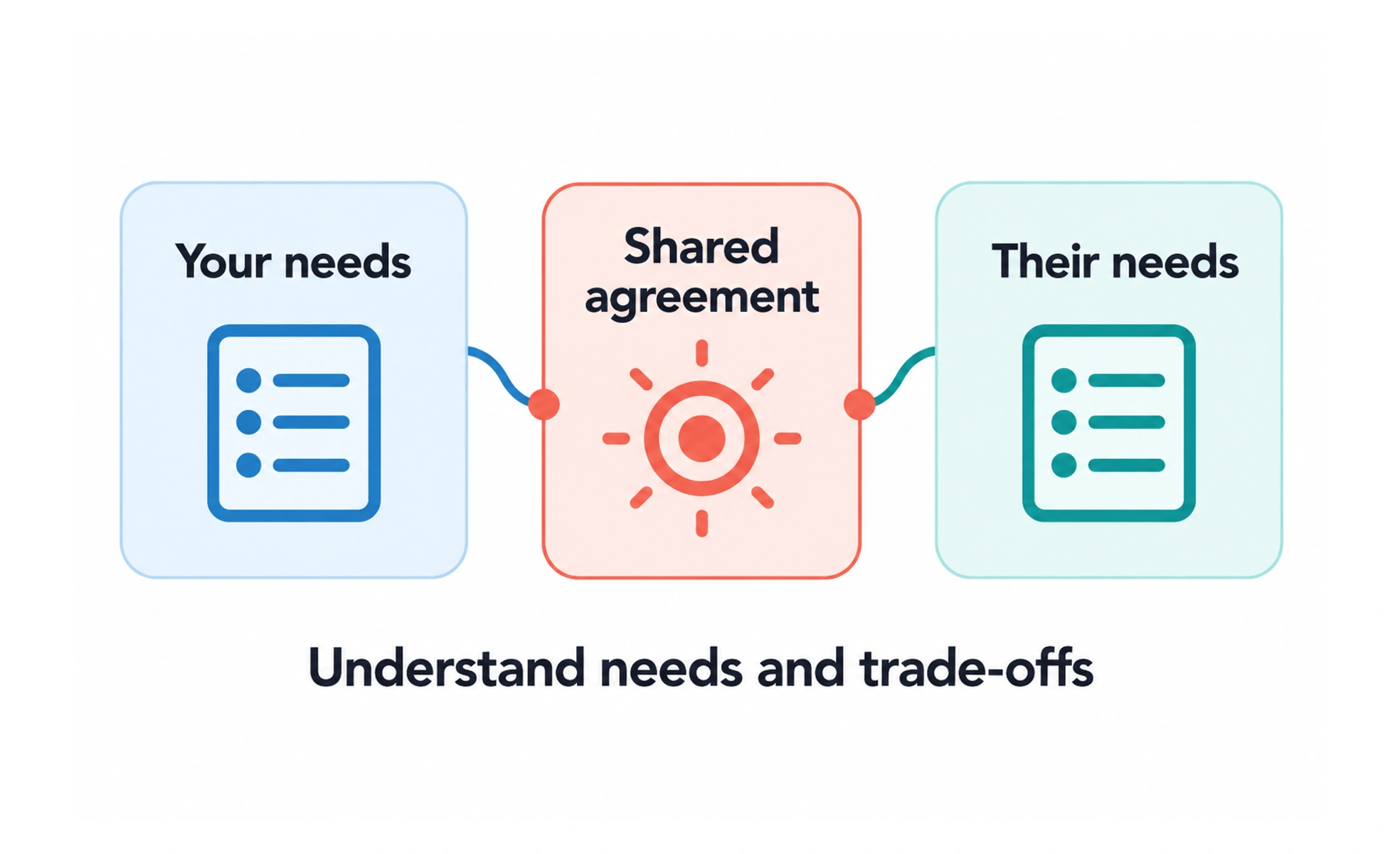
Product and design teams negotiate scope, timing, evidence, and constraints with colleagues and partners. Effective negotiation is not simply winning a debate; it makes interests visible, explores options, and records what each party has agreed to do.
It is like planning a shared route with someone who has a different destination constraint: the goal is to find a route both can actually follow.
Prepare around interests
Before a difficult conversation, clarify what you need, what the other person may need, and which constraints are fixed. Separate the outcome you want from the position you first propose. Ask what evidence or risk is driving a concern instead of treating disagreement as resistance.
Make trade-offs explicit
A useful agreement often changes scope, sequence, support, or timing. Explain what is gained and what is given up in each option. Avoid promising work that the team cannot deliver, and identify which decisions need more evidence or approval before they can be final.
Listen and communicate clearly
Summarize the other person’s point in your own words and check that you understood it. State your reasoning without overstating certainty. Use concrete examples, shared goals, and questions to keep the conversation focused on the problem rather than status or personal blame.
Record the agreement
Close by naming decisions, owners, dates, and unresolved questions. Written notes prevent different people from leaving with different interpretations. If circumstances change, revisit the agreement early and explain the new constraint rather than quietly allowing expectations to drift.
Frequently asked questions
Key takeaways
- Understand the interests and constraints behind each position.
- Compare trade-offs honestly and avoid commitments the team cannot keep.
- Listen, summarize, and discuss the problem rather than personal motives.
- Record decisions, owners, timing, and remaining uncertainty.