

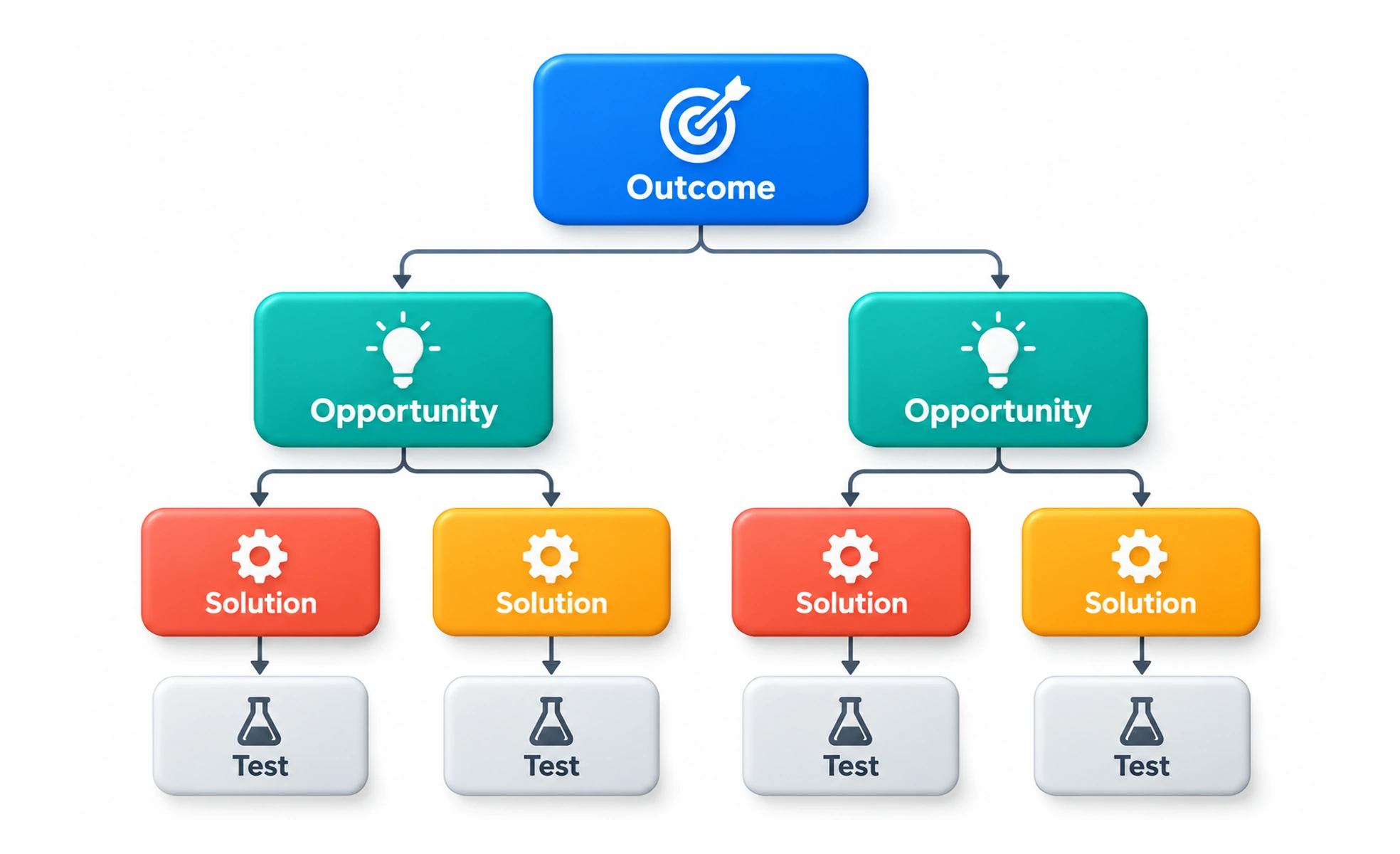
An opportunity solution tree maps a desired outcome to customer opportunities, possible solutions, and assumption tests. It helps a team explain and compare the paths it could take during discovery.
A route map shows several ways to reach a destination. An opportunity solution tree makes the reasoning behind possible product routes visible.
Begin with an outcome
Choose an outcome the team can influence and explain why it matters. It gives the tree a useful boundary. If the goal is too broad, almost any idea can fit beneath it; if it is a specific feature, the team has already narrowed its choices before investigating the need.
Ground opportunities in customer evidence
Opportunities describe needs, difficulties, or desires discovered in customer situations. Keep them distinct from proposed features and connect them to the research that revealed them. Organizing related opportunities makes it easier to compare where the team could focus next.
Explore and test alternatives
Consider several solutions for a selected opportunity, then identify the assumptions that make each promising. Design focused tests to learn about the riskiest assumptions. Update the tree as findings arrive so it records current reasoning rather than preserving every original idea as equally credible.
Example: helping learners return
For an outcome related to returning learners, interviews might reveal difficulty finding the next useful lesson. Candidate solutions could include a clearer resume action or a short learning plan. The team can compare those options with realistic tasks before committing to a large recommendation feature.
Frequently asked questions
Key takeaways
- Connect a clear outcome to customer opportunities.
- Keep opportunities separate from solutions.
- Explore alternatives and test risky assumptions.
- Keep research evidence and decisions visible as the tree evolves.