

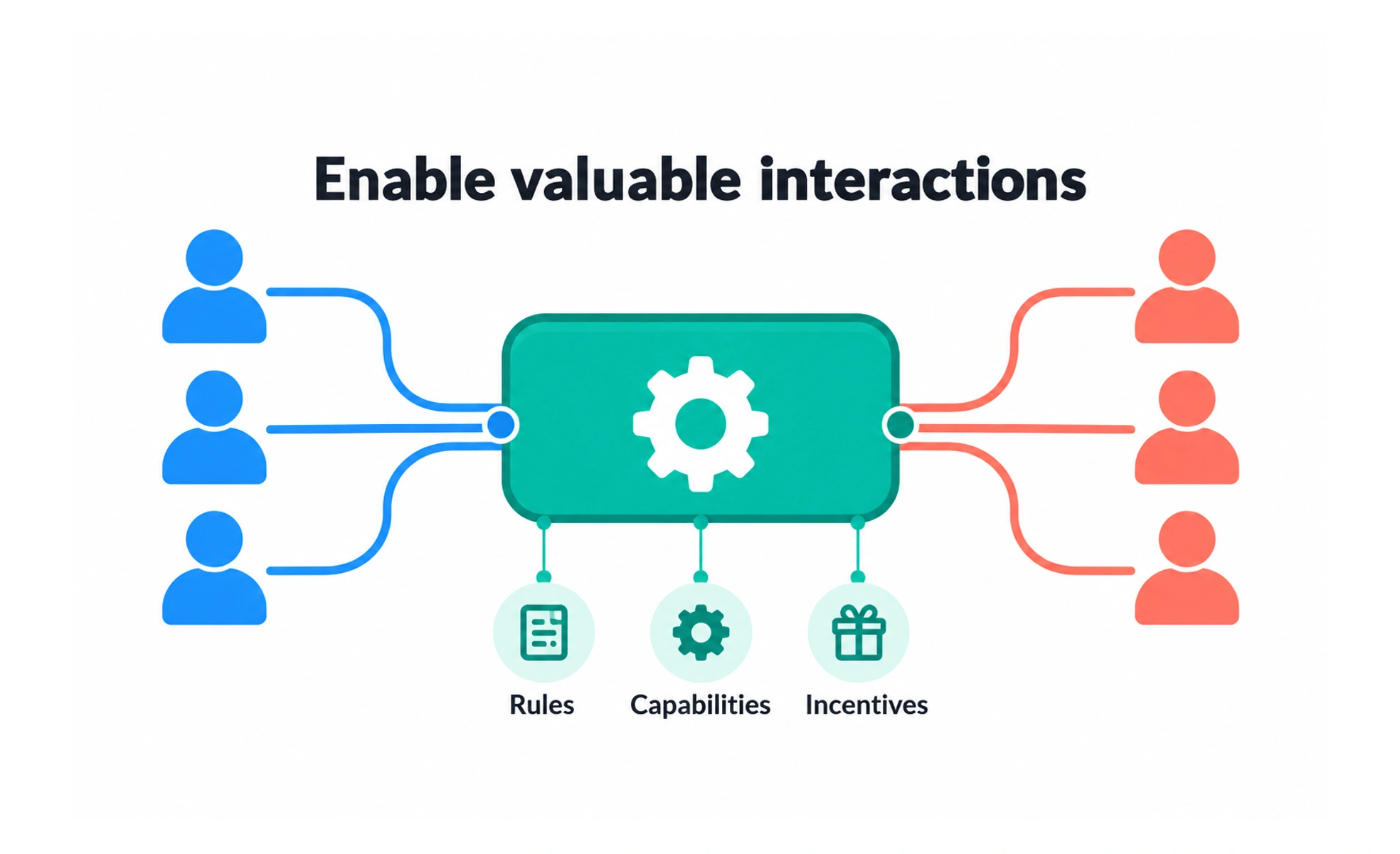
Platform strategy defines how a product enables valuable interactions or contributions between different participants. It addresses the shared capabilities, rules, and incentives needed for the ecosystem to work.
A marketplace provides a place to meet, but it also needs rules, reliable exchanges, and a reason for both sellers and buyers to return.
Identify the participants and exchange
Clarify who contributes, who receives value, and what interaction the platform enables. Participants may be creators and learners, developers and users, or buyers and sellers. The word platform can also describe shared internal technology, so agree on the intended meaning before making strategic decisions.
Create value for each side
One group’s participation may depend on another group already being present. Understand this dependency and design an initial experience that provides enough value to begin. More participants do not automatically improve the experience; quality, relevance, capacity, and trust all affect the result.
Example: an expert learning network
A network connecting instructors and learners needs useful teaching tools, discoverable content, and credible quality standards. Recruiting more instructors alone may create clutter if learners cannot find relevant material. The strategy should examine successful learning exchanges and participant incentives, not only account growth.
Frequently asked questions
Key takeaways
- Define participants and the valuable exchange.
- Understand dependencies between participant groups.
- Design incentives, trust, and quality together.
- Keep shared capabilities and rules dependable.