

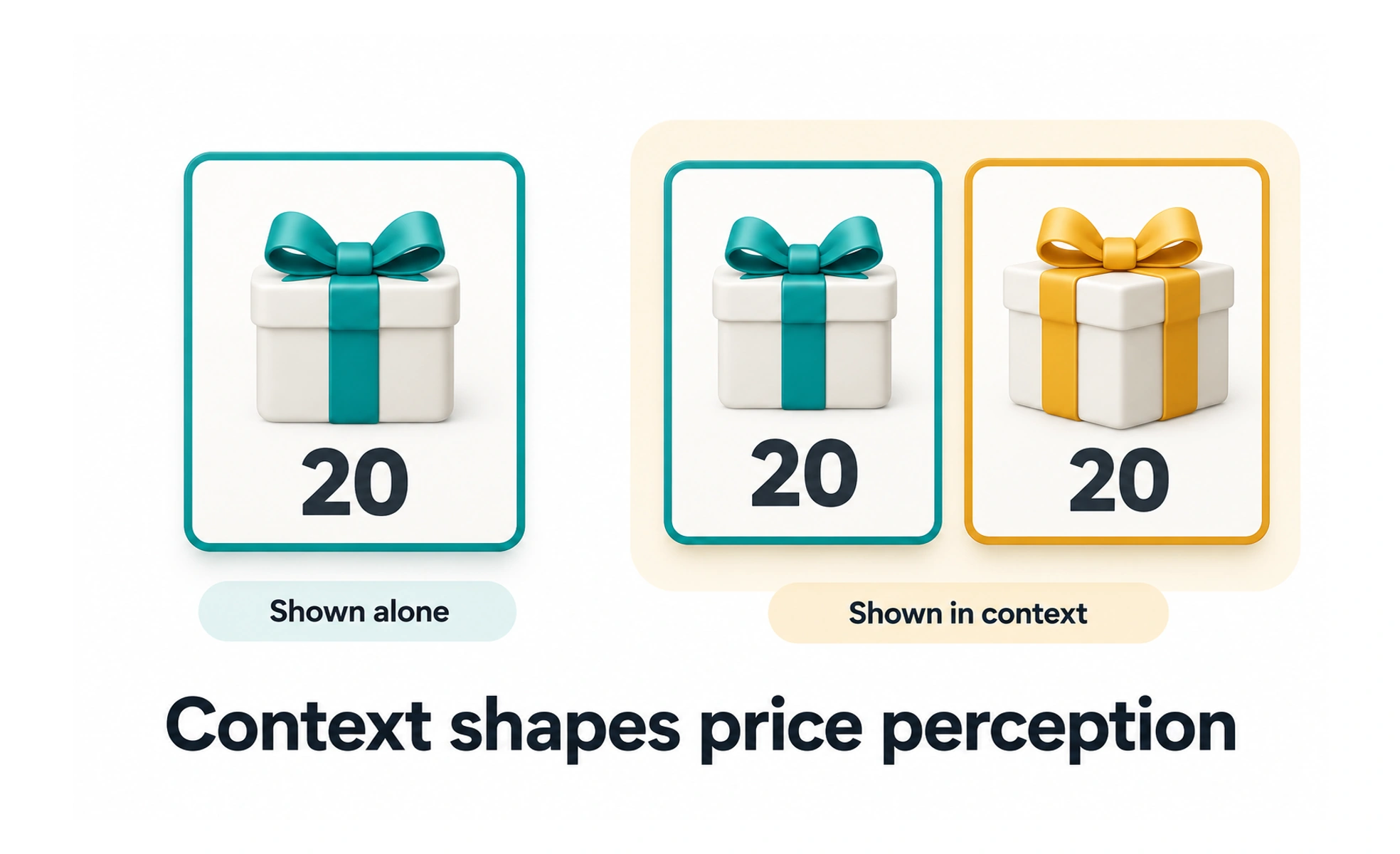
Pricing psychology examines how presentation and context influence people’s interpretation of a price. It helps teams understand comparison and perceived value while preserving clear, informed choice.
The same meal feels different when compared with a snack or a full dinner. Price judgments also depend on the alternatives and context people are shown.
Understand the comparison context
People may compare a price with familiar alternatives, previous experience, or another package shown nearby. Research which comparisons the intended audience actually makes. A team’s preferred reference price may not match the customer’s budget, situation, or understanding of the product.
Present value and terms clearly
Explain what is included, the amount charged, the billing period, and material limits. If a yearly plan is displayed as a monthly equivalent, show the actual annual charge and commitment clearly. Useful comparison should help people select an appropriate offer.
Test without assuming universal effects
Price framing, package order, and number formatting may influence choices differently across audiences and contexts. Evaluate understanding, suitability, and downstream outcomes as well as purchase rate. A short-term increase can be harmful if customers later discover terms they misunderstood.
Example: subscription plans
A learning service can compare monthly flexibility with an annual commitment using honest totals and relevant benefits. It should avoid fabricated scarcity, hidden renewals, or a preselected option that is hard to notice. Ask people to explain what they expect to pay before treating the design as clear.
Frequently asked questions
Key takeaways
- Research the comparisons customers actually use.
- Make total charges and billing terms visible.
- Test understanding and long-term outcomes.
- Use framing to support an informed choice.