

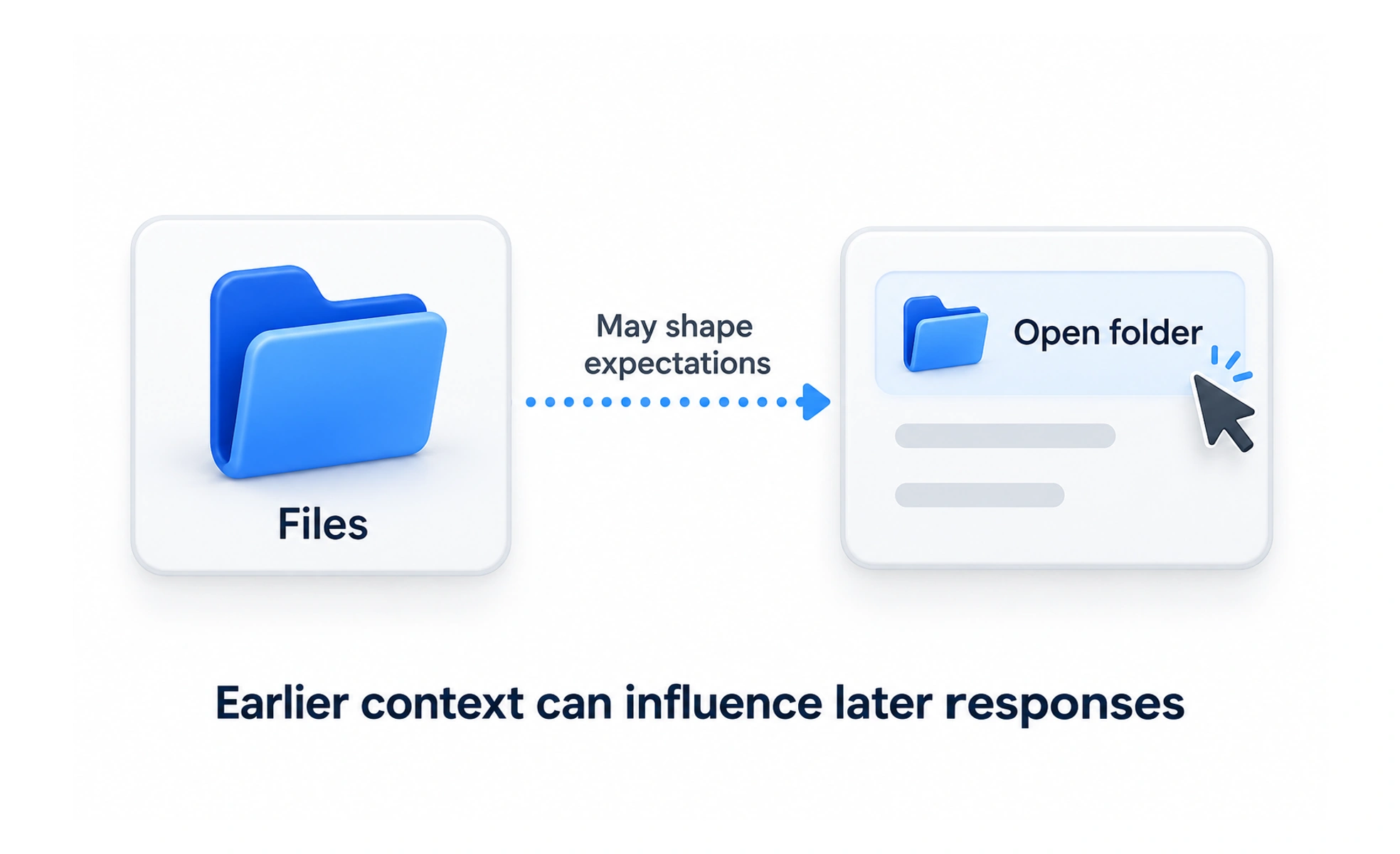
Priming is an effect in which prior exposure to a cue can influence how someone responds to later information or a task. In interface design, context and wording may shape expectations, so teams should use cues carefully and test their effects.
After hearing a song associated with a place, a small reminder may bring that place to mind. A prior cue can make some ideas easier to notice, though its effect varies by person and context.
Understand the basic idea
A cue may affect the interpretation or response that follows without being the main task itself. The effect depends on the person, context, timing, and kind of cue. Priming is a research concept, not a guarantee that a particular color, phrase, or image will produce a predictable behavior.
Distinguish priming from persuasion
Priming concerns how prior exposure may influence later processing or response. Persuasion involves attempts to change beliefs or choices, and a deliberate interface prompt may use several mechanisms at once. Avoid labeling every influence as priming when a clearer explanation of the design is available.
Use cues to support understanding
A relevant example, familiar label, or clear preview can prepare people for a task. Check that it reduces confusion rather than steering people toward an outcome they did not choose. Important consequences, costs, and alternatives should remain visible instead of being hidden behind a suggestive cue.
Test effects ethically
Use appropriate research to learn how a cue affects comprehension and decisions across different people. Do not assume a result from one setting applies everywhere. Be especially cautious when choices affect money, privacy, health, or access. Respectful design informs people and preserves their ability to decide.
Frequently asked questions
Key takeaways
- Prior cues can influence later responses, but effects vary.
- Do not treat priming as a guaranteed design technique.
- Use context to clarify rather than conceal important choices.
- Evaluate effects ethically in the actual user context.