

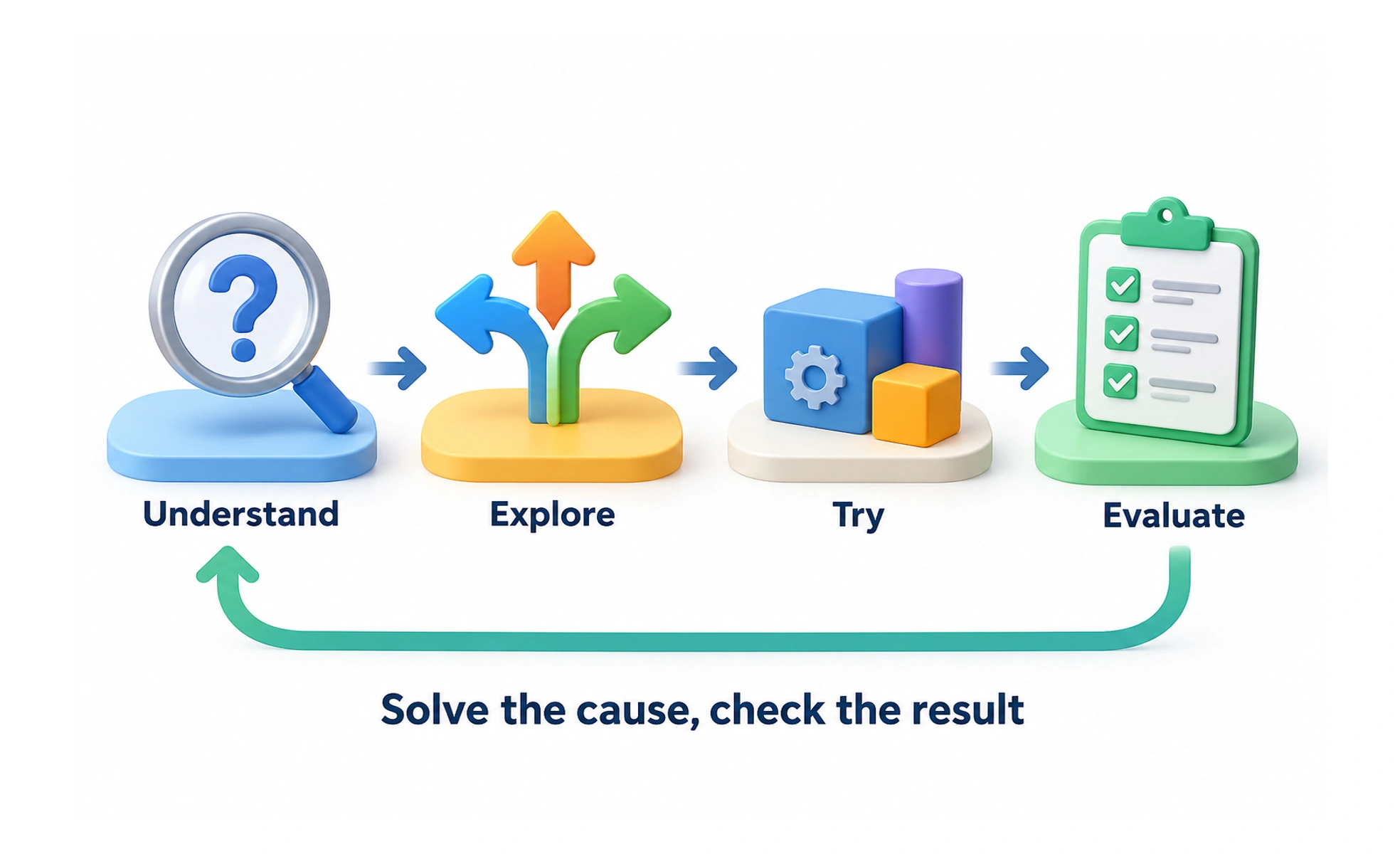
Rather than jumping to superficial cosmetic fixes, product designers dissect complex workflows to understand underlying user friction. Framing the right problem is often more critical than designing the eventual interface solution.
Think of it as a master mechanic diagnosing an engine knock. Instead of immediately replacing expensive parts at random, the mechanic checks oil pressure and examines spark plugs to identify the root failure.
How it works
Rigorous problem solving follows a disciplined progression from diagnosis to verified resolution.
- Root cause discovery applies techniques like the Five Whys to uncover the foundational breakdown behind user complaints.
- Problem reframing restates initial symptom requests into actionable, user-centric 'How Might We' design opportunities.
- Divergent solution generation explores multiple distinct conceptual paths before narrowing down to a single implementation.
- Empirical validation tests proposed solutions with target users to verify that the intervention actually cured the problem.
When to use it
Apply structured problem solving whenever products encounter performance plateaus or customer friction.
- High customer churn rates investigates whether cancellations stem from poor onboarding, confusing billing or missing features.
- Complex workflow overhauls breaks convoluted multi-step administrative dashboards into clear, modular task flows.
- Accessibility remediation redesigns inaccessible interactions to ensure full compliance without compromising aesthetic beauty.
- Legacy system modernization replaces outdated software while preserving essential institutional workflows and data integrity.
Common mistakes
Teams frequently fail in problem solving by jumping straight to solutions before understanding the disease.
- Treating symptoms rather than root causes, redesigning a button color when the underlying value proposition is broken.
- Falling in love with your first idea, refusing to explore alternative solution angles because of personal emotional attachment.
- Ignoring system-wide side effects, fixing a local UI pain point while accidentally breaking downstream customer workflows.
Frequently asked questions
Key takeaways
- Problem solving requires deep diagnosis of root causes before sketching interface solutions.
- Reframe business complaints into user-centric problem statements using 'How Might We' questions.
- Explore diverse divergent alternatives to prevent anchoring on the first obvious idea.
- Validate that the implemented solution genuinely resolves the friction through usability testing.