

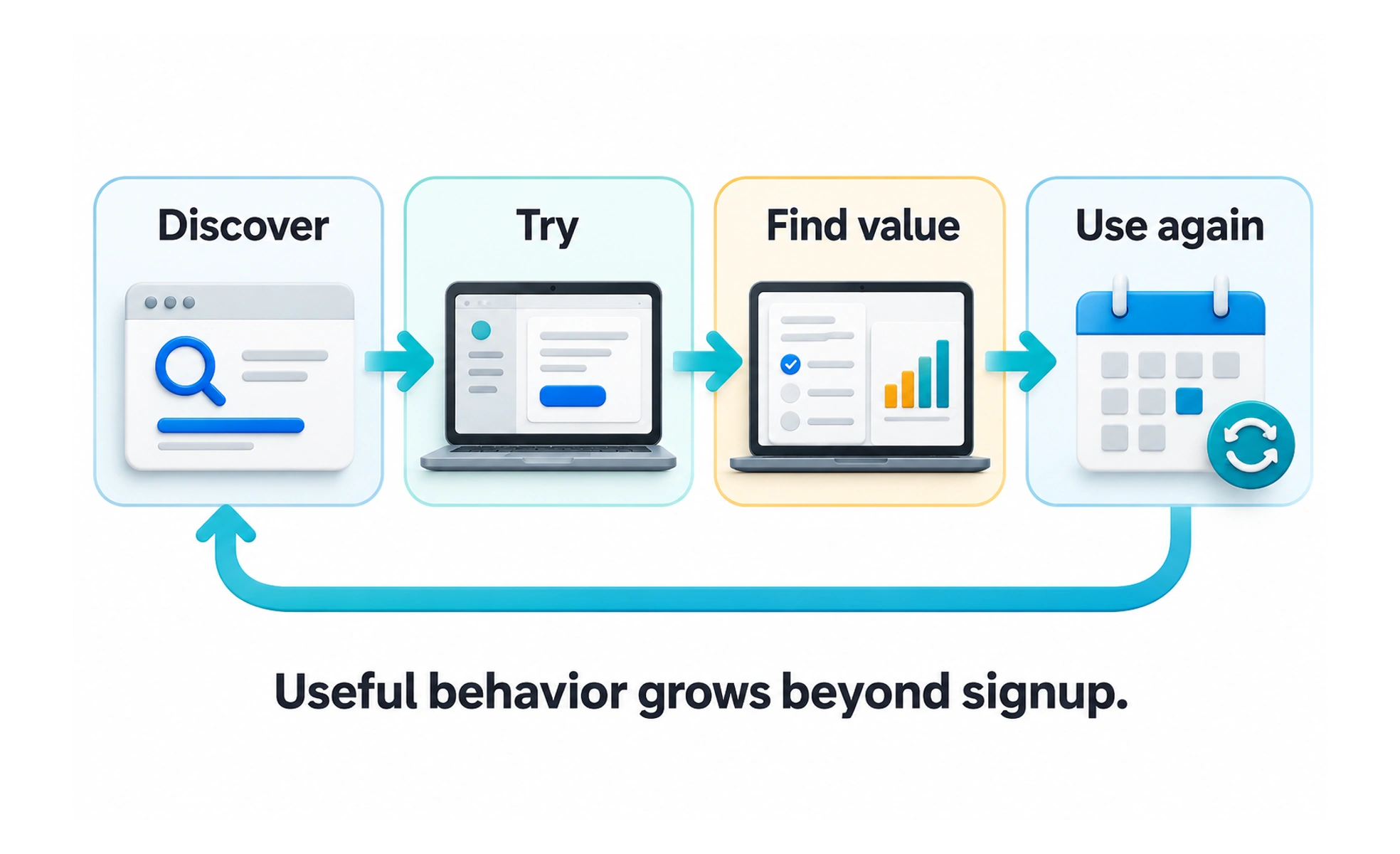
Product adoption is the process through which people begin using a product and make it useful in their lives or work. It extends beyond signup to understanding, first value, and continued use where appropriate.
Buying a bicycle is only the beginning. Adoption happens as a rider learns to use it and finds a useful place for it in everyday travel.
Define meaningful use
Identify behavior that indicates someone has received the product’s intended value. The right behavior depends on the task and natural usage cycle. A person may need a service once a month or only during a specific event, so daily activity is not a universal measure of successful adoption.
Reduce barriers to first value
People may need clear expectations, suitable setup, trustworthy information, or help changing an existing routine. Observe where they struggle before adding more tips and tours. A shorter onboarding flow helps only if people still have what they need to complete a useful task.
Study continued use by cohort
Track how groups behave after starting, and compare segments with different needs or acquisition sources. Combine event data with research to understand why people return or stop. High registration volume can hide an experience in which few users ever receive the promised benefit.
Frequently asked questions
Key takeaways
- Define adoption through meaningful value for the task.
- Investigate barriers between signup and first success.
- Use cohorts and qualitative research together.
- Respect the product’s natural usage frequency.