

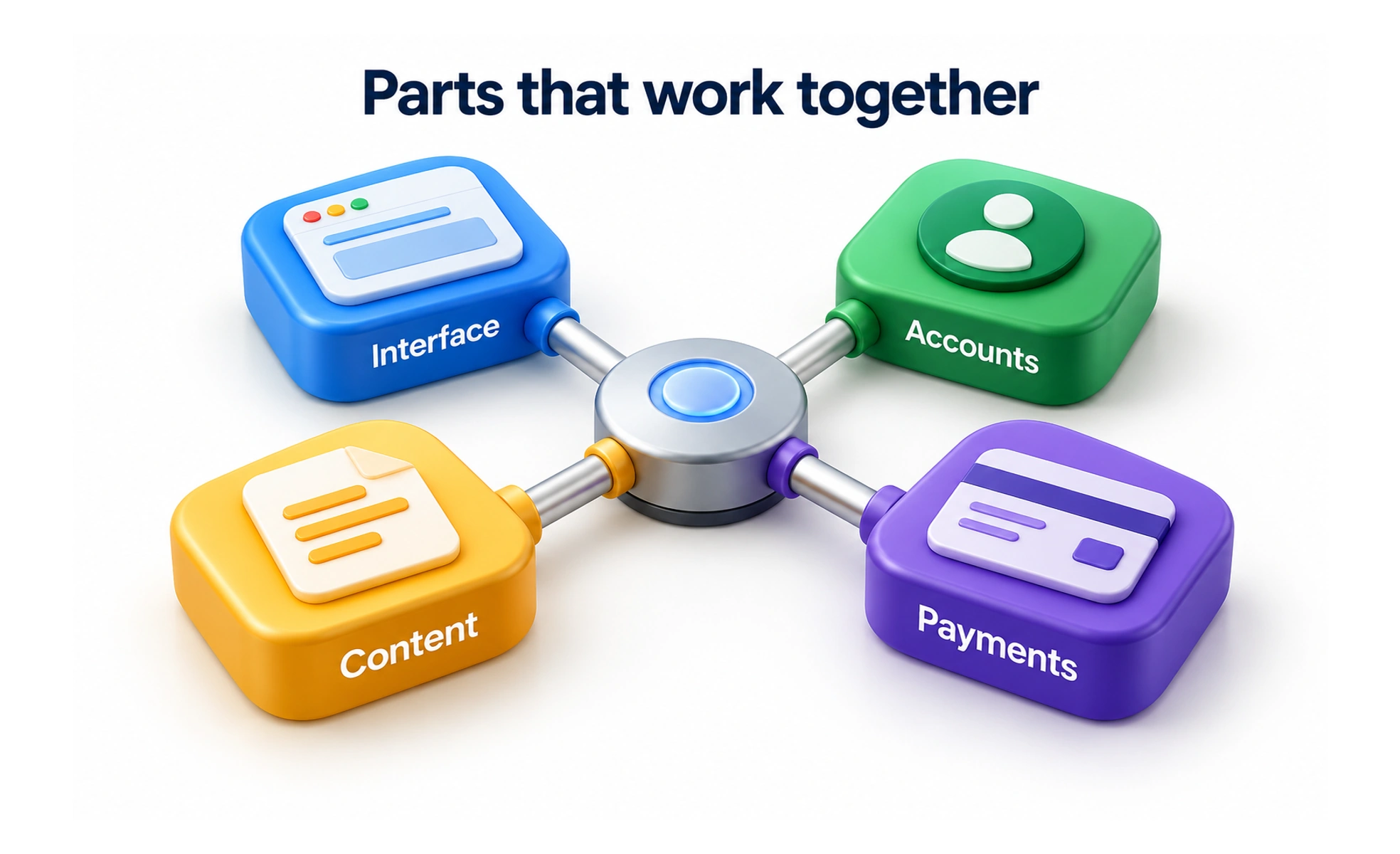
Architecture describes how a product is divided into capabilities, components, information, and technical services, and how those parts connect. Good architecture helps a product evolve without making every change costly or confusing.
A building’s floor plan connects rooms, entrances, and services. Product architecture does something similar for features and systems: it determines where responsibilities sit and how people and information move between them.
Structure around responsibilities
A product can be organized by user goals, domain concepts, or system capabilities. The best boundaries make responsibilities understandable and reduce unnecessary dependencies. If two areas change together constantly, their separation may not match how the product actually works.
Design clear connections
Parts of a product exchange information and depend on one another. Interfaces between those parts should define what is provided, what is expected, and how failures are handled. Clear contracts reduce surprise for users and for teams building the system.
Balance consistency and local needs
Shared patterns make products easier to learn, but not every feature should be forced into the same shape. Architecture should provide stable conventions while allowing deliberate differences when user goals, risks, or technical needs genuinely differ.
Keep the structure adaptable
Architecture is a set of decisions with consequences, not a diagram to admire. Teams should record important choices, understand migration costs, and revisit boundaries when evidence changes. Avoid designing for hypothetical scale at the expense of a clear present need.
Frequently asked questions
Key takeaways
- Organize product parts around clear responsibilities.
- Make connections and failure behavior explicit.
- Use shared conventions while preserving meaningful differences.
- Revisit architecture when product evidence or constraints change.