

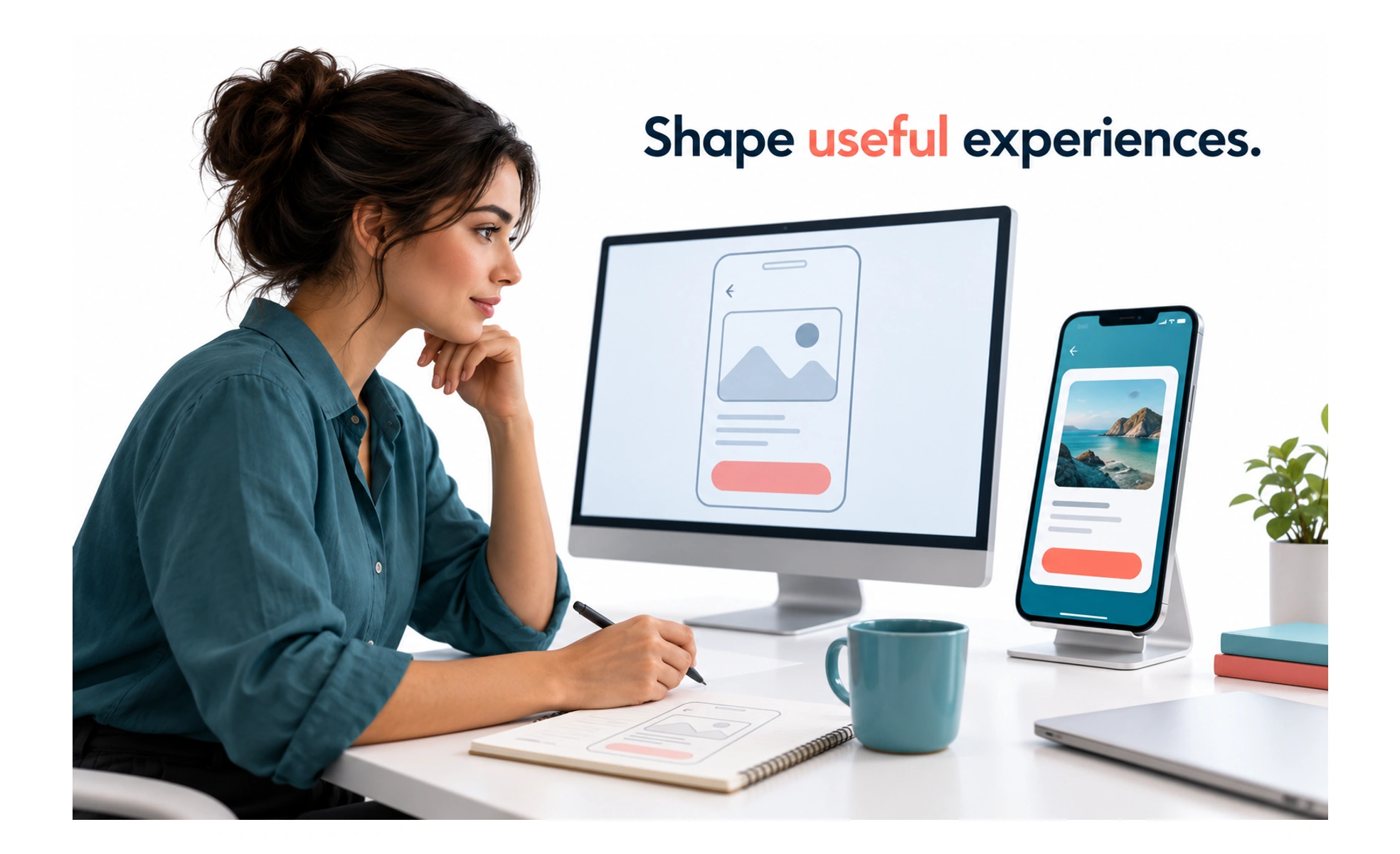
Product designers help teams understand a problem, explore possible solutions, and improve the experience as it is built and used. The role often spans research, flows, interface design, prototyping, feedback, and collaboration with product and engineering partners.
A product designer is like an editor working with a whole book, not just one page. They consider how each interaction fits the larger story and whether the finished experience helps readers reach their goal.
Understand the problem before drawing screens
Designers gather context from users, product data, support teams, and business goals. They clarify who has the problem, when it occurs, and what a useful outcome would look like. This work helps avoid polishing a solution to the wrong problem.
Explore and communicate solutions
Flows, sketches, wireframes, and prototypes help teams compare ideas at different levels of detail. A designer chooses the lightest artifact that can answer the current question, then adds fidelity as decisions become clearer.
Work with real constraints
Product design is shaped by accessibility, technical systems, content, operations, and time. Designers collaborate early so constraints become part of the design instead of late surprises. A good trade-off protects the essential user outcome and makes remaining limitations visible.
Learn after release
The work continues after implementation. Designers review the built experience, examine feedback and outcomes, and help teams decide what to improve. A successful release is evidence to learn from, not proof that the design can never change.
Frequently asked questions
Key takeaways
- Connect user needs with product outcomes and constraints.
- Use sketches and prototypes to make decisions visible.
- Collaborate with engineering and partners early.
- Treat release as an opportunity to learn and improve.