

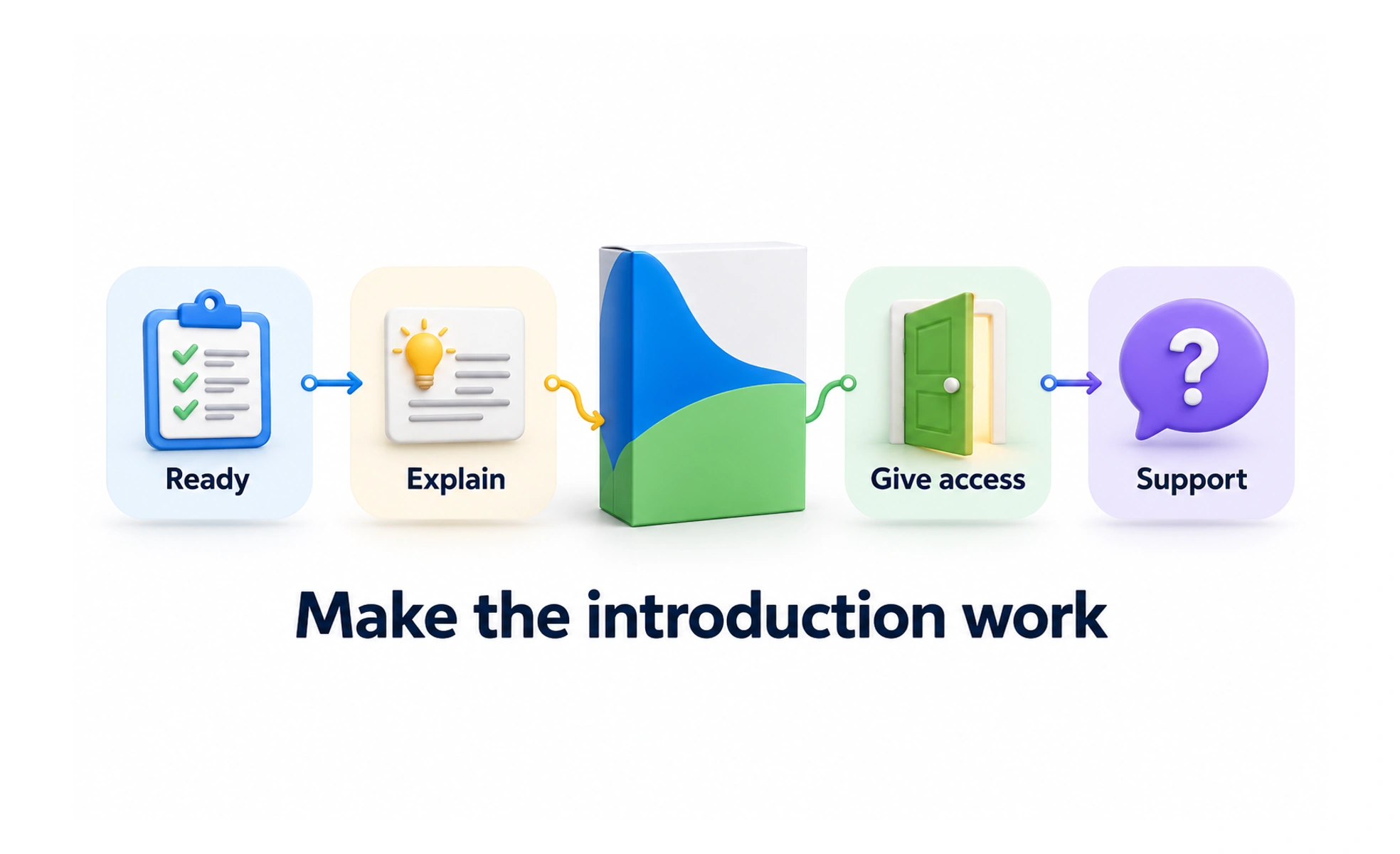
A product launch introduces a product or important capability to an intended audience. It coordinates readiness, communication, access, and support so people can understand and receive the promised value.
Opening a new café requires more than an announcement. The menu, staff, kitchen, and customer experience must be ready for the people who arrive.
Define the audience and promise
Clarify who the launch serves, what is becoming available, and why it matters. Use accurate language about scope and readiness. An announcement that promises more than the product delivers creates support work and damages the confidence of early customers.
Coordinate operational readiness
Check important user flows, billing where relevant, monitoring, help content, and ownership of incoming issues. Confirm that content and data are real and complete. A successful demonstration does not establish that the service can support the expected audience reliably.
Choose a responsible rollout
A launch can be gradual, limited to a segment, or broadly available depending on risk and purpose. Define success signals, feedback channels, and conditions for pausing. Make it possible to respond to problems without losing the record of what users were told or which version they received.
Example: launching a skill assessment
A team should verify question quality, attempt persistence, results, and clear limitations before promoting the assessment. Early feedback can identify confusing wording or flow problems. Interest and starts are useful, but completion and a credible explanation of results matter to whether the launch delivered value.
Frequently asked questions
Key takeaways
- Make the audience and product promise clear.
- Verify operational and support readiness.
- Choose rollout scope based on risk and learning.
- Evaluate delivered value after the announcement.