

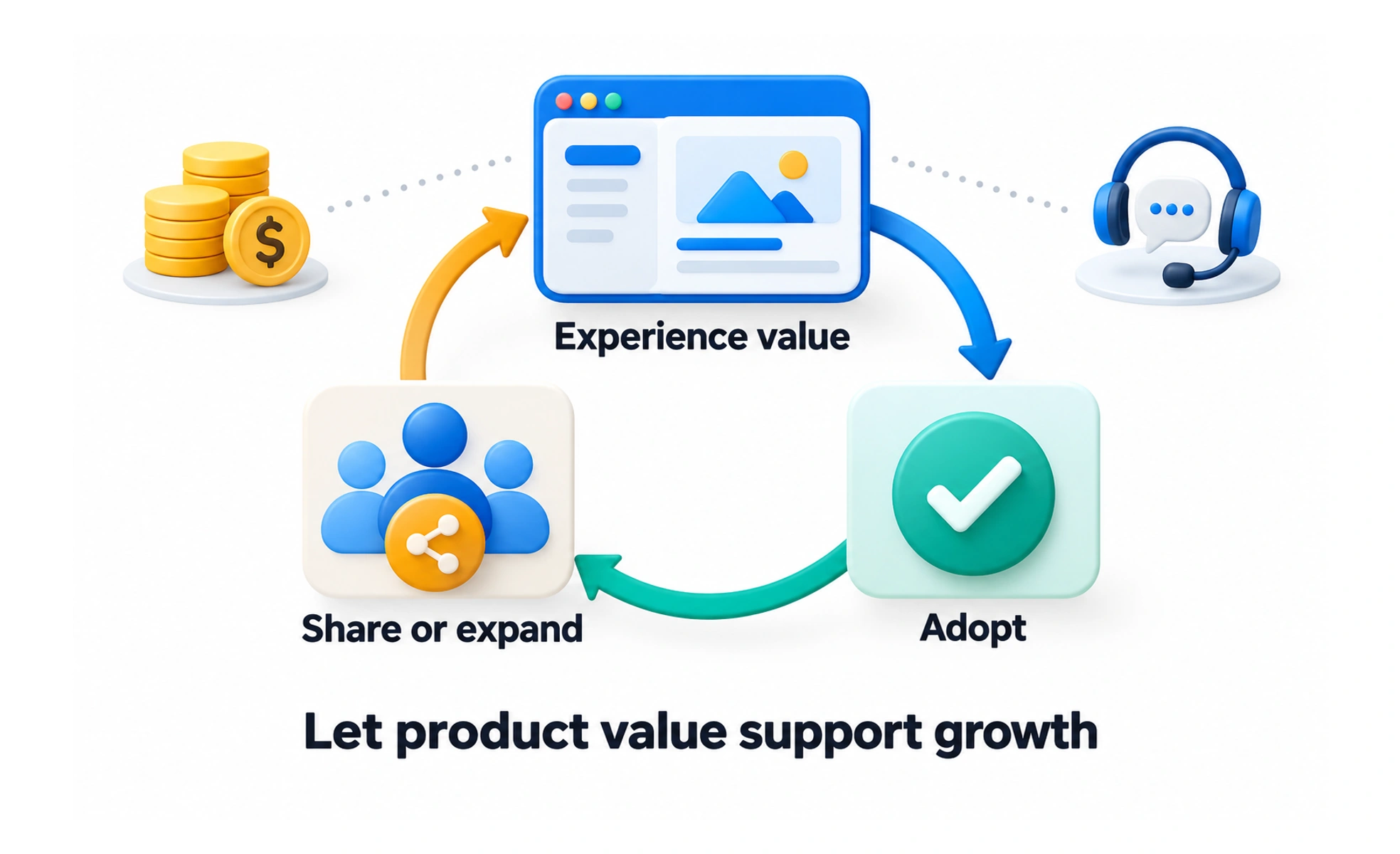
Product-led growth is an approach in which the product experience plays a central role in acquisition, adoption, and expansion. People can discover value through use, supported by suitable pricing and business operations.
A useful sample lets someone understand a product before committing. A product-led approach makes that route to value a deliberate part of how the business grows.
Make value accessible
Help the intended audience reach a meaningful result with an appropriate amount of setup and support. A free trial or free plan can be part of this, but neither establishes the approach on its own. People still need a clear reason to try and a product that serves their task.
Connect the experience to a viable model
Decide how usage relates to payment, collaboration, or expansion without hiding essential terms. The product should communicate limits and upgrades clearly. Consider service costs and whether the route from trial to ongoing value makes sense for the intended customer.
Support different customer needs
Some people can adopt independently, while others need procurement, security review, onboarding help, or sales support. A product-led motion can coexist with those services. Choose the combination based on the buying situation rather than assuming all human assistance is a weakness.
Example: a team whiteboard
A person might create a useful board, invite colleagues, and experience collaboration before choosing a paid plan. Measure successful teamwork and continuing value alongside invitations and upgrades. Forced invitations or confusing restrictions may raise activity while reducing trust.
Frequently asked questions
Key takeaways
- Let people experience meaningful value through use.
- Connect product behavior with clear commercial terms.
- Provide human support where the buying situation requires it.
- Measure value and trust alongside growth.