

It covers discovery, strategy, prioritisation and working through delivery. The discipline is judged on outcomes rather than output, so shipping a lot of features that change nothing is not a good quarter.
Think of it like this. A film director does not operate the camera or act. They decide what the film is about and make sure every department is making the same film.
How it works
- Discovery. Continuously understanding users and the market through research, behavioural data and conversations with the people who talk to customers. It never finishes.
- Strategy. Turning that into a direction. Why the product exists, who it is for, and what it should achieve.
- Prioritisation. The hardest part, because capacity is finite and every yes is several nos. The job is making trade-offs explicit rather than implicit.
- Communication. Keeping everyone aligned on the reasoning, not just the decision, so it survives new information.
- Execution. Working through the build, resolving trade-offs as they surface.
Common mistakes
- Confusing it with project management. Product decides what and why. Project decides when and how. Conflating them tends to produce work that ships on time and accomplishes nothing.
- Measuring output. Counting features shipped rewards activity over results.
- Hiding the reasoning. A decision without a visible rationale gets relitigated every time someone new asks about it.
- Specifying solutions. Arriving with the answer skips the design work and locks in the first idea anyone had.
Trade-offs
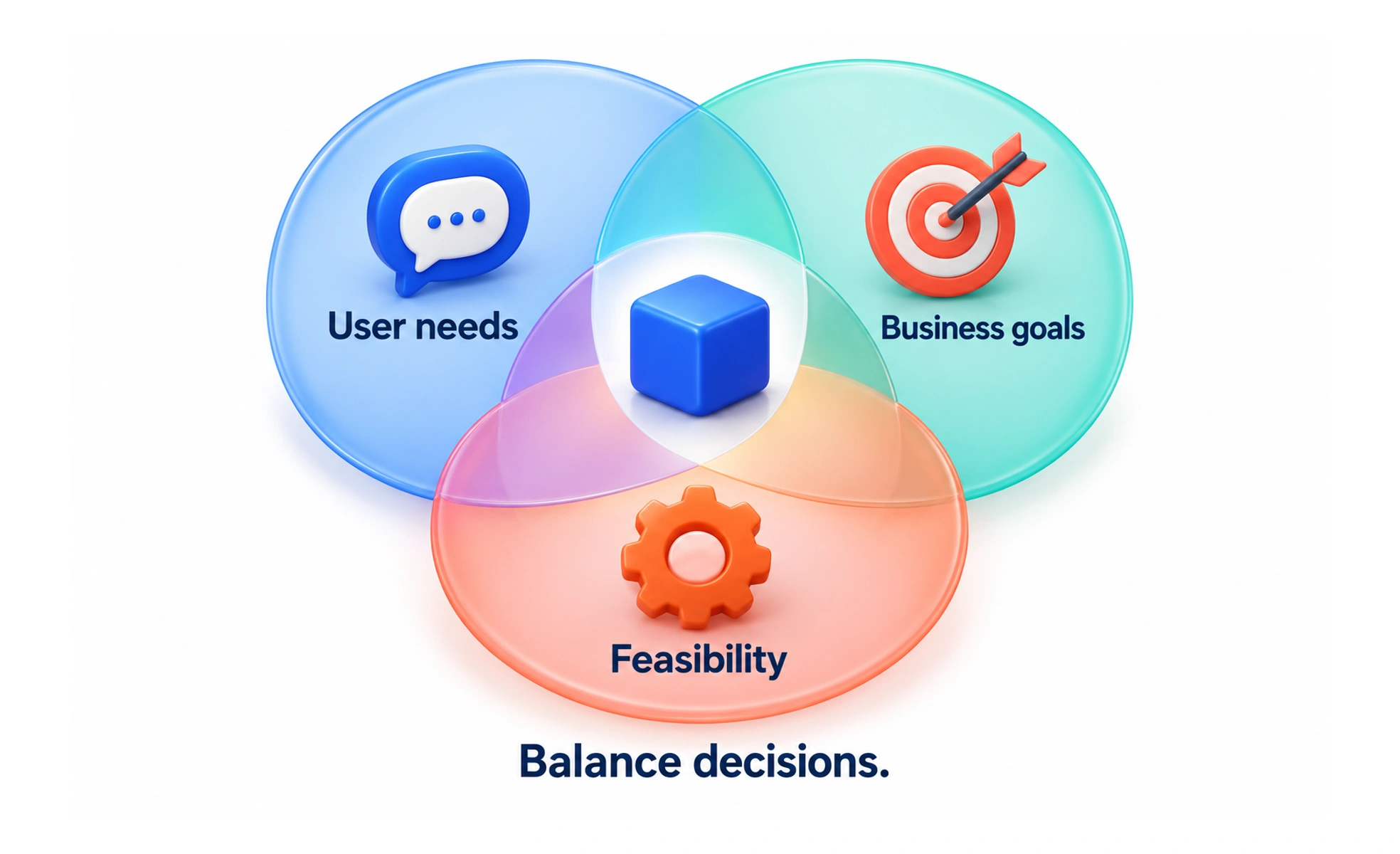
The role sits between three pressures that rarely agree, and every decision favours one at some cost to the others.
- User need against business need. The most useful thing for a user is not always the thing that funds the company. Pretending they always align is how roadmaps lose credibility.
- Speed against foundation. Shipping now often means building something you will pay to unpick later. Sometimes that is correct. It should be a choice rather than an accident.
- Focus against responsiveness. A team that says yes to everything has no strategy. A team that says no to everything stops learning from the people asking.
Frequently asked questions
Key takeaways
- Judge the work by outcomes changed, not features shipped.
- Make trade-offs explicit. Unstated prioritisation becomes politics.
- Product decides what and why. Project decides when and how.
- Bring the problem, not the solution.