

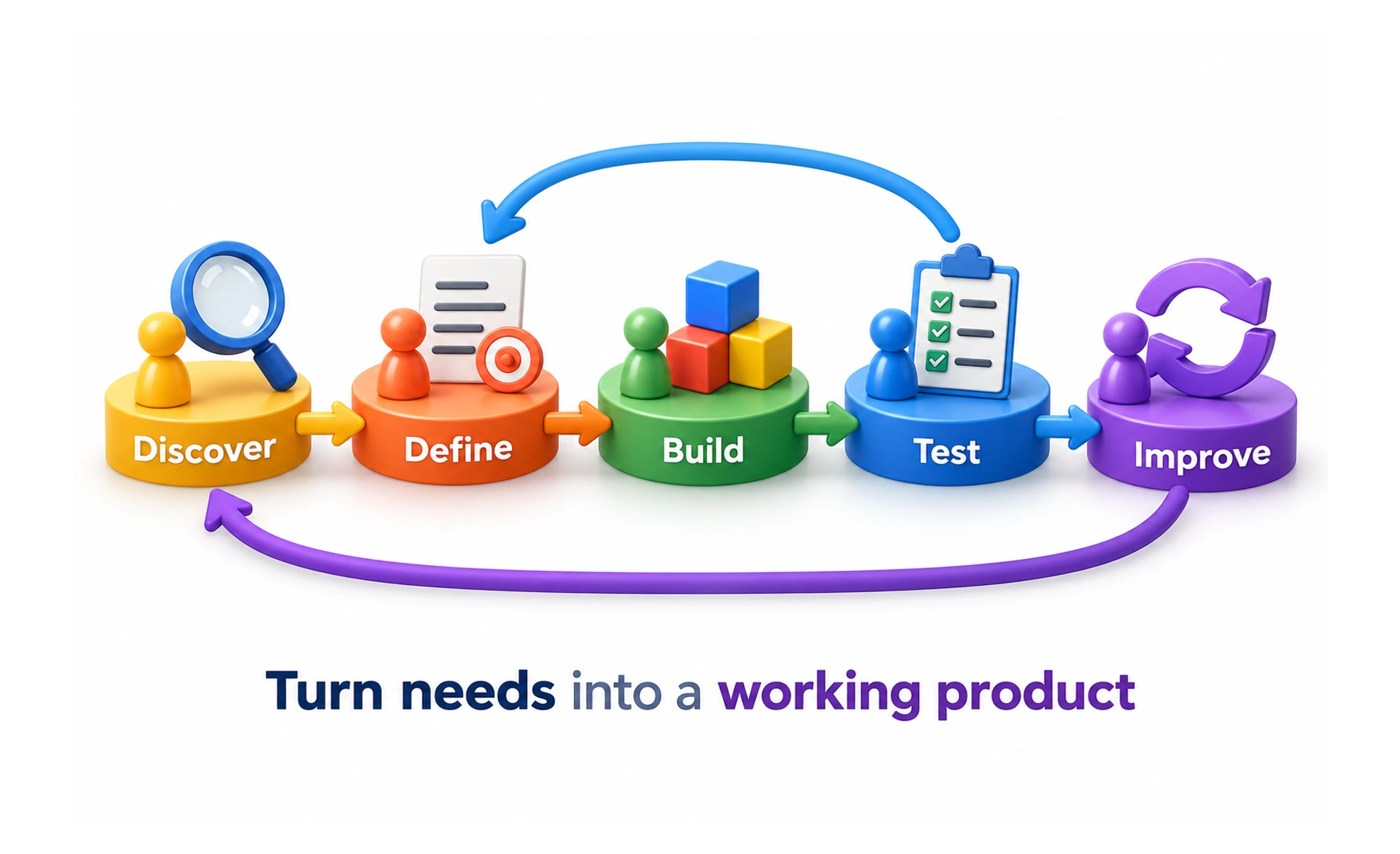
Product development is the work of discovering, designing, building, and improving a product. It connects customer needs with a usable, feasible, and sustainable experience.
Developing a bicycle involves understanding riders, trying designs, building dependable parts, and learning from actual journeys. A digital product needs the same connection between intention and use.
Begin with the need and outcome
Understand the audience, the situation, and the change the product should help create. Investigate current alternatives and important constraints. A proposed feature can be a starting point, but the team needs a clear reason to invest in it and a way to evaluate whether it helps.
Connect discovery and delivery
Research, design, engineering, and business work influence one another. Explore risky assumptions while developing a practical solution, and share findings across disciplines. Treating discovery as a one-time phase can leave later decisions disconnected from customer evidence.
Build for operation and change
A useful product needs reliable data, accessible interactions, appropriate security, and support for failure states. Consider monitoring, maintenance, and future changes alongside the first release. A polished demonstration is only one part of an experience that must work repeatedly for real people.
Example: topic following
A team might discover that learners want to revisit subjects they care about. Development includes the follow interaction, durable storage, account privacy, and useful discovery based on the selection. After release, observe whether following helps people find relevant material rather than simply counting how many buttons were pressed.
Frequently asked questions
Key takeaways
- Connect development to an audience and useful outcome.
- Keep discovery and delivery informed by each other.
- Include reliability, accessibility, and operation in the work.
- Learn from actual use after release.