

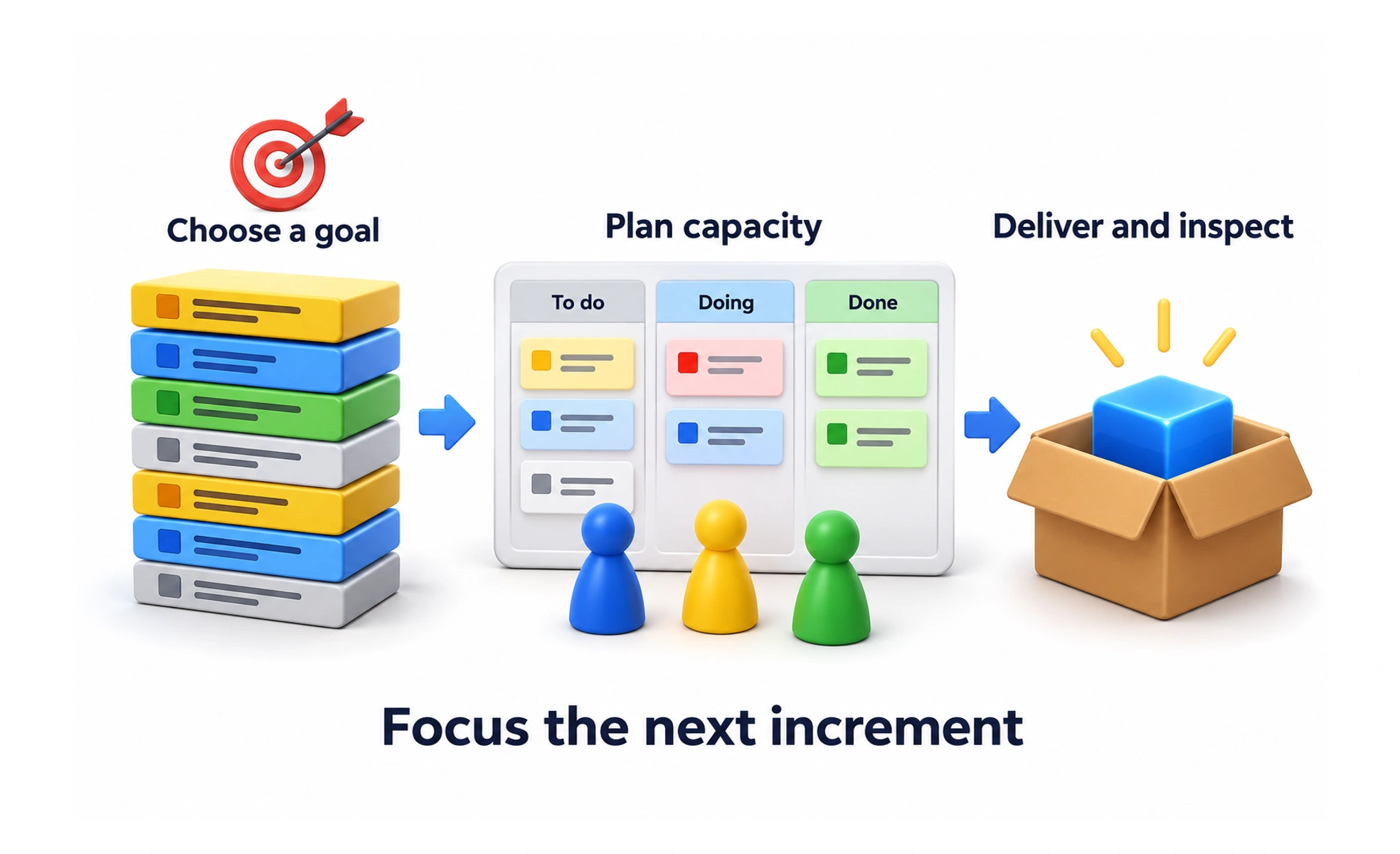
Sprint planning establishes a useful goal, the work a team expects to complete, and an initial approach for a sprint. Execution involves adapting that plan while protecting the goal and agreed quality expectations.
A short expedition needs a purpose, suitable supplies, and a route. The team can adjust the route as conditions change while keeping the destination in view.
Start with a coherent goal
Explain why the sprint matters and what useful result the team is aiming for. A goal helps people make choices when details change. A collection of unrelated tickets may fill capacity but provide little shared direction for evaluating progress or resolving tradeoffs.
Forecast with realistic capacity
Discuss available people, dependencies, uncertainty, and the work required to meet the team’s completion standard. Select work that can contribute to the goal and be completed within the sprint. A forecast should support responsible planning without pretending that estimates are exact promises.
Adapt the working plan
As work proceeds, share blockers and adjust the plan collaboratively. Keep important quality checks and make scope decisions visible. If new information threatens the goal, discuss it promptly rather than waiting for the end of the sprint to reveal the problem.
Example: reliable bookmarks
A sprint goal could be to make saved lessons reliable across devices. The plan might include storage changes, optimistic interaction recovery, and account checks. If an unexpected API issue appears, the team can revise the implementation while preserving the intended learner outcome and completion checks.
Frequently asked questions
Key takeaways
- Define why the sprint is valuable.
- Choose work using real capacity and dependencies.
- Adapt the plan collaboratively as information changes.
- Review usable results against the goal and quality standard.