

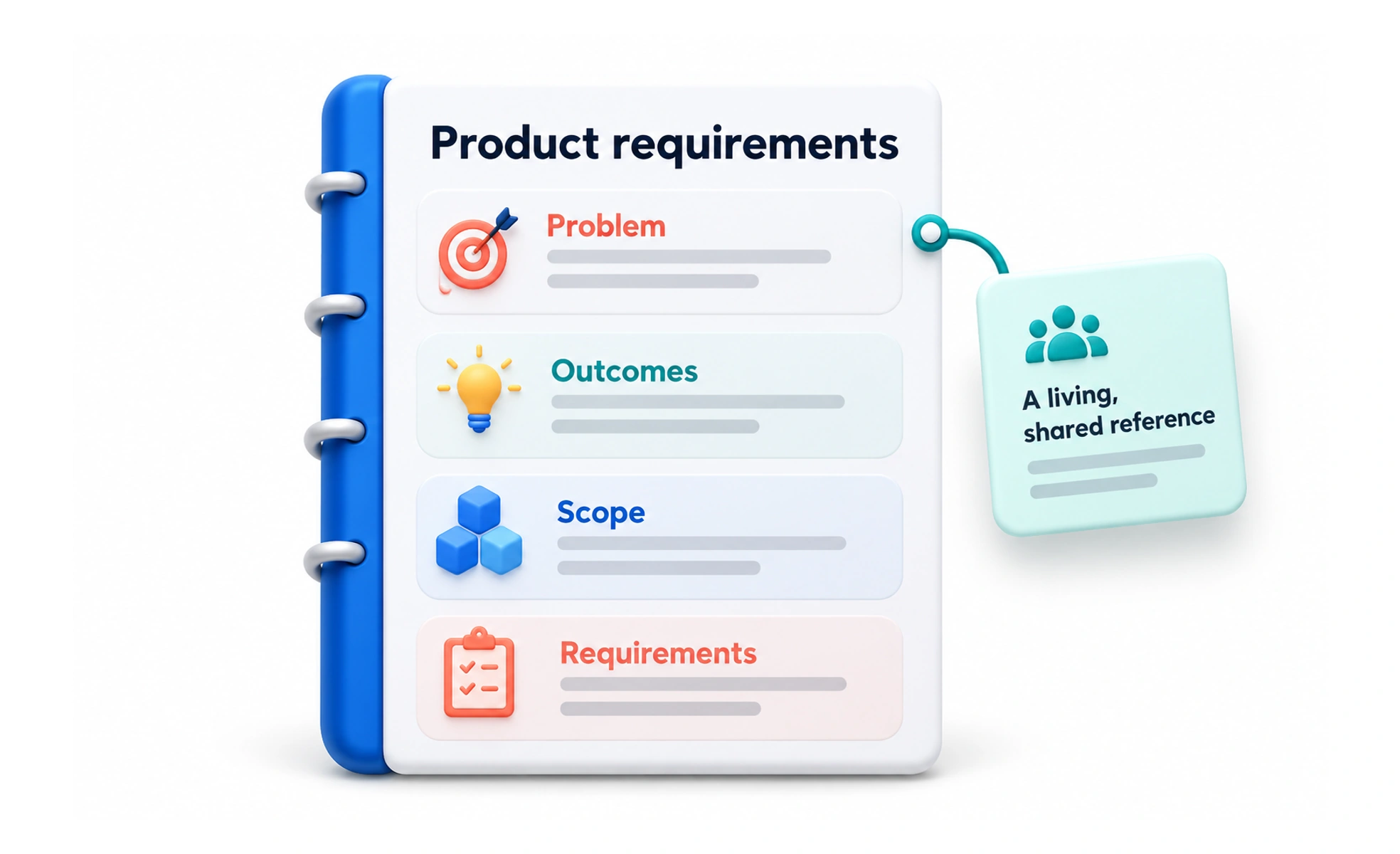
A product requirements document records the problem, intended outcomes, scope, and important requirements for a product change. It gives contributors a shared reference for decisions and expectations.
A building brief explains what a space must support before detailed plans are finalized. A PRD provides similar context for a product team.
Explain the reason for the work
Start with the audience, problem, evidence, and intended result. Describe what success would mean and how the team could evaluate it. Without that context, contributors may implement a detailed request faithfully while missing the need that made the work important.
Make scope and decisions clear
Record the behaviors, constraints, dependencies, and exclusions that materially affect the solution. Separate agreed requirements from open questions and assumptions. Link to designs and technical decisions when they carry detail better, rather than duplicating information that will become inconsistent.
Keep it useful as work evolves
A PRD should reflect current decisions and show who can resolve outstanding questions. Update it when important scope changes occur. Match the document’s size to the uncertainty and coordination required; a small change may need a brief note, while a complex release needs more context.
Example: notification preferences
A PRD can explain why learners need control over notifications, which channels exist, and how consent is stored. It can specify reload persistence, account isolation, and failure feedback while identifying future channels that are outside the current release. Contributors then share a concrete boundary for the work.
Frequently asked questions
Key takeaways
- Start with the problem, evidence, and intended outcome.
- Distinguish requirements, assumptions, and open questions.
- Link to detailed sources instead of duplicating them.
- Keep scope and ownership current.