

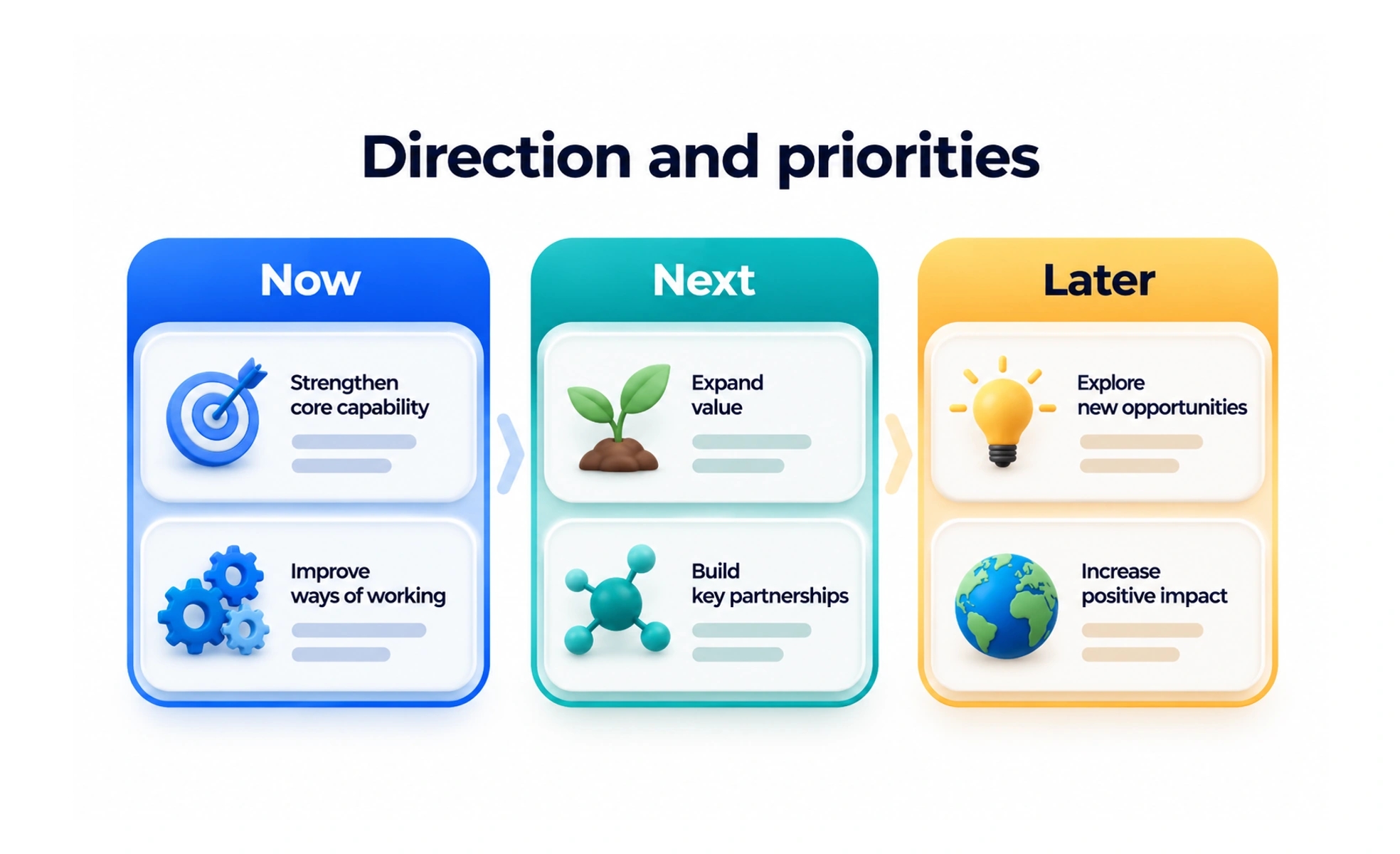
A product roadmap communicates the direction and priorities of a product over time. It helps people understand what the team is pursuing, why it matters, and how certain the plan is.
A travel plan shows the next destinations and priorities while leaving room for weather and new information to change the route.
Show the reason behind the work
Connect roadmap items to user needs and business outcomes. A list of feature names leaves people guessing about the purpose and makes it harder to evaluate alternative solutions. Include enough context for contributors to understand the problem without turning the roadmap into a full requirements document.
Make uncertainty visible
Near-term work usually has more evidence and detail than distant opportunities. Use a format such as now, next, and later when exact dates would imply confidence the team does not have. If a delivery date is a real commitment, distinguish it clearly from an exploratory target.
Review it as evidence changes
A roadmap needs regular review against results, dependencies, available capacity, and new learning. Explain meaningful changes and the evidence behind them so stakeholders can plan. Quietly moving dates or adding every request makes the roadmap less useful as a shared decision record.
Example: improving activation
A team may prioritize helping new learners reach their first useful lesson. The roadmap can name that outcome and the current investigation, while candidate solutions include clearer recommendations or a shorter setup flow. Once tests identify a promising approach, the plan can become more concrete about delivery.
Frequently asked questions
Key takeaways
- Link priorities to needs and intended outcomes.
- Distinguish committed work from uncertain opportunities.
- Use an appropriate level of detail for each horizon.
- Explain changes using evidence and constraints.