

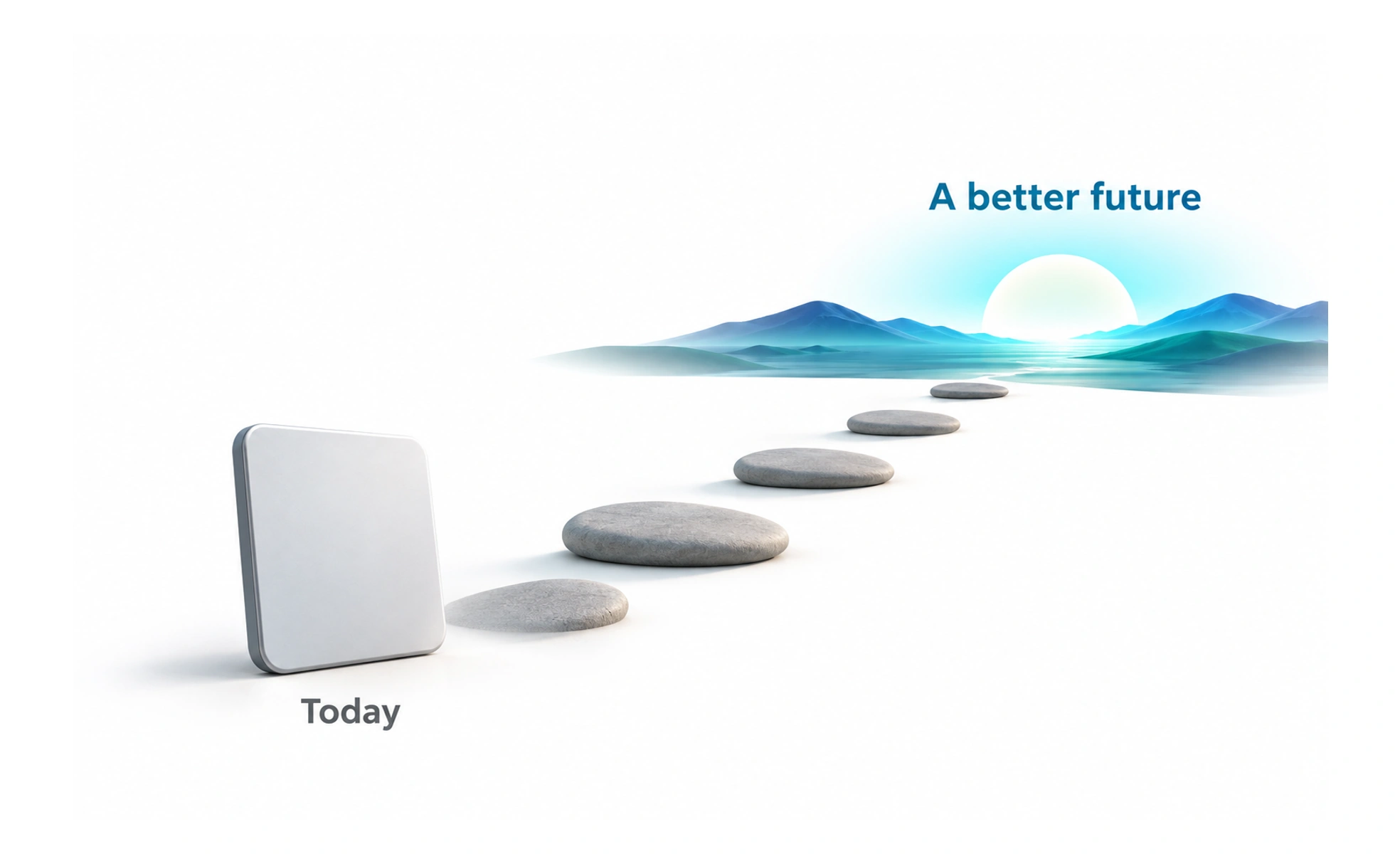
A product vision describes the future a product aims to help create for its users. It gives teams a shared direction for decisions that span many releases.
A destination gives a journey direction even when the route changes. A product vision serves the same purpose as teams learn and adapt.
Describe a meaningful future
Explain whose life or work should improve and what that improvement would look like. A vision should be clear enough to guide choices and ambitious enough to matter across multiple releases. Broad claims such as becoming the best platform provide little help unless the desired change is defined.
Connect direction to decisions
Use the vision when deciding which opportunities fit the product and which should wait. It should help teams say why a promising idea belongs elsewhere or why a difficult investment matters. If almost any project can be justified by the vision, refine the language or supporting strategy.
Support it with strategy
A vision needs a strategy that explains the choices the team will make to pursue it. Identify a target audience, important needs, distinctive strengths, and constraints. The strategy can change as evidence improves, while the broader vision may remain stable.
Example: professional learning
A learning product could aim to help early-career designers apply skills confidently at work. That direction can support practical exercises, helpful feedback, and visible progress. It gives the team a reason to question additions that increase content volume without improving the learner’s ability to use what they learned.
Frequently asked questions
Key takeaways
- Describe a future improvement for a specific audience.
- Use the vision to guide choices across releases.
- Connect the vision to explicit strategic choices.
- Revisit it when the audience or underlying need changes.