

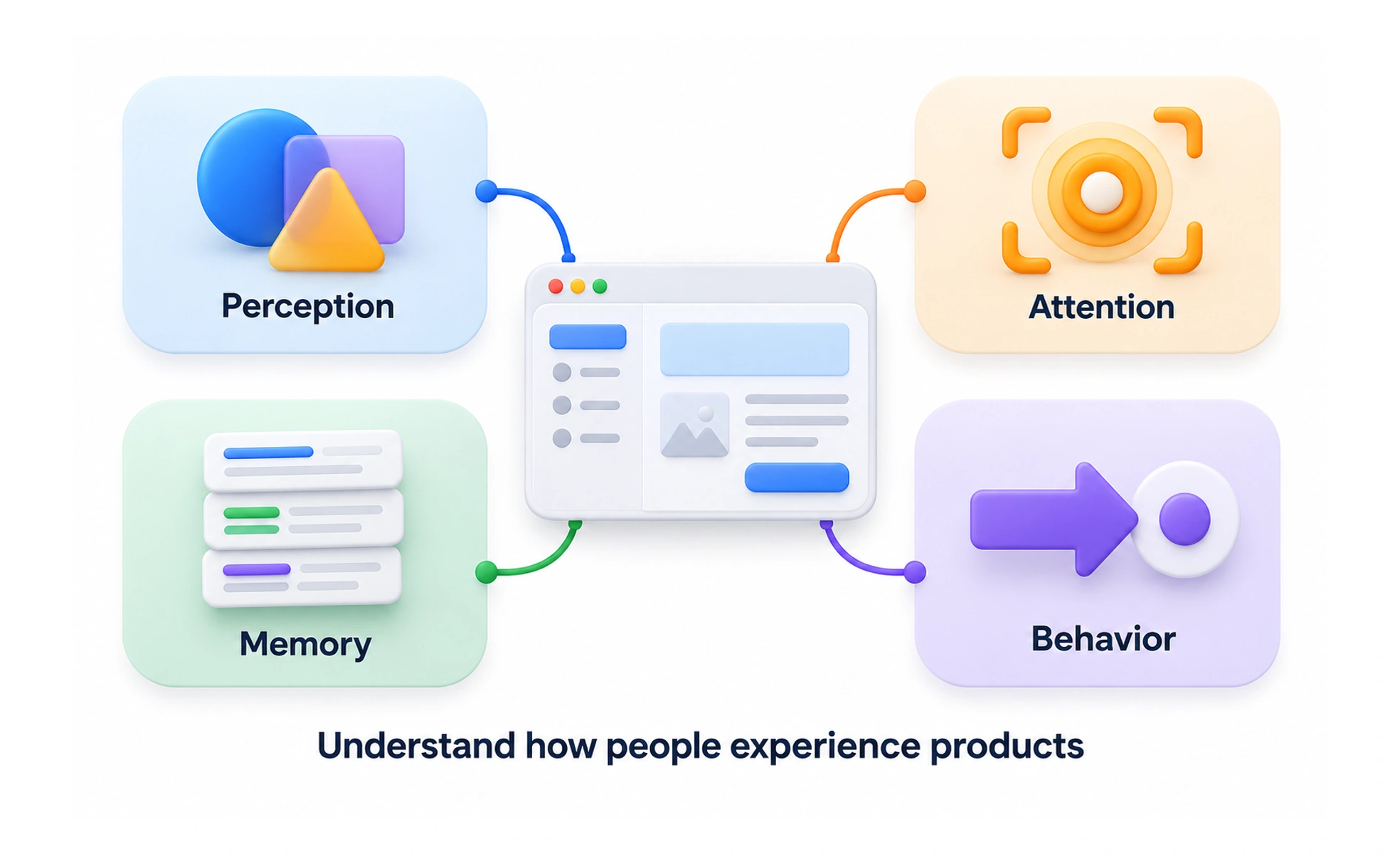
A person using an interface is interpreting information while pursuing a goal. They may be tired, distracted or unfamiliar with the task. Psychology can suggest useful questions about that experience, but it is not a collection of tricks that makes everyone behave predictably.
Use ideas as explanations to investigate
A designer might suspect that a long setup process asks people to remember too much. That is a useful hypothesis. It still needs examination in the actual task and audience.
Avoid turning a named effect into a universal command. A principle about attention does not establish that a particular animation will help someone understand an error. The implementation and context matter.
Reduce avoidable mental work
Look at what people must notice, understand and remember. A task can become harder when essential information is hidden on an earlier screen or labels change between steps.
Make useful information available where it is needed. Show a clear order summary before purchase, for example, instead of asking people to remember options they selected several minutes ago. This also gives them a chance to spot a mistake.
Example: remembering a reference number
A support form asks for a reference number shown in an email. On a phone, a person switches between the email and the form, loses their place and enters the wrong digits.
The team allows pasting, explains the expected format and helps the person find the reference. It tests whether the new flow reduces errors. Labeling the problem “poor memory” would miss the burden created by the service.
Respect differences and agency
People vary in experience, ability and circumstances.
- Avoid claims about what all users think.
- Check assumptions with relevant participants.
- Make important choices and consequences clear.
- Support correction rather than exploiting mistakes.
A psychologically informed design should improve understanding and control, not make a harmful choice easier to hide.
Frequently asked questions
Key takeaways
- Treat psychological ideas as hypotheses to examine.
- Reduce unnecessary remembering and interpretation.
- Study the task and environment around a difficulty.
- Use behavioral understanding to support informed choices.