

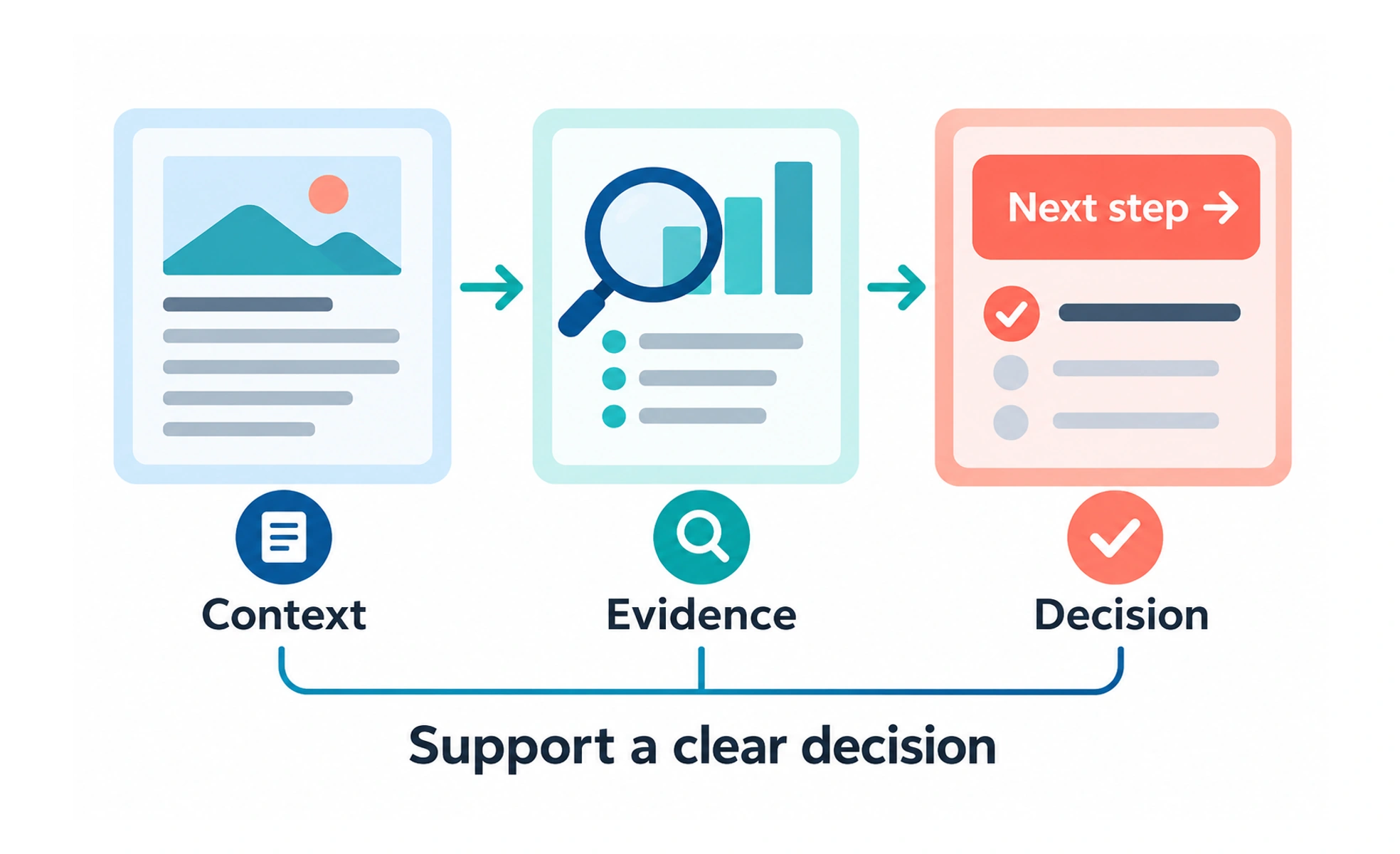
A stakeholder presentation communicates product work to people who influence or are affected by it. It should build understanding and support a clear decision, response, or next step.
A guide explains the destination, route choices, and important risks before asking a group to choose a path. A useful presentation gives decision makers similar context.
Know the audience and purpose
Decide what the audience needs to understand and what response is required. A request for a decision needs different detail from a progress update. Consider participants’ knowledge, concerns, and responsibilities so the presentation answers their relevant questions without overwhelming them.
Connect the problem to the proposal
Explain the user need, supporting evidence, and intended outcome before walking through the solution. Show how the proposal responds to the problem and what alternatives were considered. This helps discussion focus on reasoning rather than personal preferences about a polished screen.
Be clear about evidence and limits
Distinguish observed results from forecasts, assumptions, and unfinished work. Use accurate examples and visualizations with enough context to interpret them. A confident presentation should not hide uncertainty that materially affects the decision.
Example: presenting an onboarding change
Show where learners struggle, the evidence behind that finding, and how the new flow addresses it. Demonstrate important states, explain what has been tested, and state what still needs verification. End with the specific decision or feedback needed and record the agreed next steps.
Frequently asked questions
Key takeaways
- Design the presentation around a clear audience and response.
- Explain evidence and purpose before showing the proposal.
- State uncertainty and readiness honestly.
- Record decisions and next steps after discussion.