

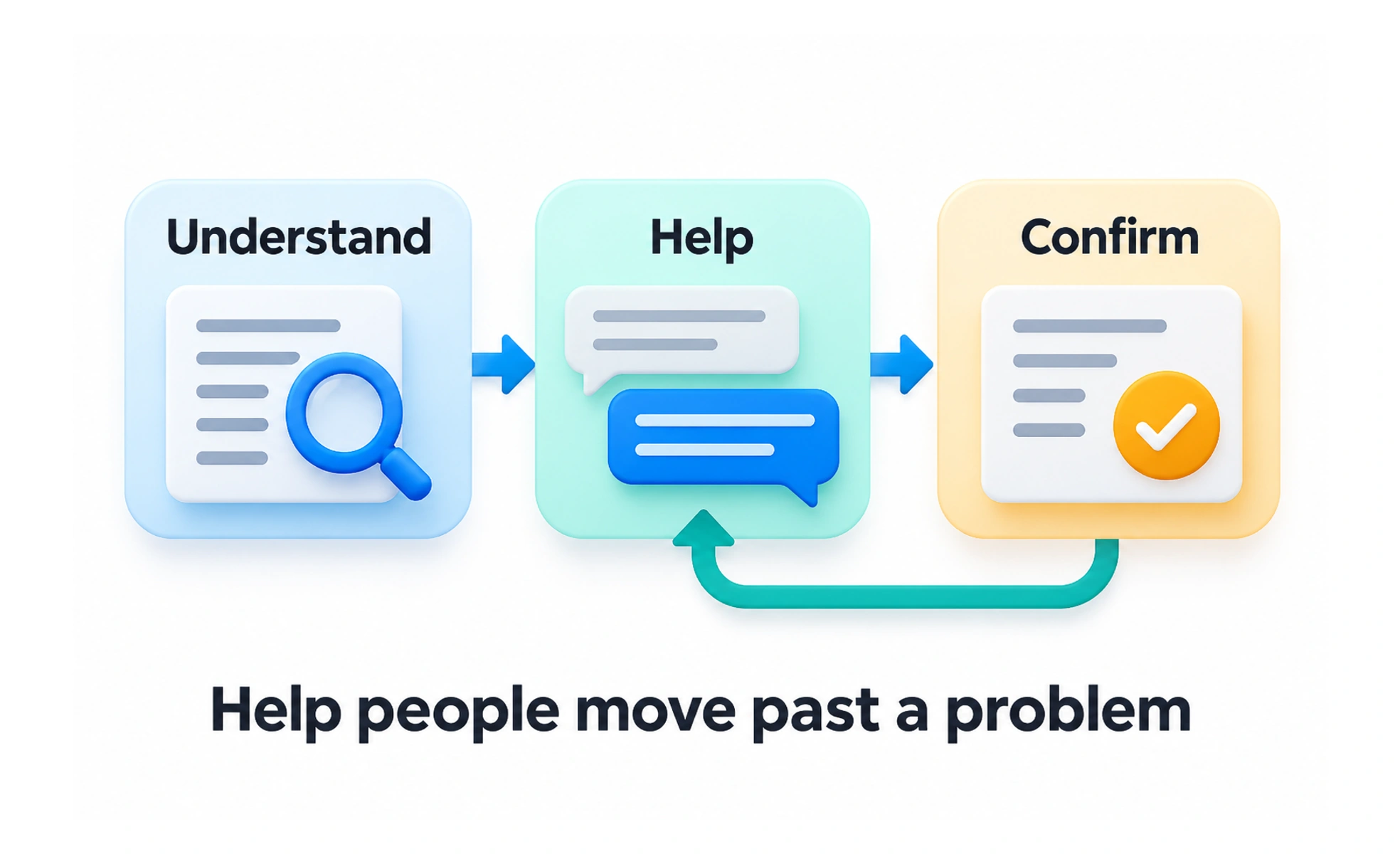
Customer support helps people resolve difficulties and use a service effectively. It includes clear help, suitable contact channels, and a dependable process for understanding and addressing problems.
A helpful service desk listens, explains what can happen next, and follows the issue through. A digital support experience needs the same continuity.
Make the right help discoverable
Offer relevant guidance near difficult steps and a clear route to further assistance. Use the terms people recognize from the product. A help center becomes less useful when articles describe old screens or hide the contact path behind unrelated suggestions.
Collect useful context safely
Ask for information that helps diagnose the issue without requesting passwords or unnecessary sensitive data. Preserve details already available to the service when appropriate. Explain expected response timing and provide a reference or status so people know the request was received.
Connect support to product learning
Look for recurring problems and share them with the people responsible for the experience. Response speed matters, but resolution quality and repeat contacts also deserve attention. A fast reply that leaves the problem unresolved can create more effort for both the customer and the team.
Example: a missing completion record
A learner reporting lost progress needs clear guidance and an investigation tied to the relevant attempt. Support should avoid promising an award before the data is checked. The eventual resolution can reveal whether the product needs better persistence, recovery feedback, or explanation.
Frequently asked questions
Key takeaways
- Make contextual help and contact routes easy to find.
- Collect relevant details without secrets.
- Set clear expectations and maintain continuity.
- Use recurring issues to improve the product.