

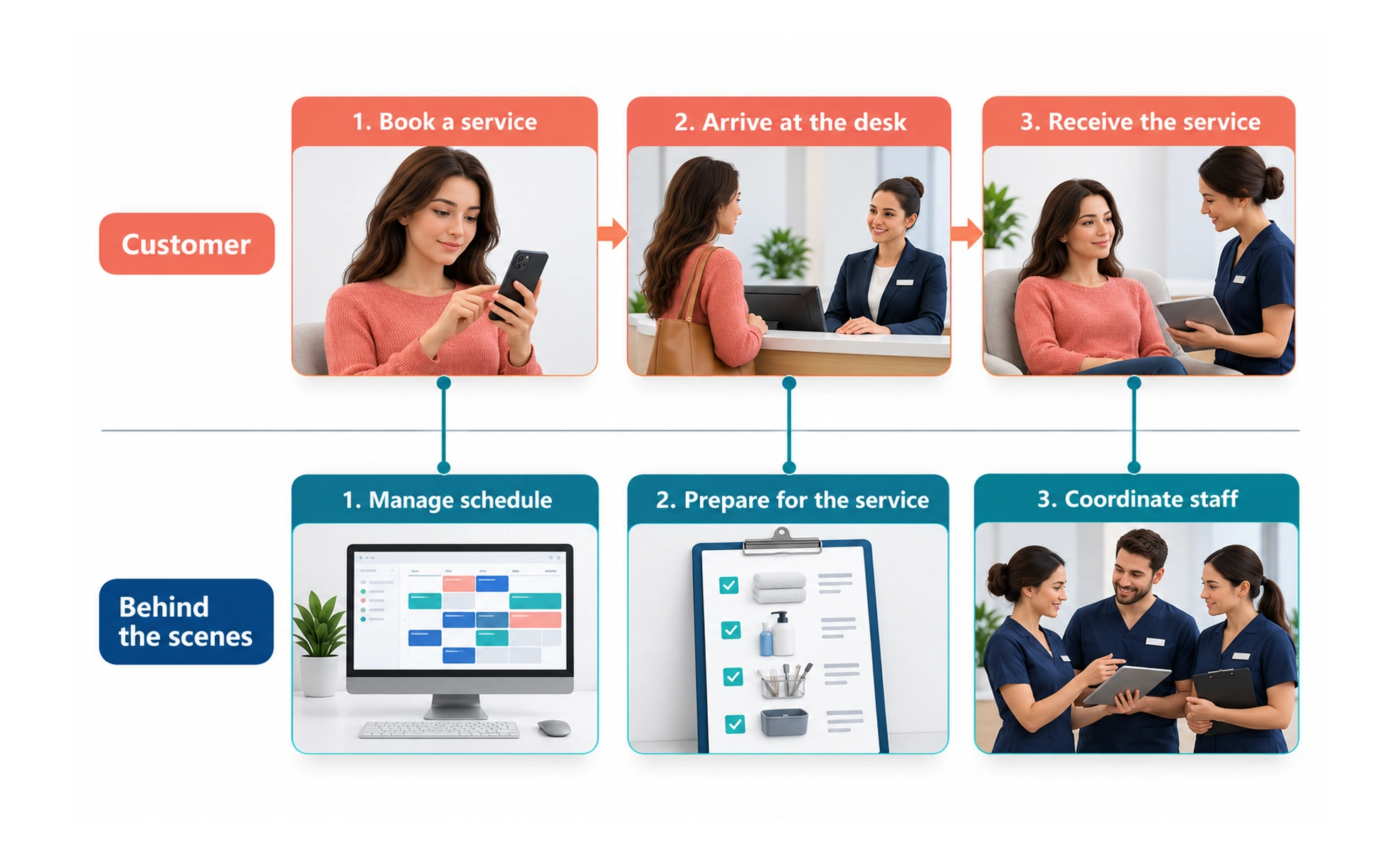
It addresses the holistic end-to-end experience by harmonizing both frontstage customer touchpoints and backstage business operations. It ensures seamless interactions across physical environments, mobile apps and customer support.
Think of it as staging a theatrical play. While the audience sees the actors and lighting on stage, stagehands, sound engineers and costume coordinators work in sync behind the curtains.
How it works
Service design maps and optimizes complex human systems across both visible and invisible service layers.
- Frontstage touchpoints include public channels the customer sees and interacts with, like websites, kiosks and staff.
- Backstage operations encompass the internal activities performed by warehouse employees, kitchen staff or support agents.
- Support processes cover software databases, payment gateways, logistics contracts and compliance verifications.
- Service blueprinting visualizes these three layers on a synchronized timeline to expose hidden operational bottlenecks.
When to use it
Deploy service design when products span multiple physical, digital and organizational touchpoints.
- Healthcare patient journeys coordinates clinic check-ins, medical records, doctor consultations and pharmacy pickups.
- Omnichannel retail operations unifies mobile app order placements with in-store curbside pickup logistics.
- Hospitality and airline travel harmonizes ticket booking apps, airport kiosk check-in, baggage drop and inflight service.
- Complex enterprise SaaS workflows integrates software subscriptions with human onboarding managers and technical support.
Common mistakes
Teams often fail in service design by focusing exclusively on digital apps while ignoring backstage human reality.
- Polishing the mobile app while ignoring backstage friction, leaving customers stranded when warehouse delivery fails.
- Designing without front-line employee input, creating idealistic workflows that staff cannot realistically execute.
- Creating beautiful blueprint posters that look impressive in workshops but never translate into operational change.
Frequently asked questions
Key takeaways
- Service design aligns frontstage customer experiences with backstage business operations and technical systems.
- The primary tool is the service blueprint, which links customer actions to internal employee processes.
- Great digital interfaces cannot rescue broken physical logistics or poorly trained support staff.
- Involve front-line employees directly in co-design workshops to build realistic, sustainable service flows.