

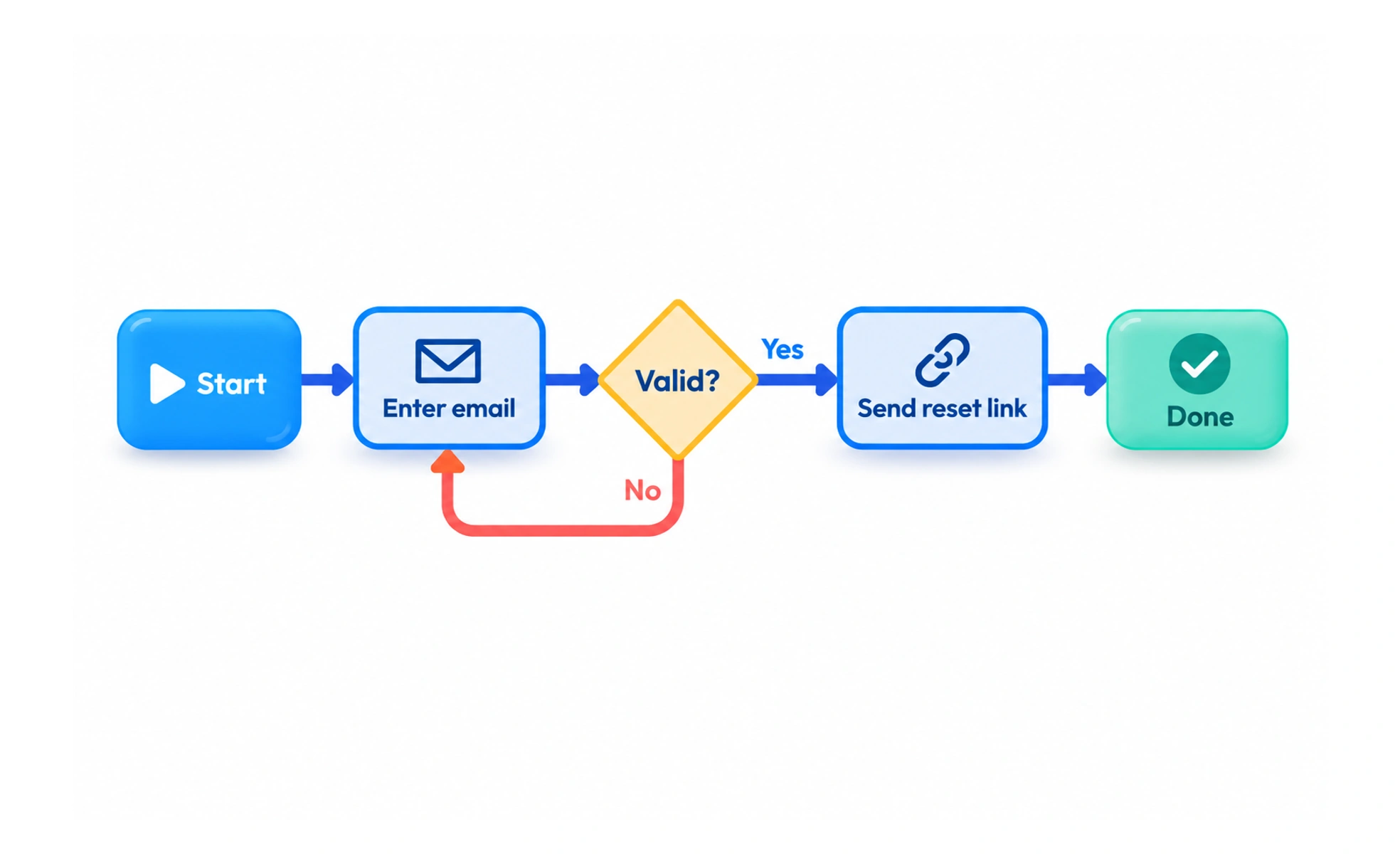
It helps a team reason about what must happen and what can go wrong before polishing screens. The focus is the task: selecting an appointment, changing a password or submitting a review. The diagram should make that sequence easier to discuss.
Define the start and successful outcome
Write a precise goal and decide where the flow begins. “Manage account” is broad. “Change the email address and verify the new one” gives the team a clearer boundary.
Describe necessary actions in an understandable order. A person’s action and a system response may both matter, but label them so the reader can distinguish who is doing what.
Include decisions that change the path
Show relevant branches rather than forcing every attempt through a happy path. A verification link may expire, an address may already be used or a person may choose to cancel.
- Name decisions as clear questions.
- Label the possible outcomes.
- Show where recovery returns the person.
- Keep unrelated tasks in separate flows.
The aim is to reveal important logic, not document every technical call.
Example: rescheduling an appointment
The person opens an existing booking, chooses a new time and reviews the change. If the slot is no longer available, the flow returns to time selection without losing the booking. If the change succeeds, the service shows the updated details.
Drawing that branch makes a practical requirement visible: a failed reschedule must not silently cancel the original appointment. The flow helps designers and developers discuss the same consequence.
Check the sequence with real tasks
Walk through the flow with a realistic example. Ask whether each step is necessary and whether the person has the information needed to make a decision.
A diagram cannot prove that labels or controls are understandable. Use a prototype or implemented interface to examine those details. Keep the flow updated when the actual behavior changes.
Frequently asked questions
Key takeaways
- Bound the flow to one clear task.
- Distinguish user actions from system responses.
- Include meaningful decisions and recovery.
- Check the diagram against actual interface behavior.