

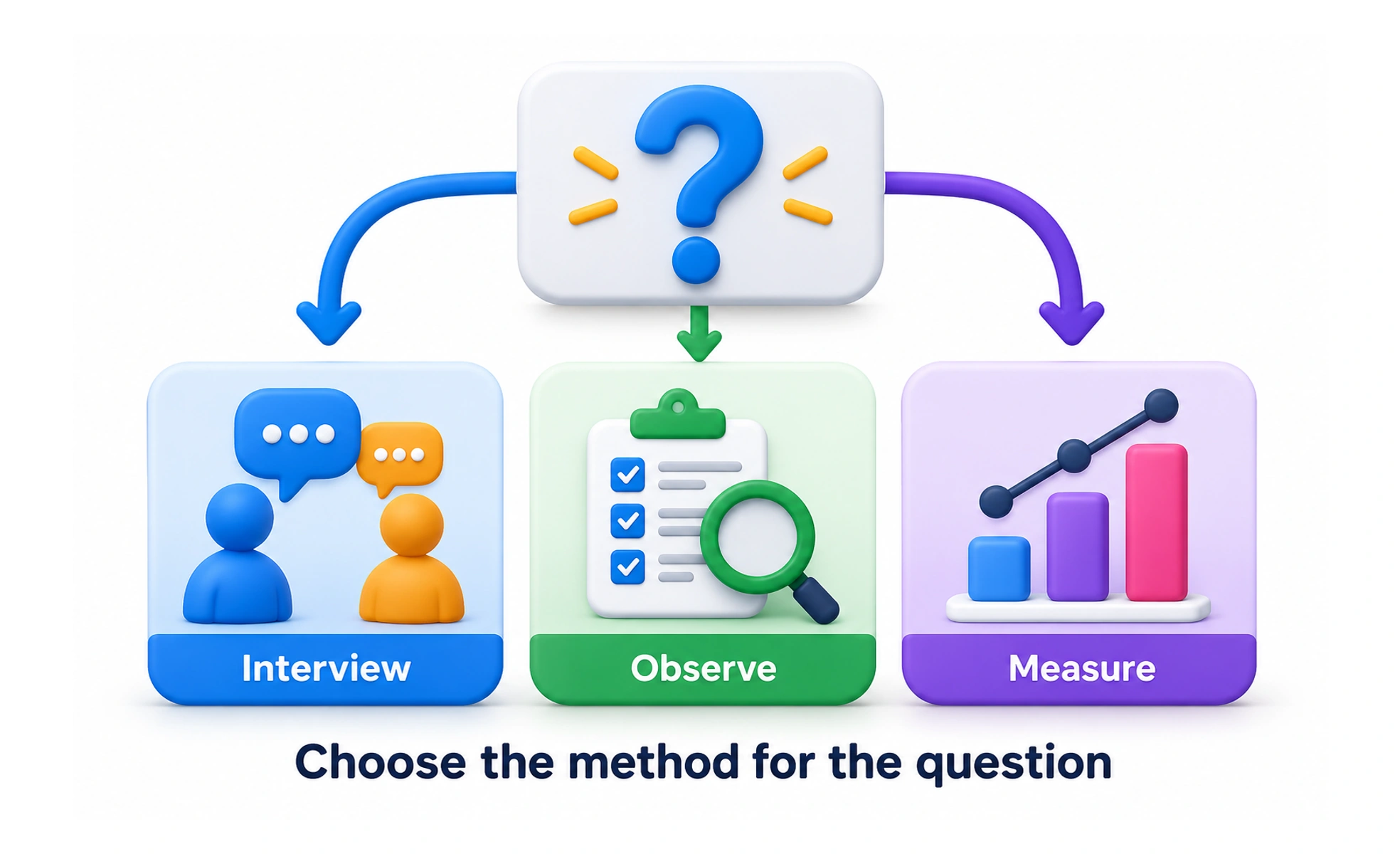
The right method depends on what you need to learn. A conversation can reveal how someone manages an activity, while observing a task can reveal difficulties they do not mention. Choosing a familiar method before defining the question can leave the important uncertainty unanswered.
Start with a decision
Write the decision your team needs to make and what it does not yet understand. “Should we change the booking process?” is broad. “Where do first-time customers struggle to compare available times?” gives the investigation a clearer focus.
Define who needs to be included and which situations matter. Recruiting only colleagues may be convenient, but their knowledge of the product can hide problems faced by newcomers.
Match the method to the uncertainty
Different methods make different things easier to examine.
- Interviews explore experiences and explanations.
- Observation shows activity in context.
- Usability testing examines interaction with a design.
- Surveys collect structured answers from a defined sample.
A method does not answer every question. Asking whether someone likes a prototype is different from checking whether they can complete its task.
Example: a confusing pickup service
A delivery team sees people contacting support about pickup. It first reads support conversations to identify recurring questions. It then watches customers try to find the pickup instructions and asks about their recent experience.
The evidence points to an address shown separately from the opening hours. The team can test a clearer presentation. A large satisfaction survey alone might have revealed dissatisfaction without showing where the confusion began.
Plan how evidence will be used
Decide what to record, how to obtain consent and how to handle sensitive details. Leave time to analyze the material and share the limits of the findings.
Choose the smallest useful study for the decision, not the fastest activity to complete. When a question remains unanswered, say so and plan the next investigation.
Frequently asked questions
Key takeaways
- Choose a research question before a method.
- Include people and situations relevant to the decision.
- Different methods provide different kinds of evidence.
- Plan analysis, consent and the use of findings.